Two things decide it, not one
People check the plug and stop there. The plug is only half the question. A transducer has to satisfy both of these before a Lowrance can use it:
- The connector. Physical pins and housing at the display end. If it will not seat, nothing else matters.
- The sonar channel and frequency. The display has to be able to drive that transducer's crystal and read what comes back. A cable adapts a plug. It cannot add a sonar channel.
Start with the connector
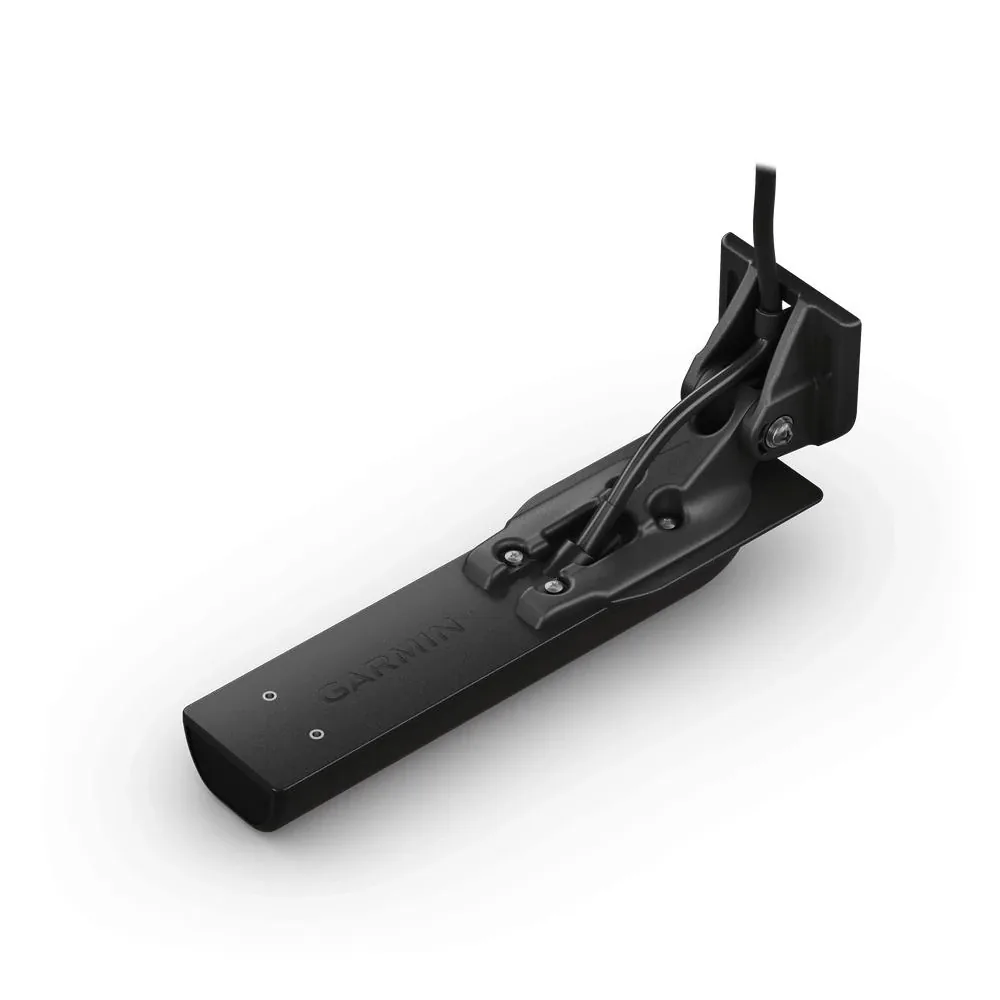
Garmin fits its own multi-pin connectors to its transducers. The units we stock are 8-pin and 12-pin — the TM185M, for example, is 8-pin and the GT51M-TM is 12-pin — and a 12-pin imaging transducer will not plug into an 8-pin port even on a Garmin display.
Lowrance has run several connector families of its own across its display generations, so a Lowrance transducer that suits one unit will not necessarily suit the next. If you are standing at the boat with a cable in each hand, the transducer guide covers how to identify a connector and count the pins properly.
Then the sonar channels and frequencies
This is where cross-brand swaps usually die. Garmin's traditional sonar, ClearVü and SideVü are Garmin's own implementations, and Lowrance runs its own traditional, down and side imaging on its own channels. A Garmin imaging transducer paired with a Lowrance head unit through an adapter is not a supported combination — the adapter gets the plug to fit, but the display still has no channel that speaks that transducer's language.
Straight traditional sonar is the narrow case where a cross-brand match is more plausible: a plain 50/200 kHz or mid-band CHIRP transducer is a simpler device than an imaging one. Even there, the display must be rated for the transducer's frequency range and power. Match the numbers on both spec sheets — frequency in kHz, power in watts, and the number of channels the display can read at once.
What an adapter cable can and cannot do
Third-party adapter leads exist that mate a Garmin transducer plug to a Lowrance socket, and some anglers run them happily. Be clear about what you are buying: an adapter is a third-party part, it does not come with either manufacturer's support, and it only solves the mechanical connection. If the sonar channel or frequency does not line up, the adapter changes nothing except how the cable ends.
We will not tell you a specific Garmin transducer fits a specific Lowrance unless the listing for that part says so. What we will do is check the pair before you pay.
How Deepline checks it before you pay
Send us your Lowrance model — the exact model, not just "HDS" — and the Garmin transducer part number you are considering. We look at the connector, the sonar channels the display runs, the frequency and power of the transducer, and the mounting you have room for, then tell you what we find before an invoice goes out. Nothing is charged on the website at any point; you pay the emailed invoice by card link, ACH or wire, or Zelle, and only after you have the answer.
The two clean routes
If you already own the Garmin transducer, the reliable route is to match it to a Garmin display built for it — our Garmin fish finders are all Garmin-channel units.
If the display you are keeping is the Lowrance, fit a transducer made for it. Our Lowrance fish finders and Lowrance sonar pages are the place to start, and the transducer department carries the brands that pair with each system.
Either way, send the boat details with the model. Transom angle, hull material and where the cable has to run decide as much as the plug does. Send your display model and boat and we will match it.