One name, two different jobs
AIS does two separate things, and the box you buy decides which half you get. Receiving means picking up the identity, position, course and speed of the vessels around you and drawing them on a screen. Transmitting means broadcasting the same information about your own boat. A VHF radio with AIS built in, like the Garmin VHF 215i AIS, does the first. A black-box transceiver such as the Garmin AIS 800 or the Raymarine AIS700 does both. Nothing that only receives will make you visible to anyone else.
That difference is the whole buying decision. Work out which half you need before you compare prices.
If you only need to see: an AIS receiver
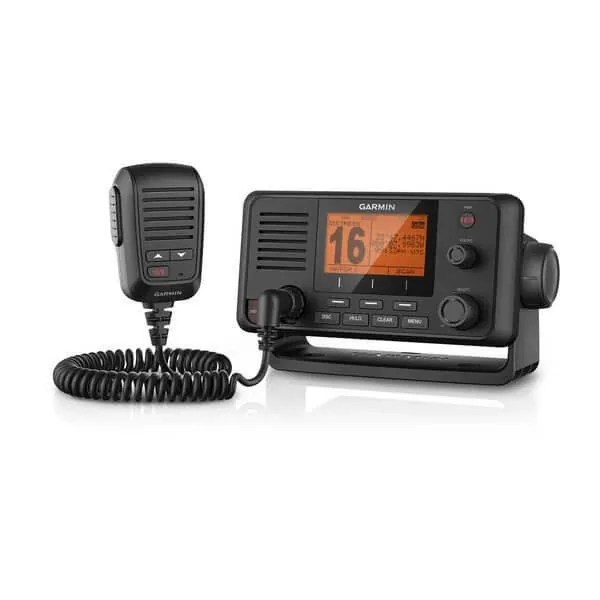
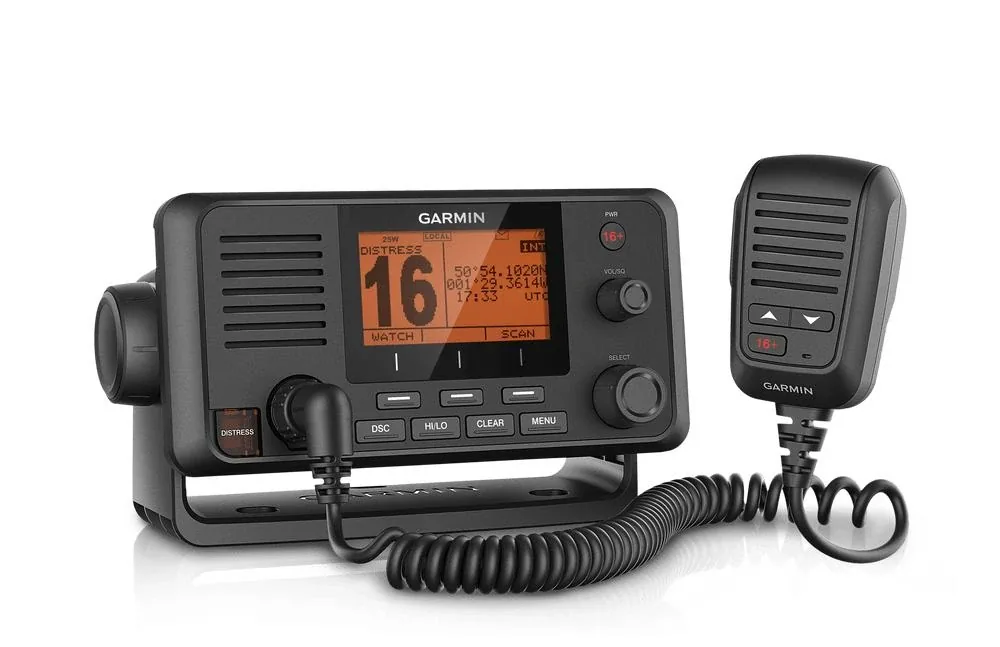
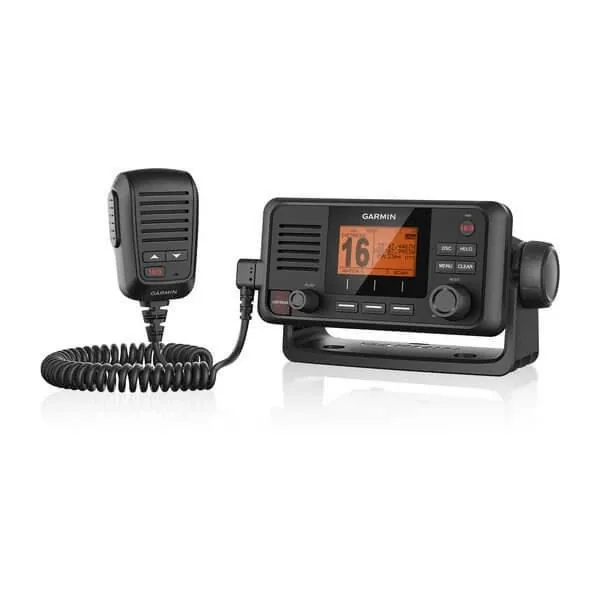
The Garmin VHF 215i AIS (part 010-02098-01) is a fixed-mount, 25-watt VHF radio that presents AIS targets on a compatible Garmin chartplotter or MFD. The listing describes it as plug-and-play with the GPSMAP 7x2/9x2, 10x2/12x2, 7400/7600 and 8400/8600 families over NMEA 2000. It carries Class D DSC with distress calling and direct calling from a programmed MMSI, all U.S., Canadian and international marine channels, 10 NOAA weather channels, NMEA 0183 compatibility and a two-way hailer.
The practical appeal is that it replaces the VHF you were going to fit anyway instead of adding a second box and a second antenna run. If your plotter is already Garmin and your radio is old, this is the cheapest way to get a traffic picture at the helm.
What you give up is being seen. In fog off a busy inlet, or crossing a shipping lane at night, other vessels will not know you are there unless their lookout or radar picks you out.
If you need to be seen: a Class B transceiver
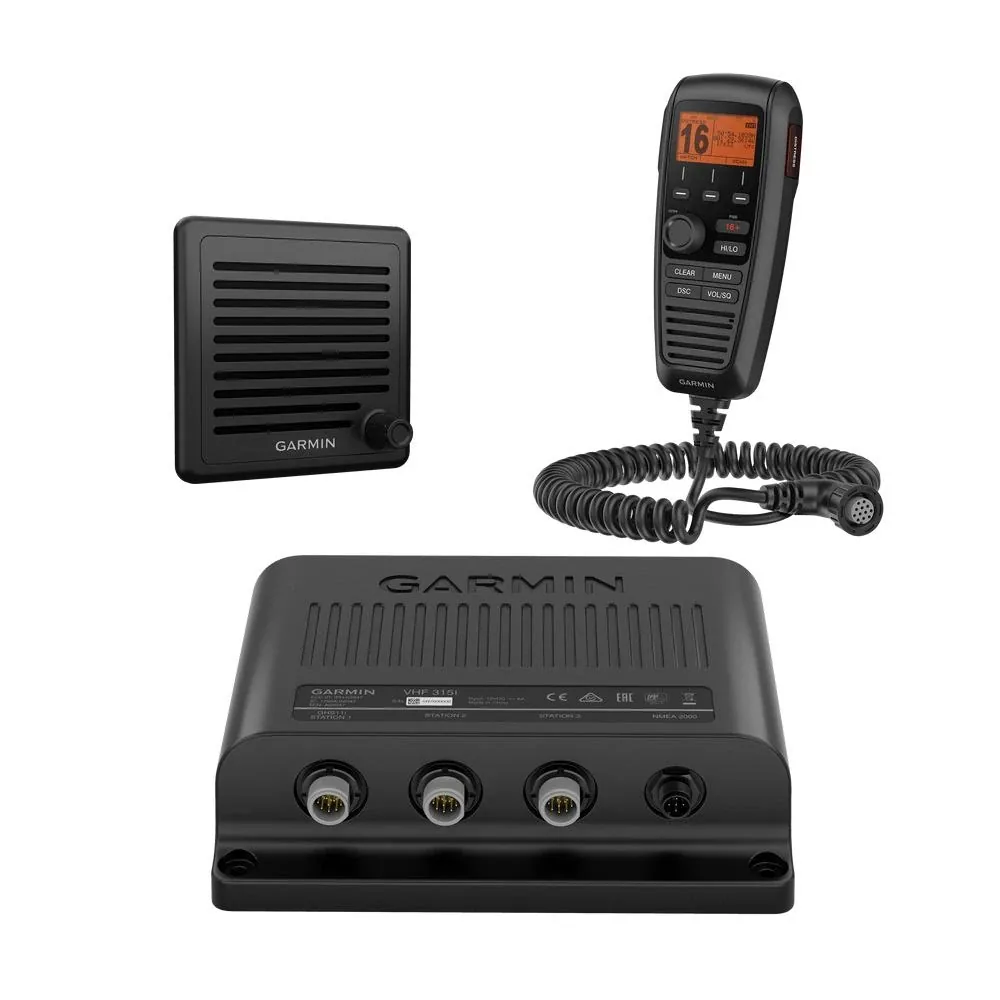
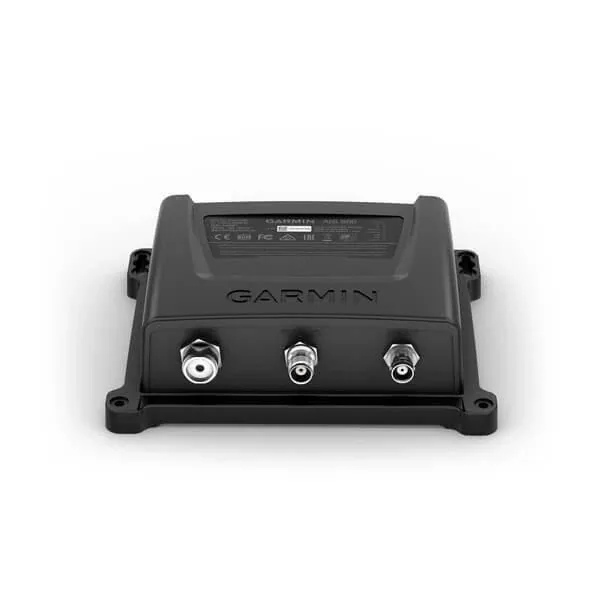
The Garmin AIS 800 (part 010-02087-00) is a black-box transceiver: 5 watts of transmit power on Class B/SO for faster position reporting, continuous receive of AIS target data while it transmits your own, a built-in GPS with a connector for an optional external antenna, and NMEA 2000 connectivity for compatible chartplotters and multifunction displays. It has an internal VHF antenna splitter so the VHF radio and the AIS share a single antenna, which saves a whip and a run of coax. The case is rated IPX7. The box ships with the NMEA 2000 T-connector, a 2 m drop cable, a 1.2 m VHF interconnect cable, a power cable, a USB adapter cable and the mounting hardware.
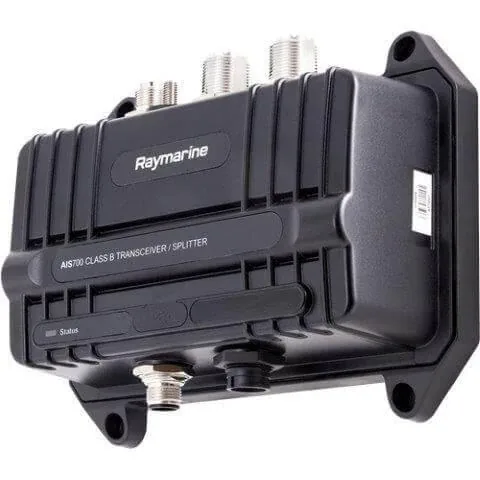
The Raymarine AIS700 (part E70476) is the same idea inside Raymarine's ecosystem: Class B with an integrated splitter, so it shares the existing VHF antenna and lands on a Raymarine display.
Class B is the class built for recreational and smaller commercial boats. Class A is the 12.5-watt commercial and SOLAS unit, and it is what the rules below name for the vessels that must carry AIS.
What the U.S. rules actually require
The carriage rule is 33 CFR 164.46, and it is written about vessel type and length, not about what you would like to have. Class A AIS is required on a self-propelled vessel of 65 feet or more engaged in commercial service, on a towing vessel of 26 feet or more with more than 600 horsepower in commercial service, on a vessel certificated to carry more than 150 passengers, on certain dredging vessels working in or near a channel, and on vessels moving certain dangerous or flammable liquid cargoes.
A Coast Guard type-approved Class B device may be used in place of Class A on fishing industry vessels, on dredging vessels covered by the rule, and on 65-foot commercial vessels certificated for fewer than 150 passengers that stay out of Vessel Traffic Service areas and below 14 knots. Vessels of 300 gross tons or more on an international voyage fall under SOLAS instead.
Two things follow that matter when you are choosing. First, the rule is about transmission, so a receiver alone does not satisfy it. Second, the Coast Guard can ask the operator of a vessel the rule does not cover to fit AIS voluntarily where traffic conditions warrant it. A recreational boat under 65 feet is not caught by the rule, but it is exactly the boat that benefits most from being seen.
What each one plugs into
AIS is only worth having if it lands somewhere you look. Every display in the chain has to accept the data: a chartplotter listing such as the Garmin GPSMAP 1222xsv states AIS support (tracks target ships position) and NMEA 2000 compatibility, and that is the pair of lines to look for in your own unit's specifications. If your plotter is older, check for a NMEA 0183 input and whether it needs a converter.
Deepline checks this before it invoices. Send the display model with the order and the radio or transceiver is matched to it — connector, network port, and whether a splitter is already inside the unit — rather than shipped and hoped for.
MMSI, antenna and the install
A transceiver needs an MMSI programmed into it before it transmits, because that number goes out with every position report. Recreational vessels under 65 feet that fit AIS voluntarily register an MMSI with an approved organization; vessels that fall under FCC licensing get theirs in that process. Deepline does not program MMSIs and does not install — that is your installer or your own work.
Antenna is the second decision. A unit with an internal splitter shares your existing VHF whip; a receiver-only radio uses the antenna you were already fitting. AIS is line-of-sight VHF, so height matters more than power for range.
Which one to buy
- Receiver if you want traffic awareness on the plotter, your VHF is due for replacement, and nothing requires you to transmit.
- Transceiver if a carriage rule applies to your boat, or if you run at night, in fog, through inlets or across shipping lanes and want to appear on other vessels' screens.
- Both, eventually is normal on a cruising boat: the radio shows the traffic, the transceiver makes you part of it.
Compare the units in the AIS transponder department, or go straight to Garmin AIS, Raymarine AIS and VHF radios. Pair either with a display from GPS chartplotters.