Live sonar is a system, not a screen upgrade
A regular fish finder sends a pulse down and paints what comes back. You read depth, bottom and marks, and you find fish by working structure until something shows. Live sonar holds a real-time picture instead: you watch a fish come to the bait and take it, in the water ahead of, below or around the transducer.
That difference comes from hardware. A phased-array transducer steers its beam electronically, and a processor keeps up with the returns fast enough to draw them live. None of that lives inside an ordinary 2D display, so the honest answer to "can I add it?" is a fit question — and three of the four parts are things you add.
The four parts you actually need
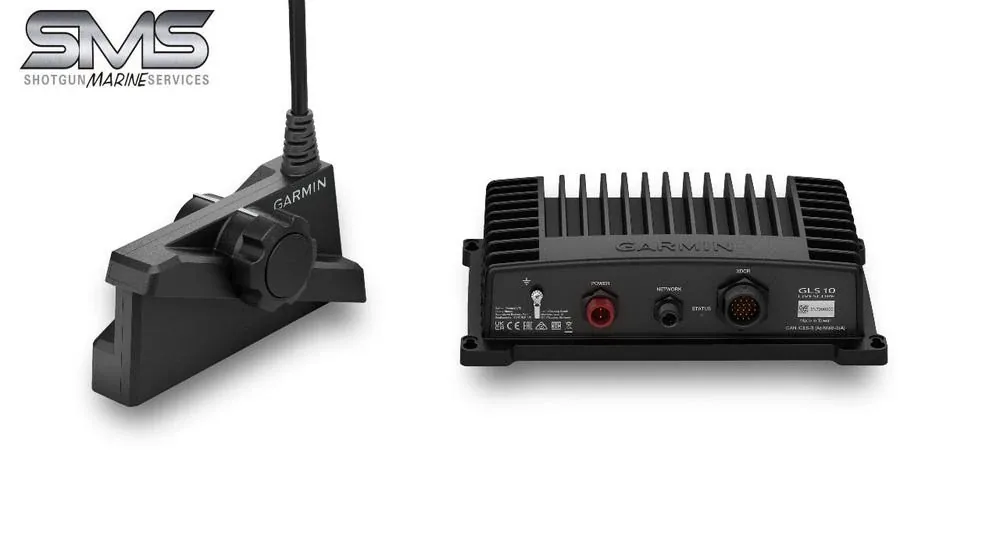
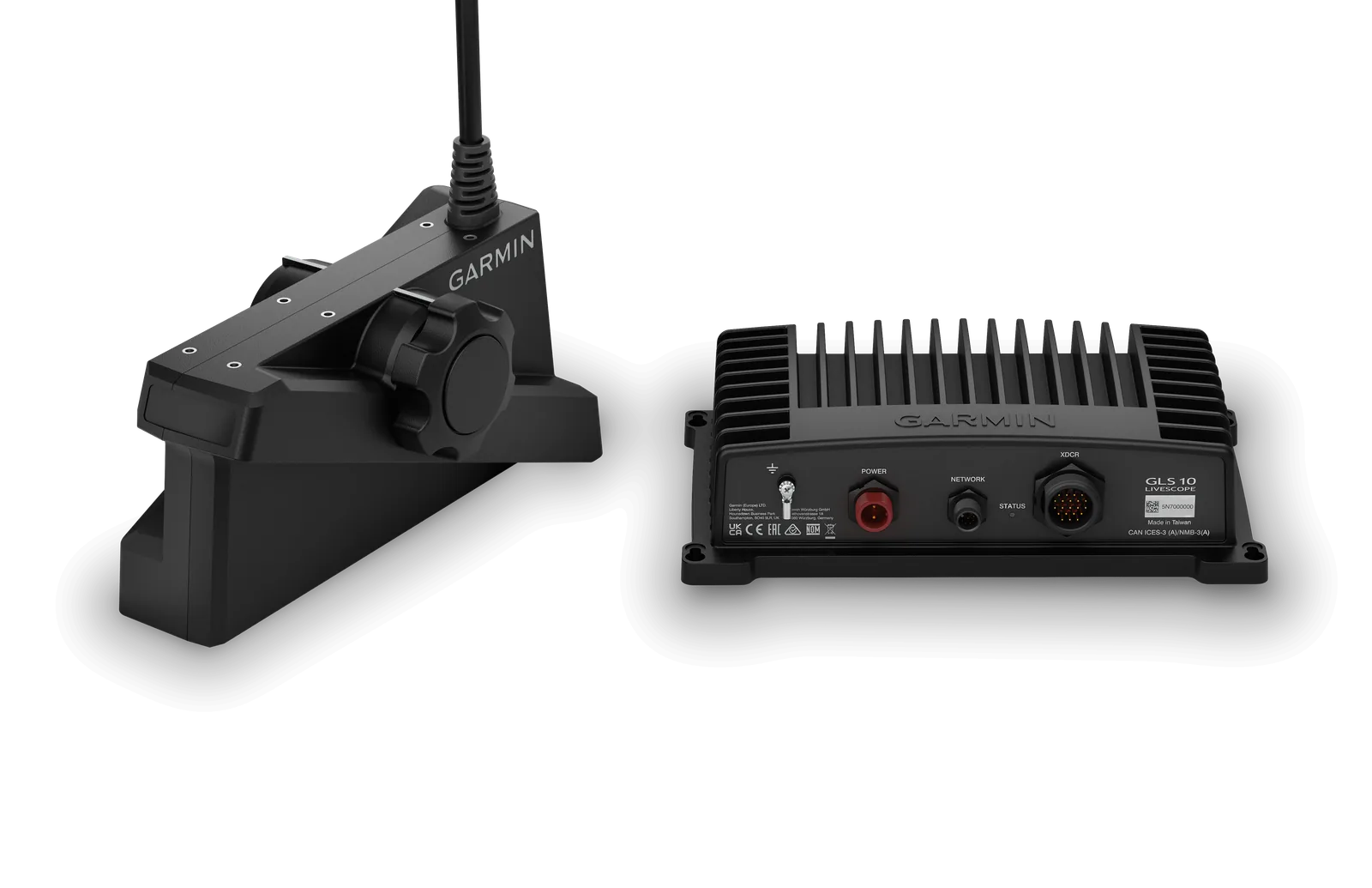
- The live sonar transducer. Forward, down and perspective views all come from this unit, mounted on the transom, the trolling motor shaft or a pole.
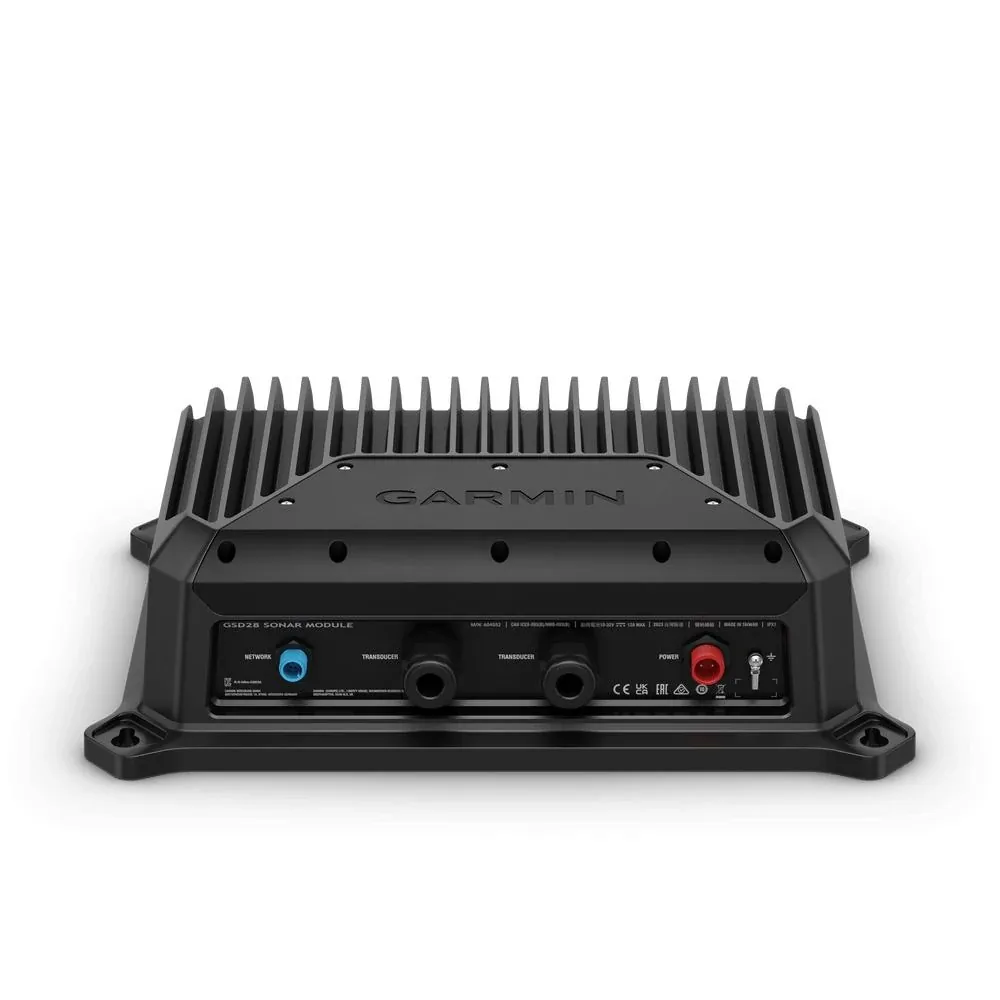
- The sonar module, or black box, if the system uses one. Garmin's LiveScope Plus and LiveScope XR systems ship with the GLS 10 box: the transducer plugs into it, and it does the processing and hands the picture to the display. Garmin's LiveScope 2 transducers in our catalogue are listed as needing no black box — they run from your existing power source and feed a compatible display directly.
- A display that will run it. The listing for the LiveScope Plus system names Garmin GPSMAP and ECHOMAP multifunction displays as the compatible units. A basic depth sounder with no sonar-source support and no network port will not show live sonar, whatever cable you find.
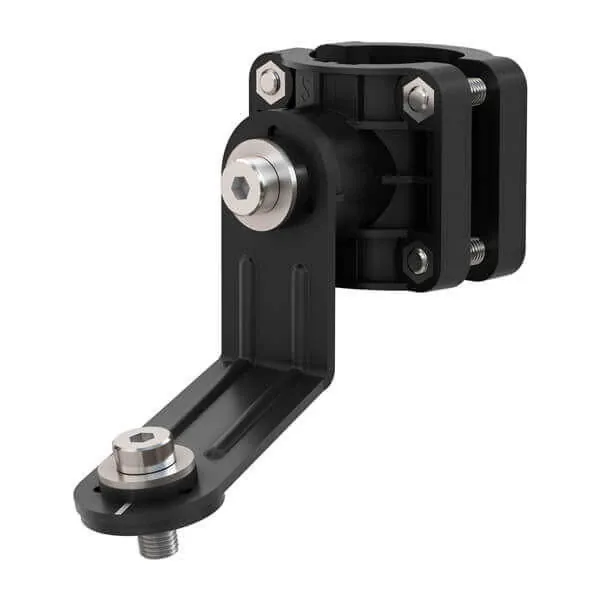
- A mount and clean power. Trolling-motor shaft, transom bracket or a dedicated pole, plus a mount that holds its aim once you set it. Perspective-view setups use their own bracket.
Three Garmin routes and what each one asks of you
| System | What comes in it | What it needs from you |
|---|---|---|
| Panoptix LiveScope Plus with GLS 10 and LVS34 | Black box, transducer, cabling | A GPSMAP or ECHOMAP display that the listing names as compatible |
| LiveScope XR with GLS 10 and LVS62 | Black box, extended-range transducer, 265–550 kHz | The same display check, plus a mounting point and cable run that suit the larger transducer |
| LiveScope 2 LVS44 or LVS42HD | Transducer only, no black box | A display that supports LiveScope 2 directly |
| Perspective Mode Mount | Bracket only | A LiveScope transducer and a mount point that suits the bracket |
The mistake to avoid is buying a bare transducer that still needs a box and then discovering the box is a second purchase. Buy the transducer alone only when your display supports that transducer without one. When the system ships complete with the GLS 10, you are buying one part and finishing the job.
The same rule holds at Humminbird and Lowrance
MEGA Live 2 on Humminbird and ActiveTarget on Lowrance work the same way: a live transducer plus a head unit built to display it. The Humminbird XPLORE units in our catalogue are listed with MEGA Live 2 imaging; smaller or older units generally are not. Lowrance's Eagle Eye 9 is sold with live sonar built in, which is a different route again — the sonar arrives with the screen.
So decide the pair, not the part. Pick the display and the live system together, or tell us the display you already own and work back from it.
Mounting and power, where these installs go wrong
- Trolling motor shaft mount turns with the motor, so the view follows where you point the boat. It also means the transducer spins and needs stowing clearance.
- Transom mount is the simplest to fit and the least fussy at speed, but it looks behind the boat, not where you are casting.
- Perspective mode wants the transducer aimed forward and level. A bracket that drifts off its setting ruins the view you paid for.
- Power. Live sonar draws more current than a 2D sounder. A dedicated battery or a clean, fused circuit avoids the dropouts that get misread as a sonar fault.
- Cable runs. The transducer cable goes to the box, and the box needs a network connection to the display. Measure the run before you order, not after the boat is apart.
How we check it before you pay
Send your display model and your boat, and we match the system to it: whether the unit supports the sonar source, whether it needs a black box, which mount fits your shaft or transom, and what cable goes where. Nothing is charged on the site — we confirm the fit first, then send an invoice you can pay by card link, ACH or wire transfer, or Zelle.
Where a listing does not state that a display is compatible, we will not tell you it is. We check it and say so. Browse the Garmin live sonar systems, modules and mounts, the rest of the sonar department, or the Humminbird and Lowrance fish finder ranges. If the transducer side of the boat is the open question, the transducer guide covers mount, frequency and connector, and the FAQ answers the ordering questions.