What the letters mean
MARPA stands for Mini Automatic Radar Plotting Aid. The word to notice is Mini: it is the recreational and light-commercial version of ARPA, the Automatic Radar Plotting Aid that has been on commercial bridges for decades. The radio detection is the same; the difference is scale — MARPA tracks a handful of targets you select on a modest radar, ARPA tracks many, automatically, on a set built and certified for the job.
Radar on its own paints a target where it is on this sweep. An echo trail tells you it moved, but reading a course off a trail at night, in a seaway, with three other targets on screen is slow work. MARPA does that arithmetic continuously and draws a vector so you can see a crossing situation before it develops.
What it does, step by step
- You acquire a target — put the cursor on the echo and select it, or let a guard zone or an automatic acquisition mode take everything inside a range ring.
- The processor follows that echo across successive antenna sweeps and builds a track.
- From the track it calculates the target's course and speed, its closest point of approach, and the time until it gets there.
- It alarms when a tracked target's CPA comes inside the limit you have set, which is the whole reason for having it.
Tracking is only as good as the sweeps behind it. A target acquired a minute ago has a rough course; the same target after several minutes has a usable one. Small, fast and fading echoes are the ones that drop out, so a plot that disappears is not a plot that cleared.
It needs own-ship heading
MARPA needs to know which way your bow points, and that comes from a heading sensor — a fluxgate or gyro compass on the network, often the heading source of the [autopilot](/shop/autopilots). Course over ground from GPS is direction of travel, not heading, and the two diverge badly in a cross-current or at trolling speed. Without a heading feed, target course and speed are unreliable and many units will not compute them at all. This is the most common reason a radar that has MARPA appears not to.
The second requirement is time on target: the antenna has to keep turning and the target has to stay inside the echo. MARPA also only tracks radar echoes — not AIS. AIS is a separate data feed from the other vessel's transponder, and a display can overlay both, but an AIS target is not a MARPA target.
MARPA, ARPA and AIS side by side
| MARPA | ARPA | AIS | |
|---|---|---|---|
| What it tracks | The radar echoes you select | Radar echoes, acquired automatically in volume | Position reports transmitted by other vessels |
| Other vessel must cooperate | No — it only needs to reflect radio | No | Yes — it needs a working transponder |
| Shows vessel identity | No, just a tracked echo | Usually not | Yes — name, MMSI, type, course |
| Where you meet it | Recreational and light-commercial radar and MFDs | Commercial-grade radar on certificated vessels | Any receiver fed by an AIS transponder |
The practical read: MARPA and ARPA see things that have no transponder — a skiff, a mooring field, a breakwater. AIS sees vessels that are transmitting, at ranges your radar cannot reach, with names attached. Serious offshore boats want both on the same screen.
Where you meet it on this site
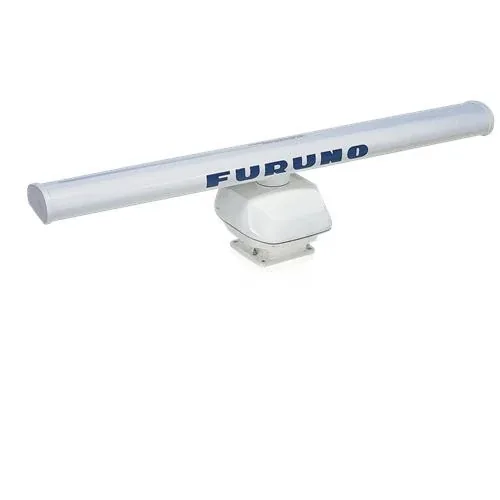
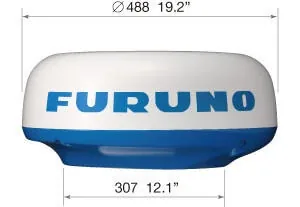
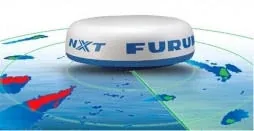
Radar stock sits mostly in [Furuno radar](/shop/c/furuno-radar) — five listings: the DRS4D-NXT 25W Doppler UHD digital radome, the DRS6A-X 6 kW, DRS12A-X 12 kW and DRS25A-X 25 kW open array drive units, and the M-1815 4 kW LCD radar. Read their published specifications carefully: none of those five listings names MARPA, so do not assume the feature from the badge on the dome.
One radar listing in the whole catalogue does name it: the [Simrad Halo 4 open array pulse compression radar](/shop/c/simrad-radar), whose spec sheet lists target tracking (MARPA) for up to 20 targets alongside VelocityTrack Doppler and a 72 NM maximum range. That is the only radar listing on the site that states the feature.
On the display side, the [Furuno TZT3 Touch 16F](/shop/c/furuno-multifunction-display) lists 30 ARPA targets and CPA/TCPA radar alarms in its published specifications — that is where tracking is presented when a Furuno DRS radar is paired with a NavNet display. Whether a particular radar head and a particular display actually deliver MARPA is a pairing question, not a badge question, and it is the one we answer before invoicing. More on how that works in the [FAQ](/faq).