What it actually measures
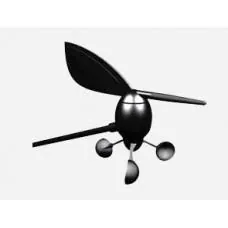
Water moving past the boat spins the wheel. The transducer counts those revolutions and converts them to a speed. That is a direct measurement of how fast the hull is moving through the water around it, usually called STW, or speed through water.
It is a mechanical reading, and that is the whole point. Nothing about it depends on satellites, chart data or the boat's calculated position, so it tells you something a chartplotter cannot work out on its own.
Speed through water is not speed over ground
A GPS receiver measures speed over ground, SOG — how fast you are travelling across the earth's surface. A paddlewheel measures the water. When the water is moving, the two numbers disagree, and the gap is the current.
On still inland water they track each other closely. Push against two knots of current in an inlet or a river and the paddlewheel shows two knots more than the GPS; run with it and it shows two knots less. In the Gulf Stream, the Chesapeake, a tidal river or the Lower Mississippi the difference is not a rounding error, it is the thing you are trying to steer around.
Why anglers care
A trolled lure or a live bait is moving relative to the water, not the bottom. Boat speed over ground can read 3.2 knots while the lure is working at 1.8, because a following current is doing part of the work. Anglers trolling for salmon, walleye, striped bass or billfish use speed through water to hold a lure at the speed the fish want, and they watch the SOG number to know how the current is setting them.
Why cruisers and sailors care
Speed through water is what the autopilot, the trip log and dead reckoning use, and it is what fuel burn per mile should be judged against in a river or an inlet. It also gives you the current set and drift, which is the number that matters when you are planning a bridge opening or a tidal passage.
The three forms in the catalogue
Paddlewheels are sold in three practical shapes, and the choice is about the boat, not the brand.
Transom mount
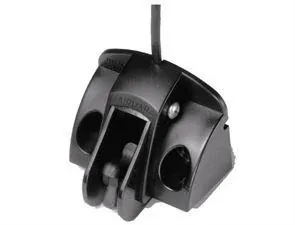
The Raymarine ST69 is a transom-mount speed and temperature transducer. No hole in the hull, the bracket screws to the transom, and the whole thing lifts off when you trailer or when the wheel needs cleaning. It is the straightforward fit for a trailer boat, a center console or anything that comes out of the water regularly.
Low-profile retractable through-hull
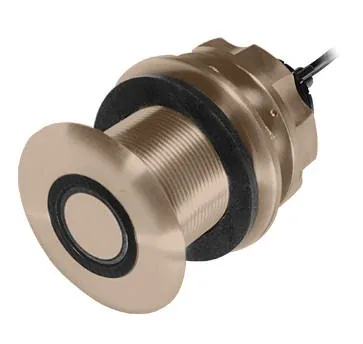
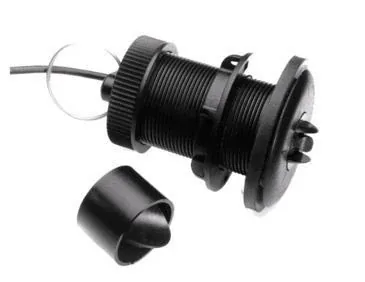
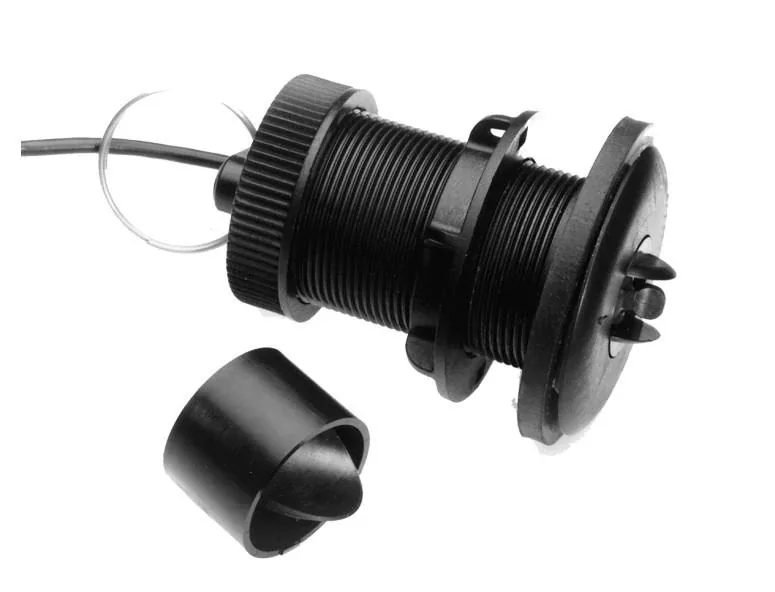
The Raymarine B120 is a bronze, low-profile, retractable through-hull speed and temperature unit. The housing goes through a 2-inch hole and sits nearly flush so it barely drags, and the sensor core pulls out of the housing for cleaning while the boat is in the water. That retractability is the feature that sells it: you are not hauling out to clear a fouled wheel.
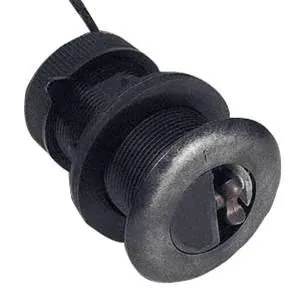
The Raymarine ST900/P120 is the same idea in a plastic housing, using Raymarine's later-generation paddlewheel. Raymarine publishes a speed range of 0.3 to 45 knots for the ST900 core and states that the core retrofits into existing P120 and B120 housings, which matters if a housing is already in your hull.
Combined depth, speed and temperature
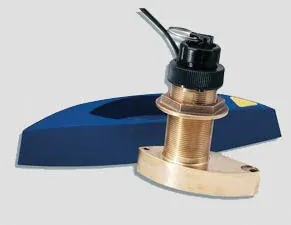
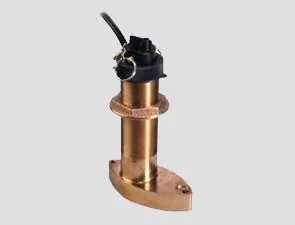
The Raymarine B744V puts the paddlewheel, the depth element and the temperature sensor in one bronze through-hull housing, so a single 2-inch hole feeds all three readings. The long-stem B744VL adds a fairing block for a hull with enough deadrise that a flush housing would need fairing in anyway. If you are cutting one hole, this is the way to get everything from it.
How a paddlewheel fails
The wheel is the part that goes wrong. Marine growth, weed, barnacle and even a coating of bottom paint will slow it, and a slowed wheel under-reads. The failure is not a clean break: the number just sags over a season and quietly stops being true.
Three habits keep it honest:
- Do not paint the wheel. Bottom paint on the paddlewheel is the most common cause of a speed reading that is low from day one of the season.
- Pull the insert and spin it by hand. With a retractable housing this takes a minute at the dock. It should spin freely and the pin should be straight.
- Treat a zero as a fault, not a reading. A wheel that has stopped turning reads zero, not slightly low. If the number is flat while the boat is moving, the wheel is stuck.
What has to match before you buy
Four things decide whether a paddlewheel transducer works on your boat, and only the first is obvious.
- Hull material. Bronze housings are listed for fiberglass and wood. Plastic housings are listed for fiberglass and metal. Bronze against an aluminum hull is a corrosion problem, so an aluminum boat needs the plastic or stainless route, not a bronze B-series housing.
- Hole size and existing housing. Raymarine's low-profile speed/temperature housings use a 2-inch (51 mm) hole. If a housing is already through your hull, you may only need the core, and that changes the part number entirely.
- What it plugs into. A paddlewheel feeds an instrument, not a sounder, and the connector has to suit it. Analog instrument connections and network connections are different cables. This is the mismatch that most often sends a transducer back.
- Deadrise at the mounting point. A flush through-hull on a steep V needs a fairing block or a long-stem housing. Measure at the spot you intend to drill, not at the transom.
Send us the display or instrument model and the boat, and Deepline checks the housing, the connector and the cable against it before an invoice is sent. Nothing is charged on the site, and you can cancel any time before the parcel ships.
Where to go next
If the mount is still open, work through the transducer guide first — mount, frequency, power and connector, in that order. The speed and temperature units themselves sit in Raymarine transducers, and the displays they feed are in Raymarine instruments. For everything else, start at transducers. If you have a question about fitting one to your boat, ask us.