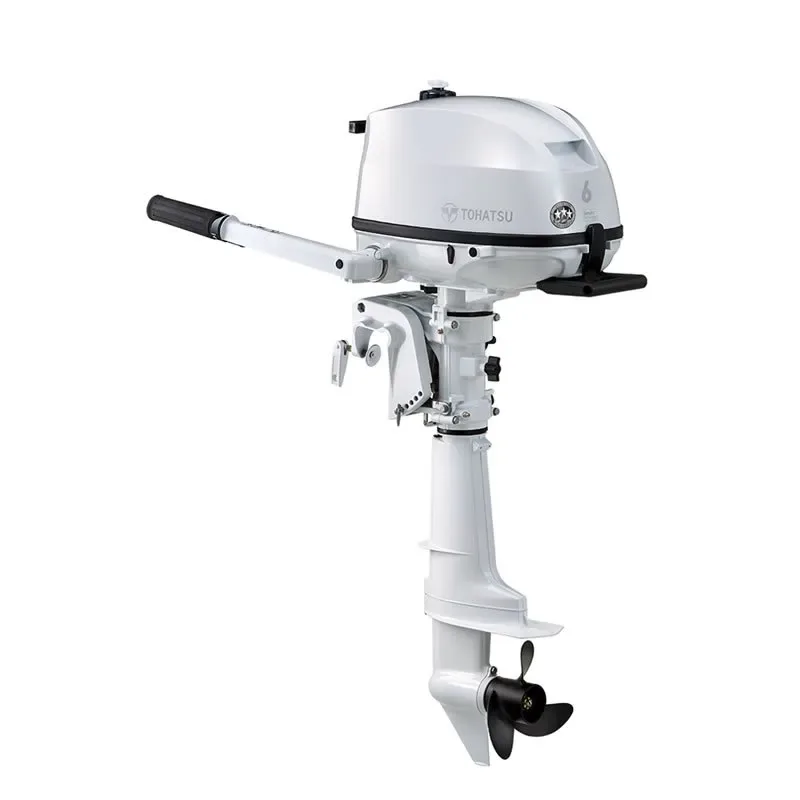
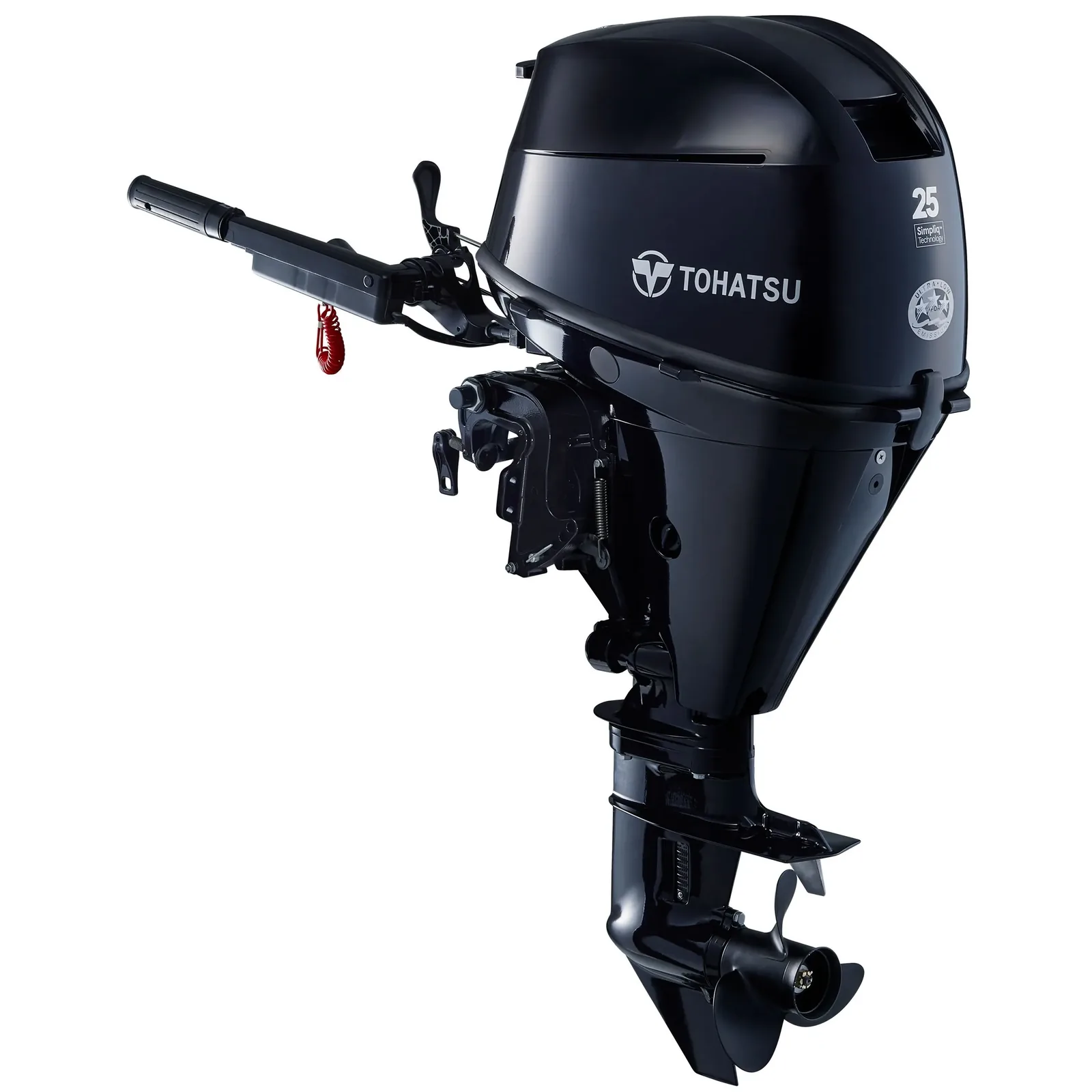
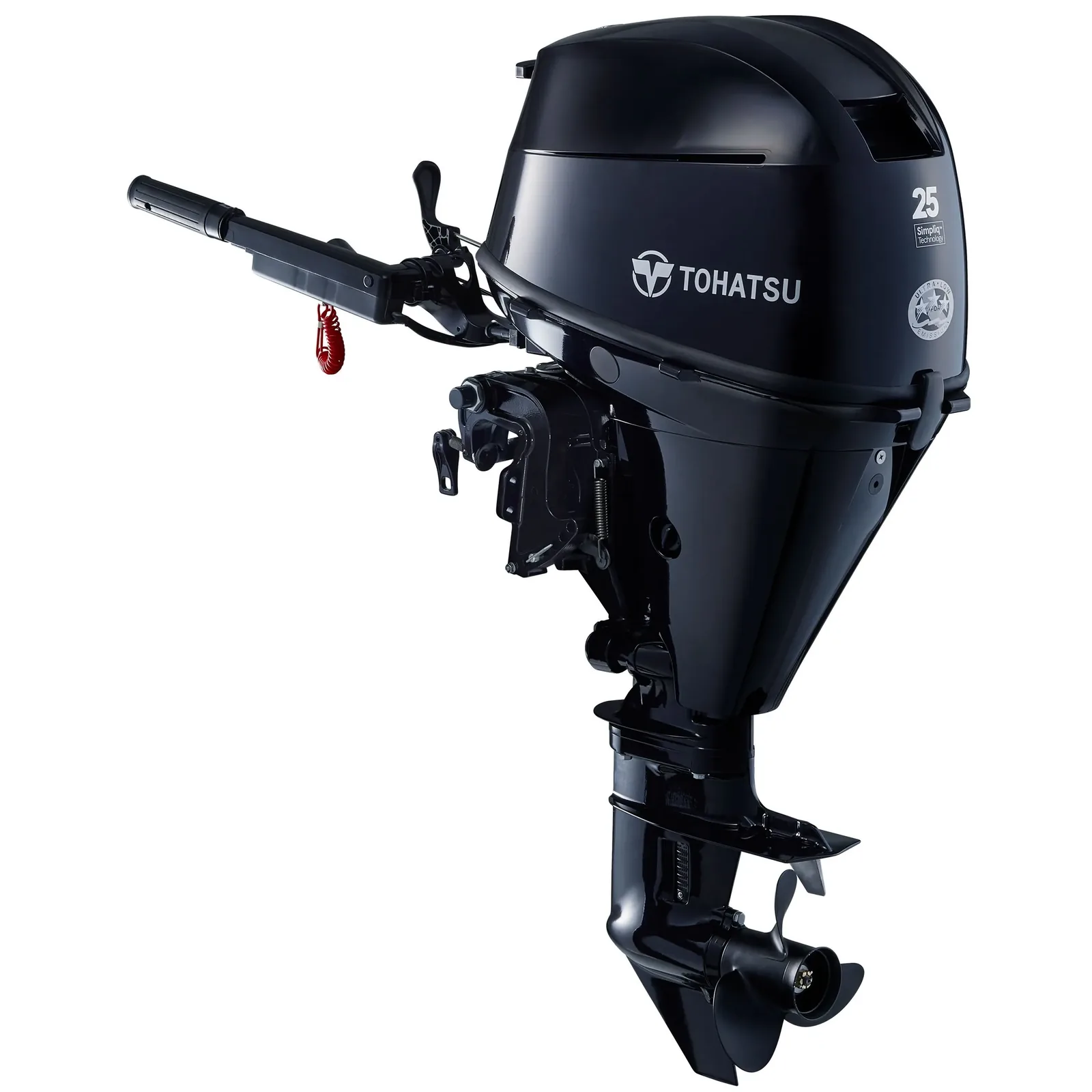
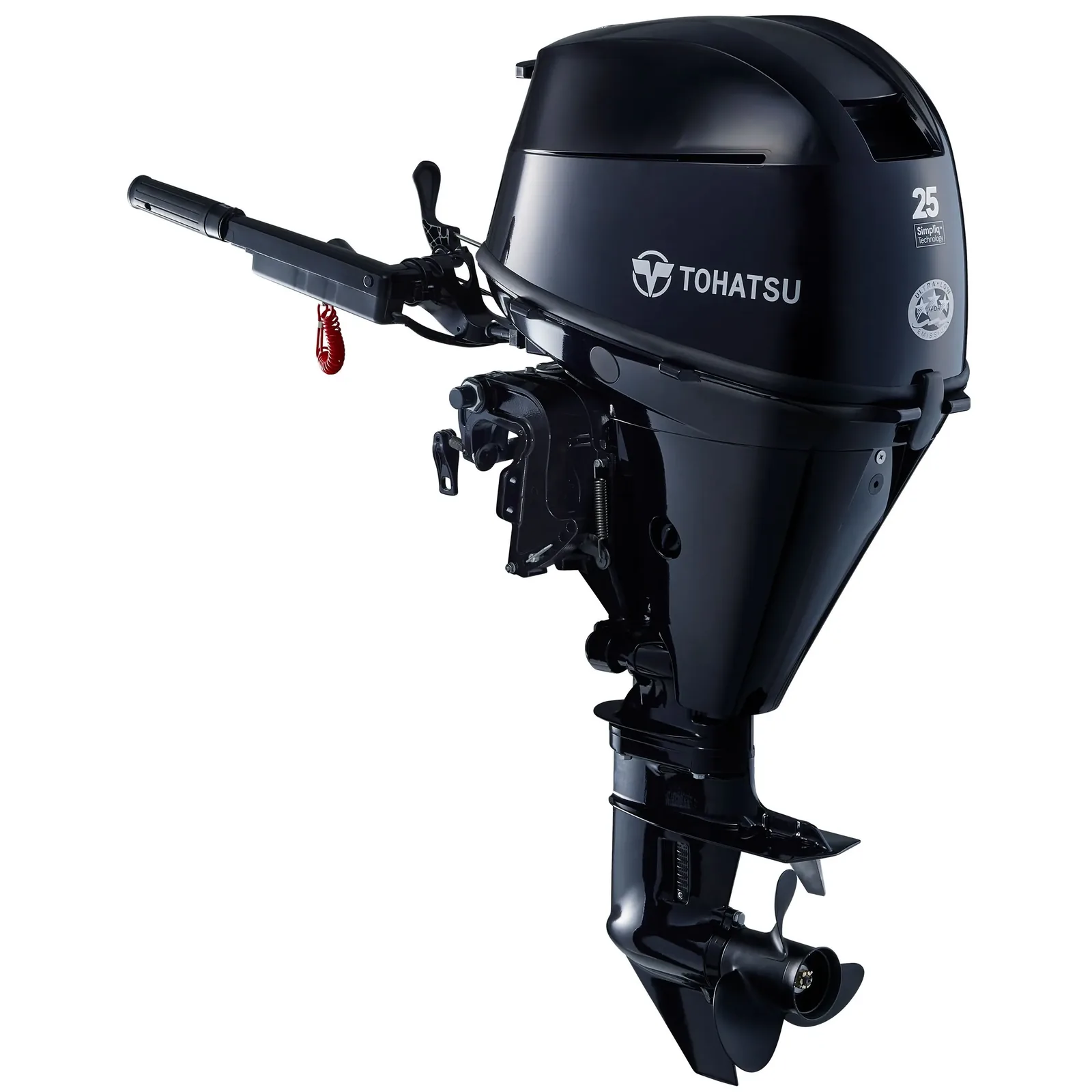
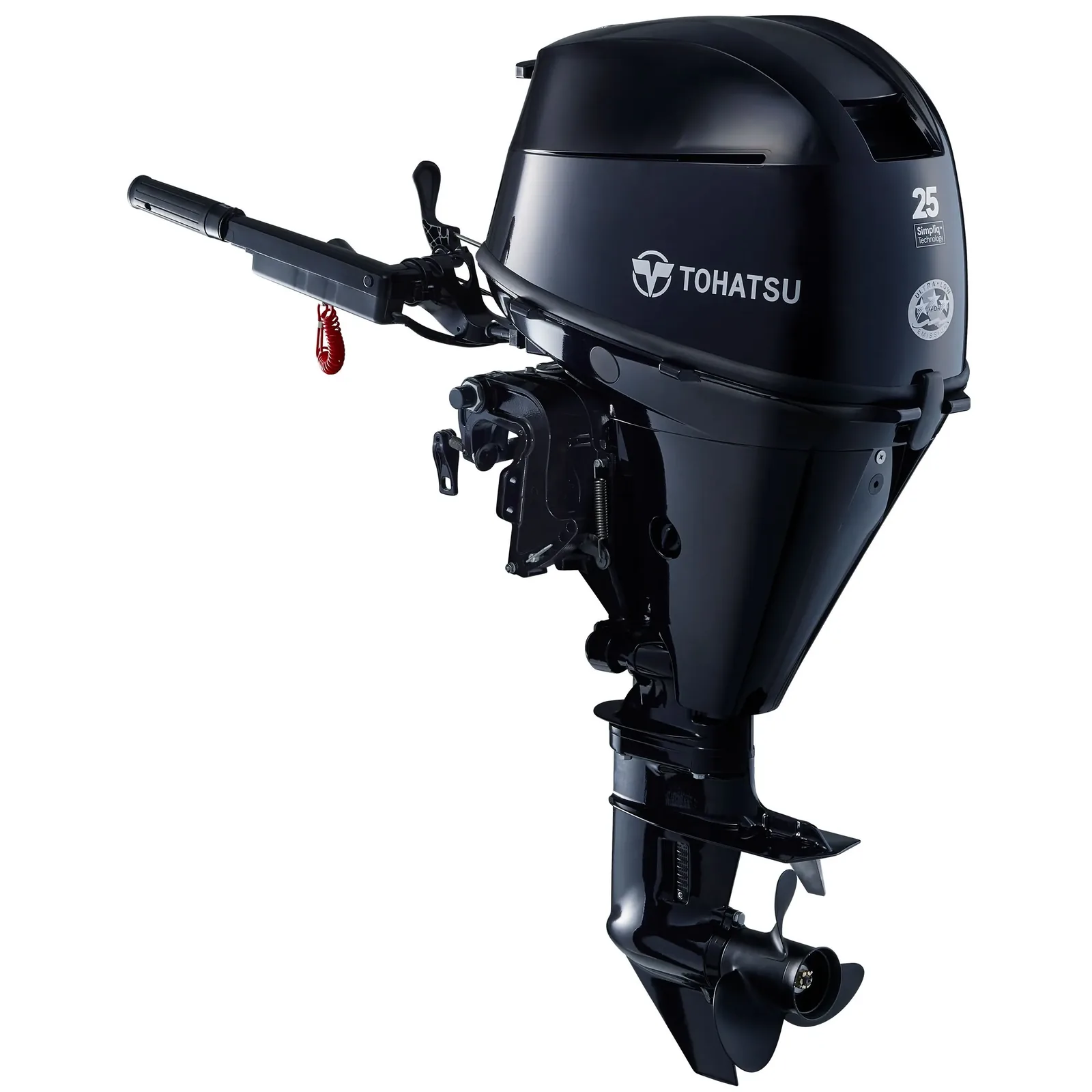
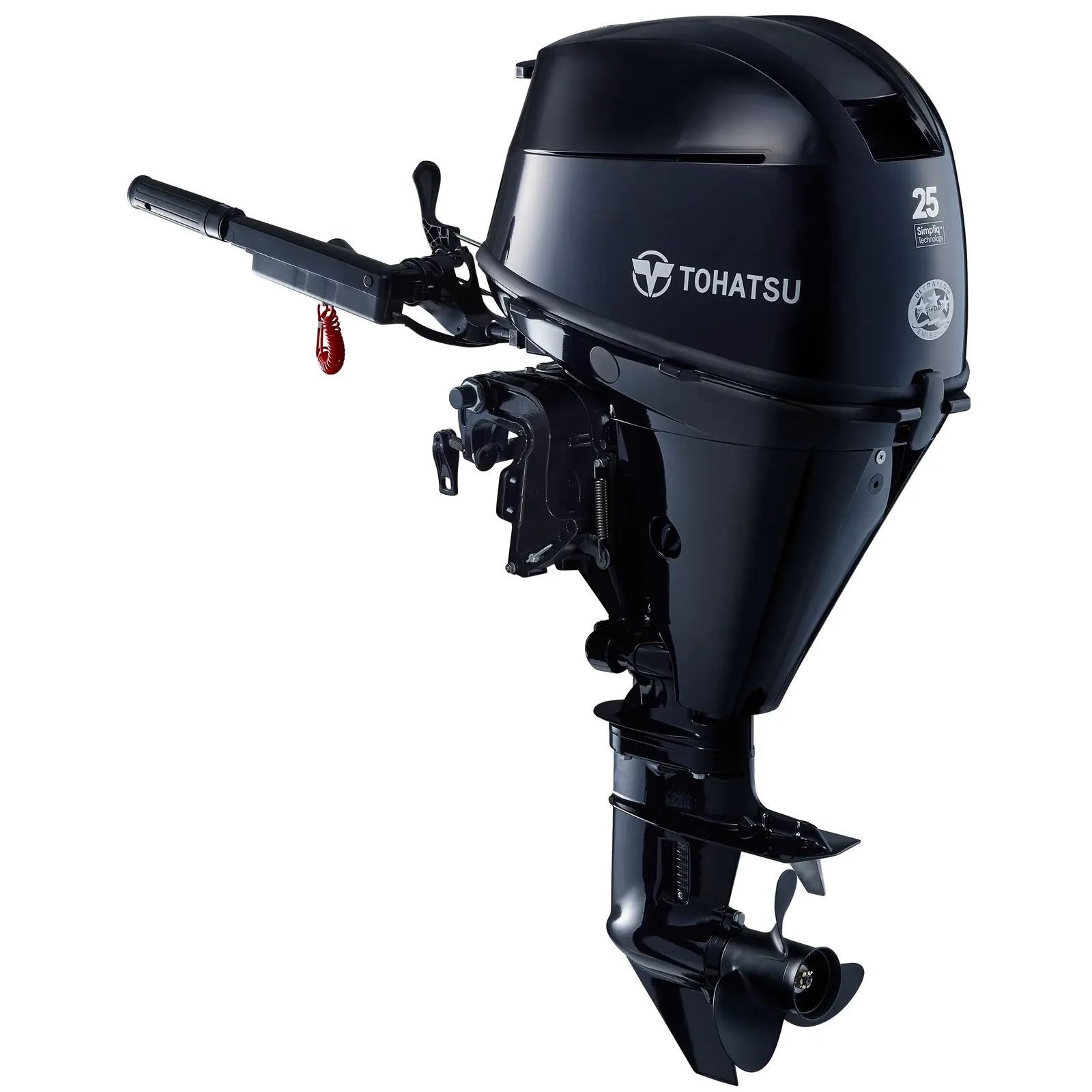
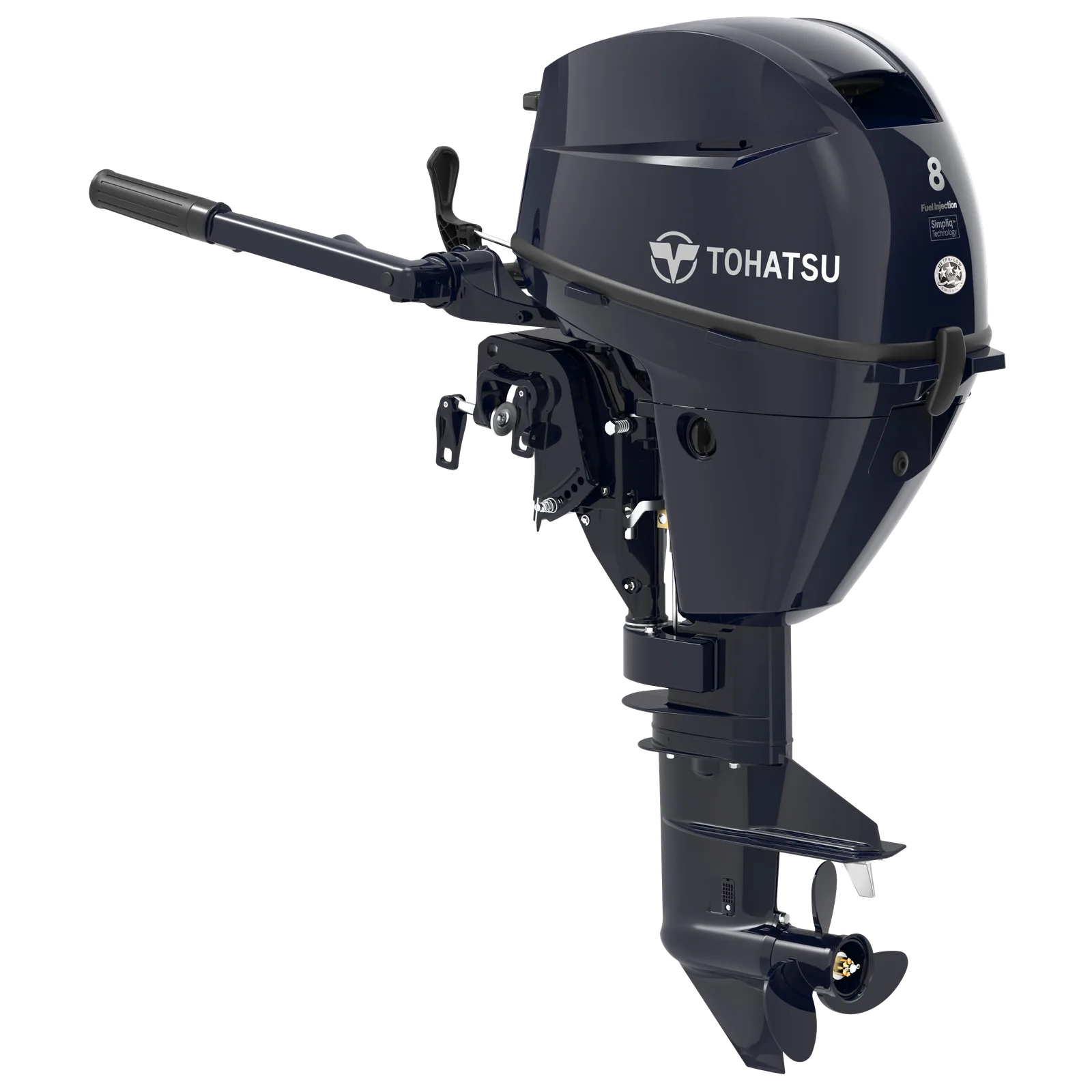
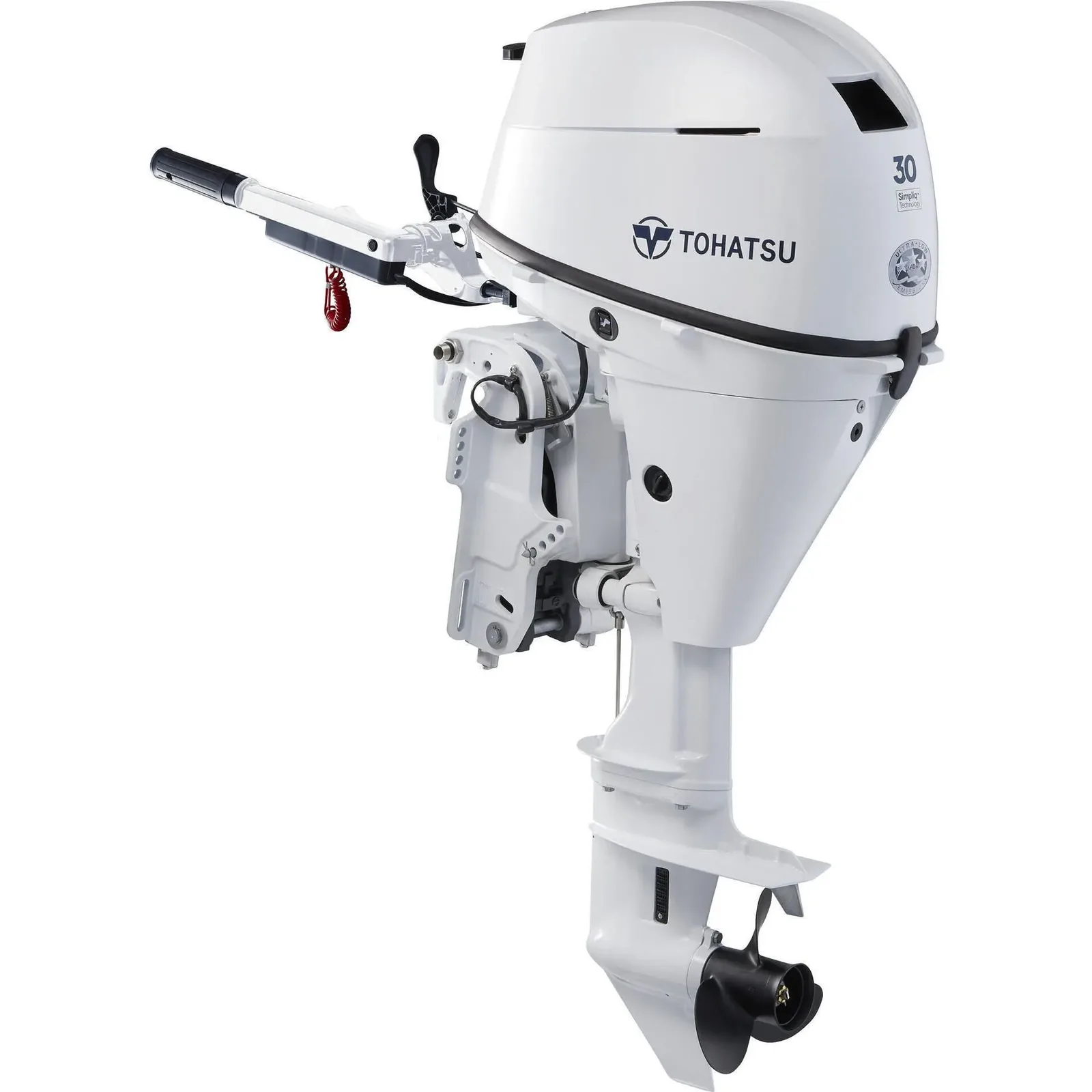
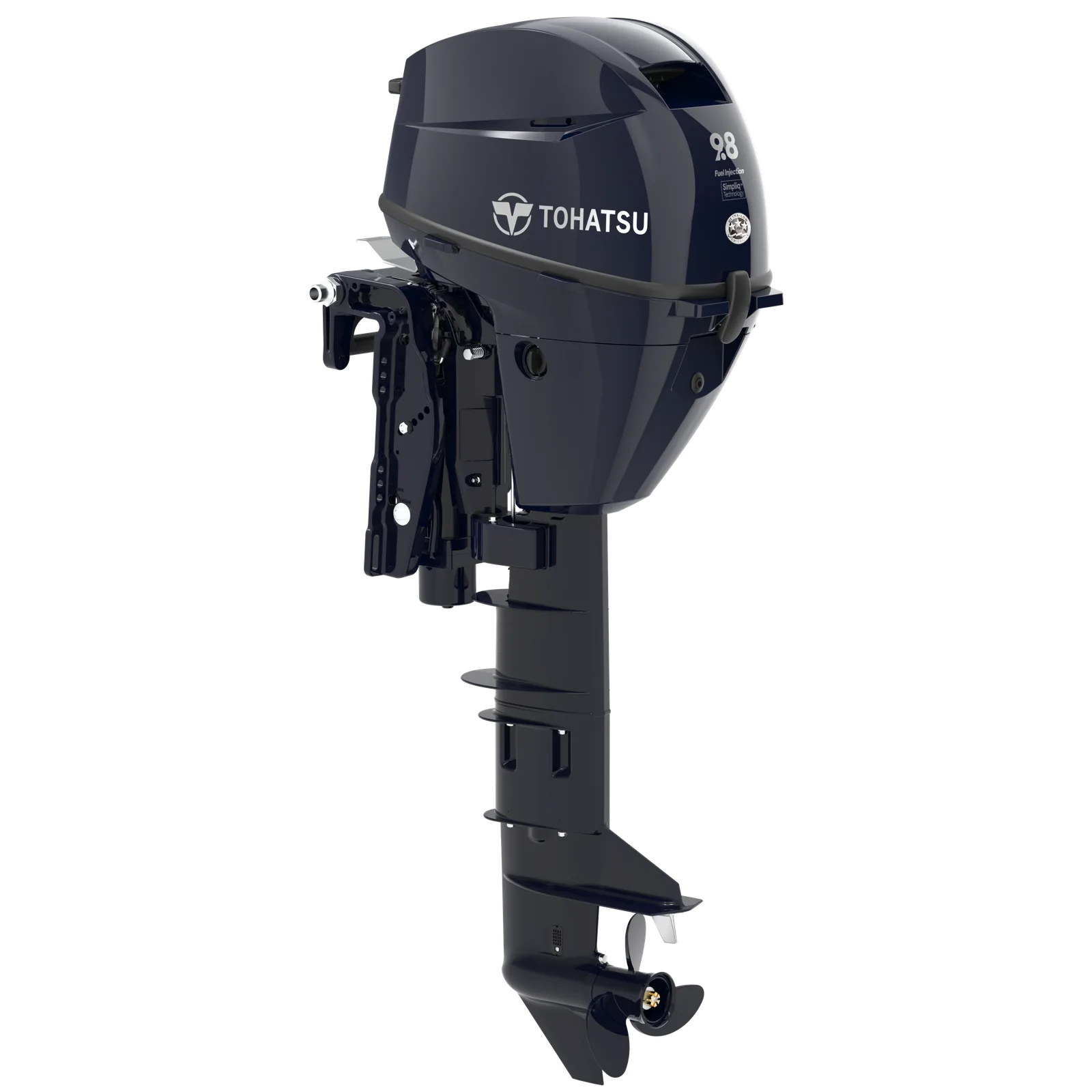
 Tohatsu MFS9.8CEPTUL EFI Outboard — tap to view
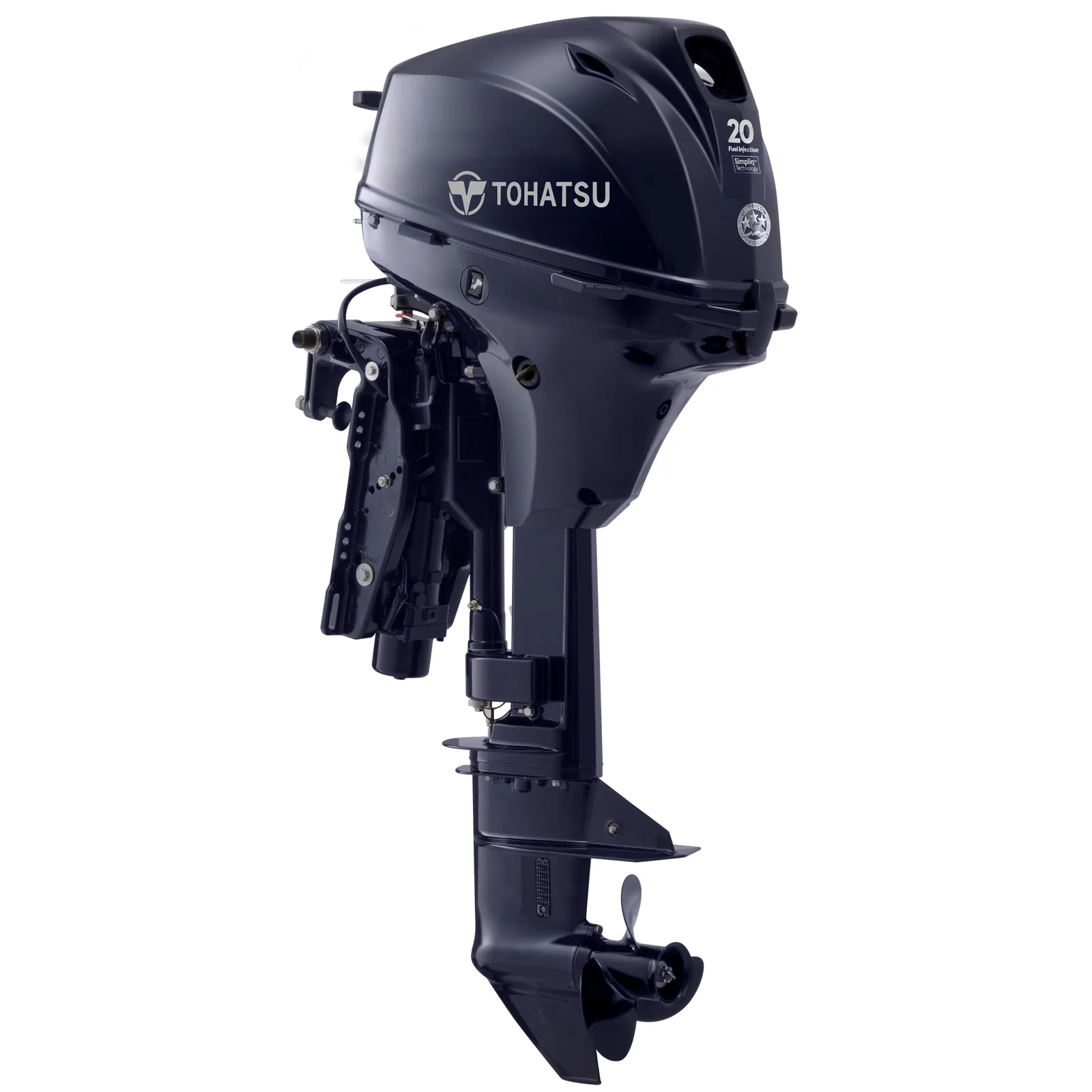 Tohatsu 20 HP MFS20EEPTUL Outboard – Remote Steer — tap to view
The capacity plate is the first number, and the hard one
A capacity plate is the small metal or plastic label near the helm, usually on the console or the inside of the transom. It gives four things: maximum persons, maximum weight of people and gear, maximum horsepower, and sometimes maximum motor weight. On single-hull powerboats under 20 feet, US federal law requires the builder to fit one, so almost every small aluminum boat, skiff and RIB has it.
Read the horsepower figure as a limit set by the builder, not a suggestion. Fitting above it is a liability problem if anything happens, an insurance problem, and a handling problem: more weight and torque on a transom designed for less. If you want more speed than the plate allows, the answer is a different hull, not a bigger motor.
Two boats have no usable plate: older hulls built before the rule, and most boats over 20 feet. For those, the builder's original rating is the reference. Send the make, model, year and length and we will match against it before anything is invoiced.
What the plate does not tell you: total weight and how you use the boat
The plate says how much the hull can carry. It does not say how much you will actually put on it, and that is what decides whether a given horsepower planes or wallows.
- Loaded weight. A bare 14-foot aluminum boat with two people planes on 15 hp. The same hull with three adults, a full livewell, a trolling-motor battery, a cooler and gear may need 20 hp to get up and stay up.
- How you run it. A tender that crosses a mooring field at 5 knots needs enough motor to push against wind and chop, not enough to plane. A skiff that runs ten miles to a flat needs to plane with the load you actually carry.
- Altitude and heat. Naturally aspirated four-strokes lose power as air thins. A rig that feels right at sea level can be marginal at 5,000 feet, and a hot, humid summer day costs a little more.
- Propeller. Pitch decides whether the motor reaches its full-throttle rpm range. A motor that is correctly sized but over-propped feels weak; the listed rpm range on each product page is the number a prop is chosen around.
Sizing bands that match what we stock
Our outboard listings run from 2.5 hp to 30 hp, across Tohatsu, Mercury, Yamaha, Honda and Suzuki, plus Mercury's Avator 7.5e electric. That covers tenders, jon boats, small skiffs, sailboat auxiliaries and kickers, which is where most of the sizing questions come from. If your plate calls for more than 30 hp, we are not the right shop for that purchase and we will tell you so.
| Boat and use | Usual range | What decides it |
|---|---|---|
| Dinghy, tender, canoe, kayak, small inflatable | 2.5–6 hp | Weight on the transom, internal versus external tank, how far you carry it |
| Sailboat auxiliary, heavy displacement hull, kicker on a bigger boat | 6–9.9 hp high thrust | Extra-long 25-inch shaft, high-thrust propeller, charging output |
| 12–14 ft aluminum utility or jon boat | 9.9–20 hp | Tiller or remote steer, manual or electric start, plate maximum |
| 14–16 ft aluminum, small skiff, RIB | 15–30 hp | Transom height, loaded weight, whether you need power tilt |
| Small pontoon or deck boat | 25–30 hp, or whatever the plate allows | The plate, not the trend: most pontoons are rated well above 30 hp |
Shaft length: the spec that decides whether it fits at all
Horsepower gets the attention, but shaft length is what makes a motor usable on your boat. Measure from the top of the transom where the motor bracket sits, straight down to the bottom of the hull at the centerline, with the boat sitting level. That measurement is your transom height.
- 15-inch shaft (short): transoms around 15 to 17 inches. Small aluminum boats, jon boats, many inflatables.
- 20-inch shaft (long): transoms around 20 to 22 inches. The most common size on 14 to 16 foot boats.
- 25-inch shaft (extra long): 25-inch transoms, sailboat auxiliaries, high-thrust kickers on offshore brackets, some pontoons.
Too short and the propeller runs near the surface, ventilating in turns and chop. Too long and you drag the gearcase, throw spray and risk grounding. This is why the same horsepower appears several times in the catalogue with different model codes: the Tohatsu MFS9.8CEFS is the 15-inch, the MFS9.8CEFL is the 20-inch and the MFS9.8CEFTUL is the 25-inch, and the 20 hp MFS20EEPL and MFS20EEPTUL split the same way.
Start type, steering and tilt
Three choices separate otherwise identical motors, and they matter more than most buyers expect.
- Tiller or remote. Tiller if you sit aft and steer by hand, which suits most boats under about 16 feet. Remote if you have a helm, a steering cable and a throttle control.
- Manual or electric start. Electric start needs a battery and a charging circuit on the boat. Many 8 to 20 hp models are offered both ways, and some electric-start models keep a manual recoil as a backup.
- Manual tilt or power tilt. Power tilt earns its weight if you run shallow water, beach the boat or trailer often. On a light tiller boat, manual tilt keeps the motor lighter and simpler.
If you are replacing a motor rather than starting from a bare hull, tell us the old model too. Control cables, harnesses and tiller handles do not always carry over between brands and generations.
What happens when you order
Nothing is charged on this site. Every listing shows its part number and full specs, and once you send the order we check it against your boat and plate before an invoice goes out. You then pay by card payment link, ACH or wire transfer, or Zelle, and shipping is priced to your ZIP and confirmed on the invoice before you pay. Parcels are dispatched in 1 to 3 business days once payment clears, then 2 to 6 business days in transit to the East and Midwest and 3 to 8 to the Plains, Mountain and West. Alaska and Hawaii are quoted case by case. Unused motors in original, unopened packaging can be returned within 30 days with no restocking fee, and every motor is new with the manufacturer's own warranty.
Browse the whole range at outboard motors, or go straight to Tohatsu outboards and the Tohatsu brand page. Shopping by brand instead: Mercury, Yamaha, Honda and Suzuki. Electric only? Start at electric outboards. For payment and returns detail, see the FAQ.