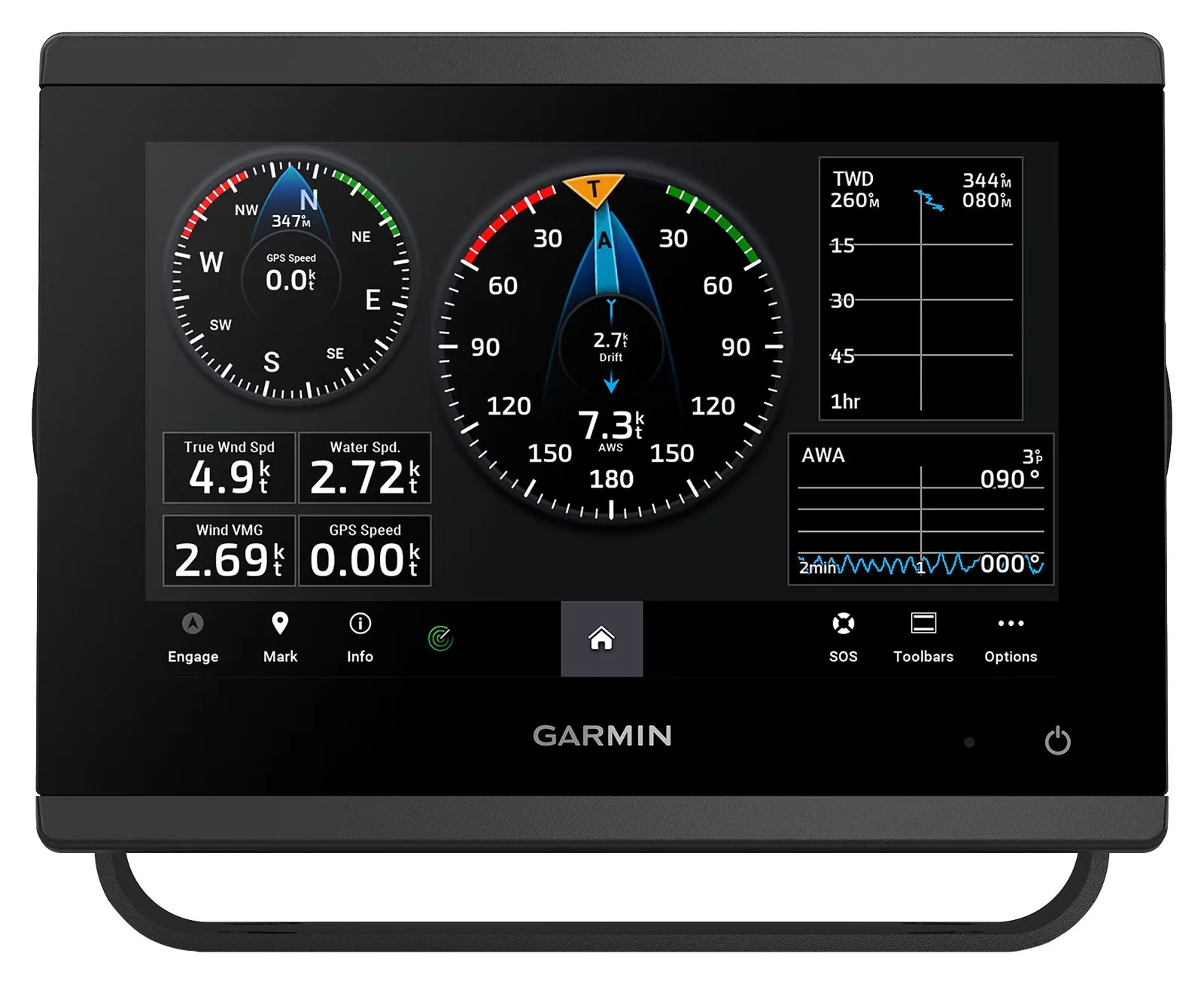
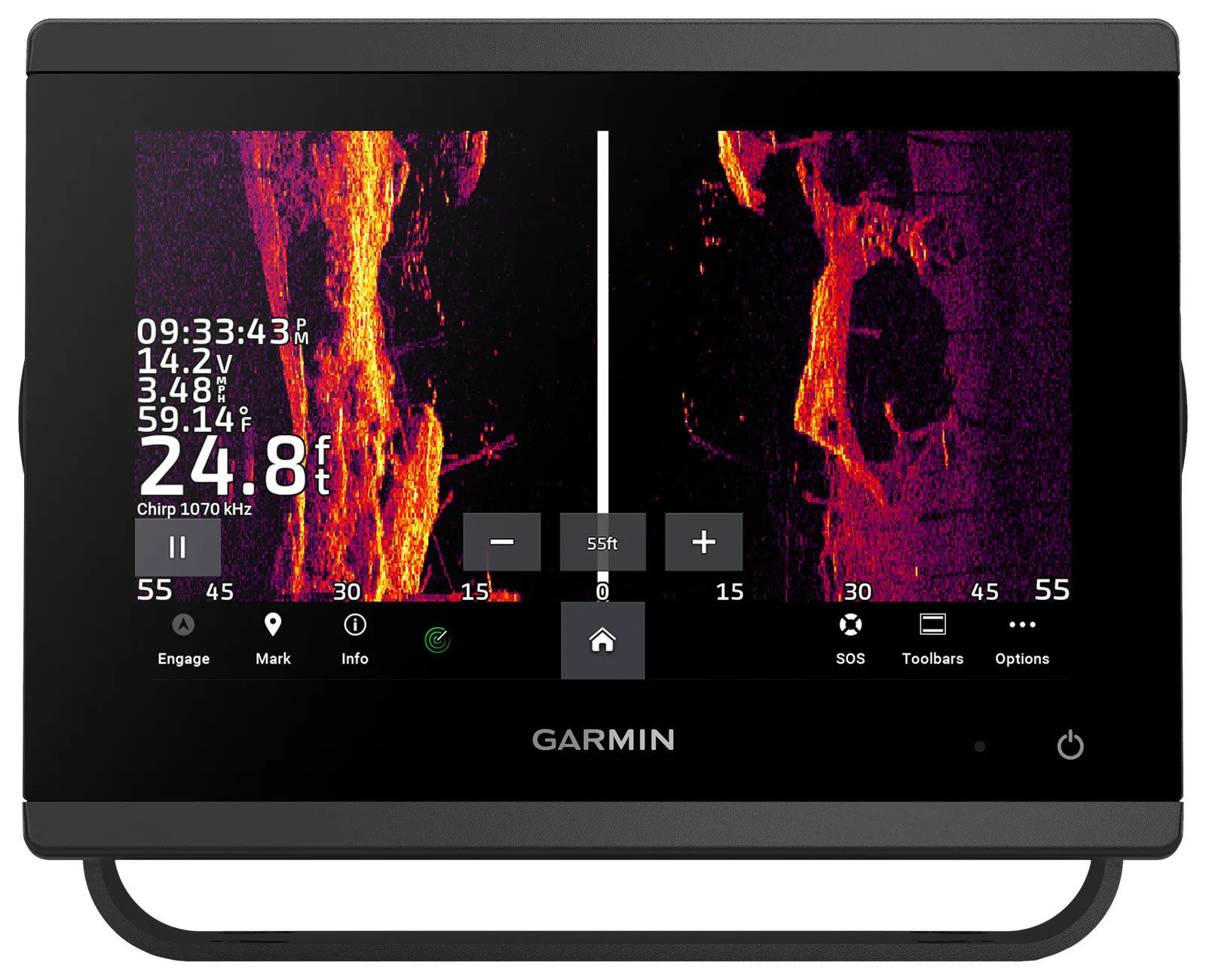
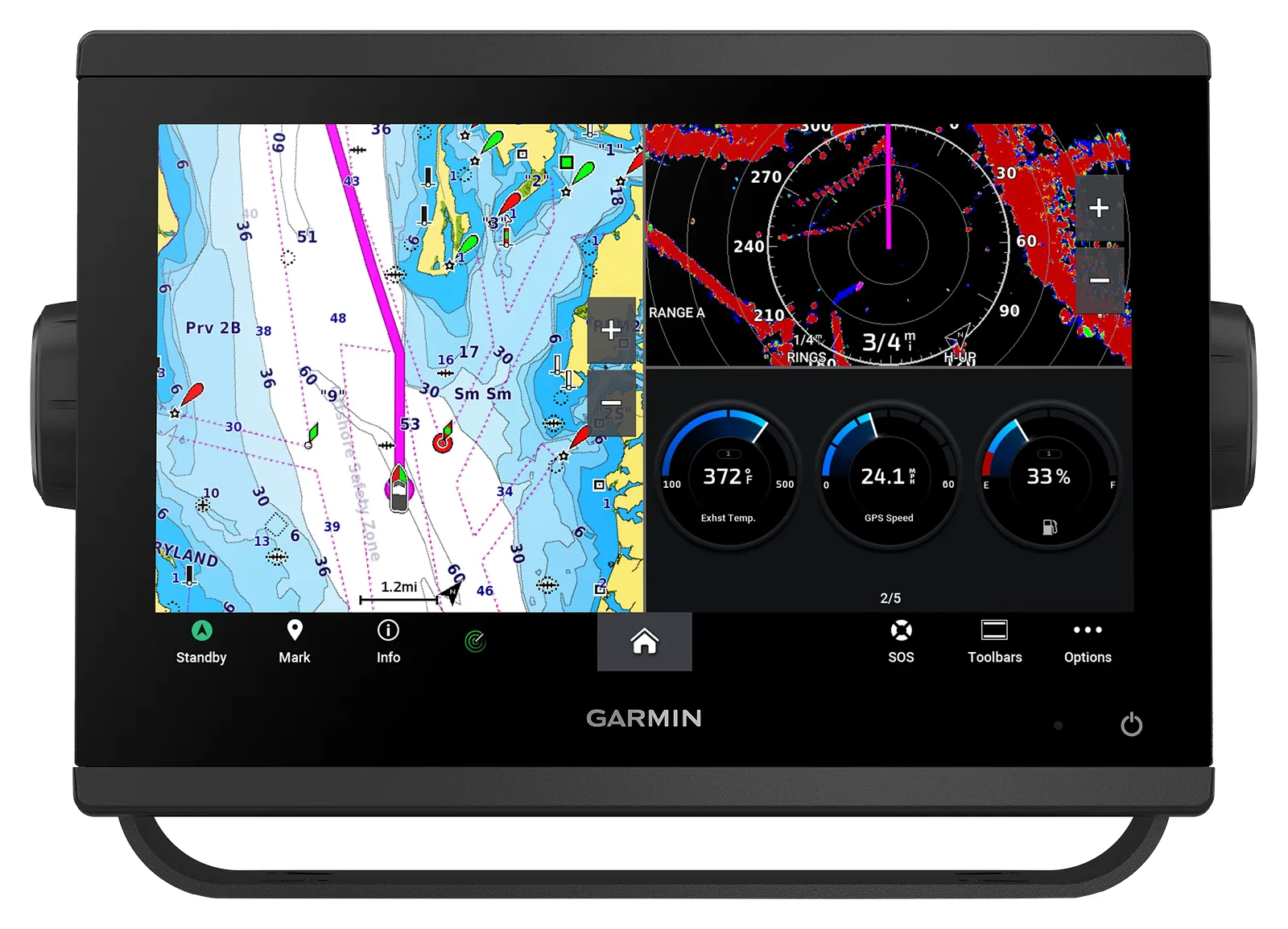
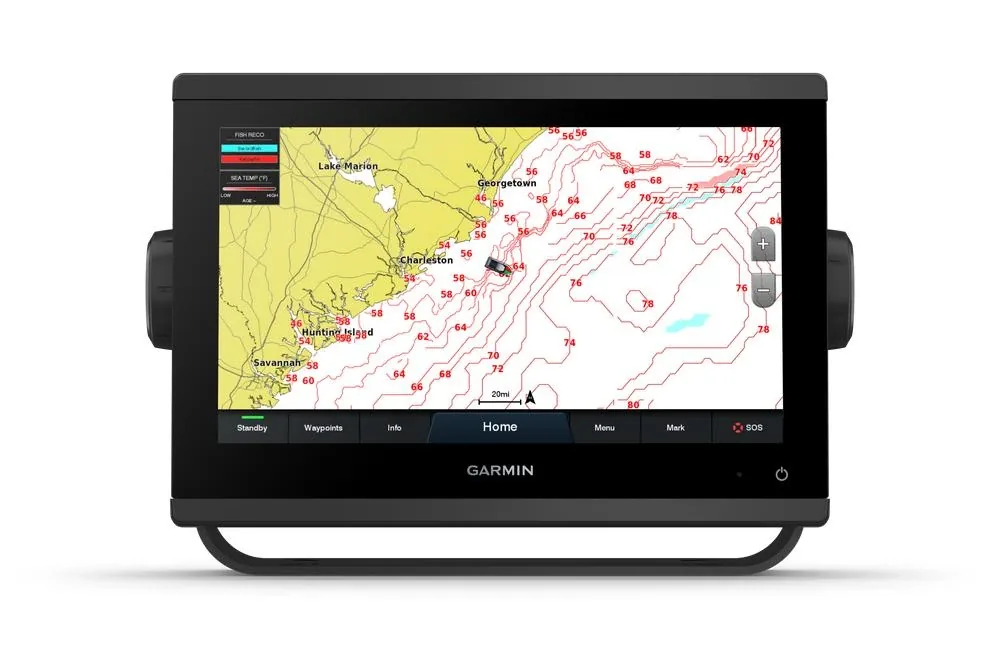
 Garmin GPSMAP 953xsv 9" Chartplotter Sounder — tap to view
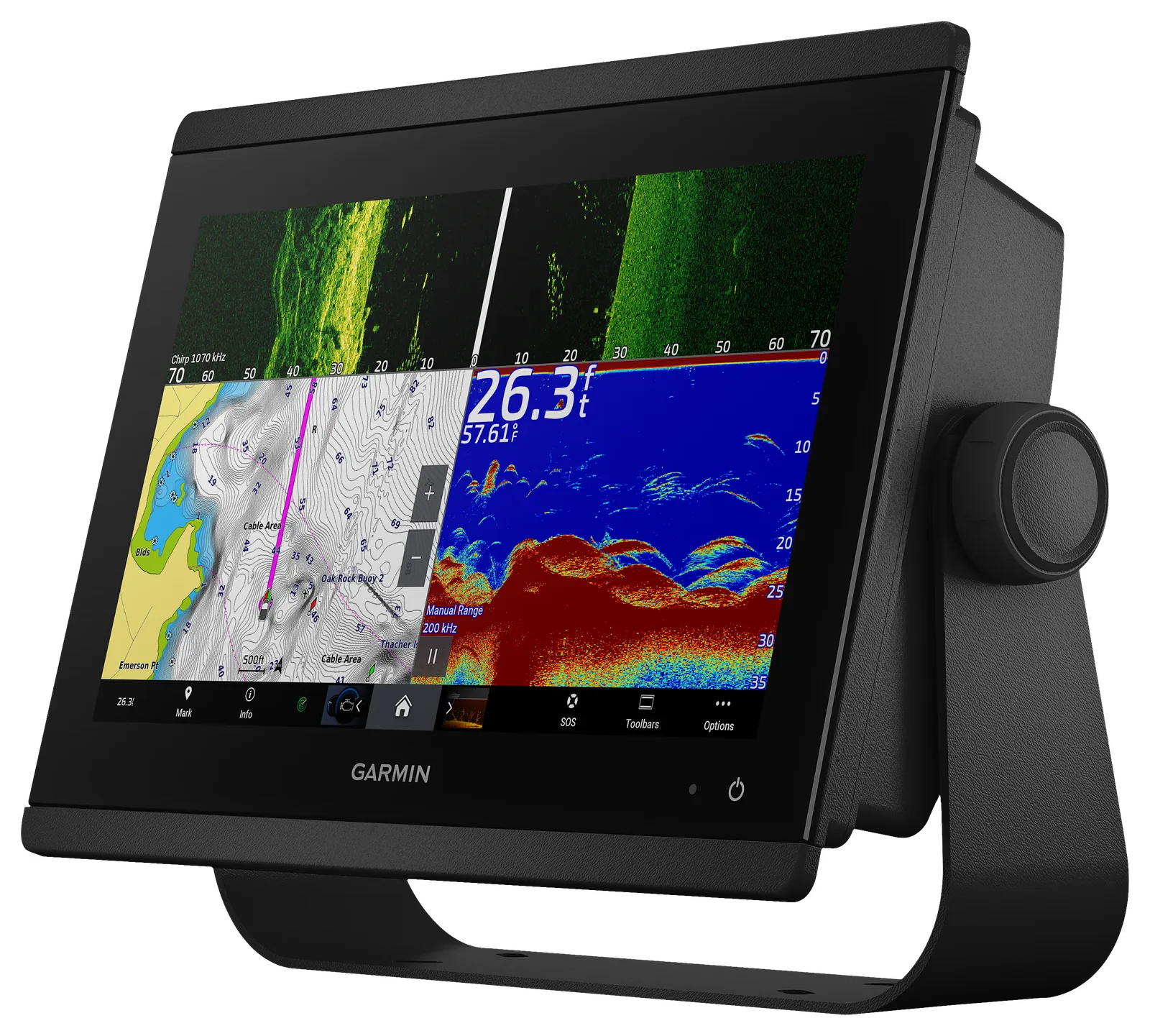
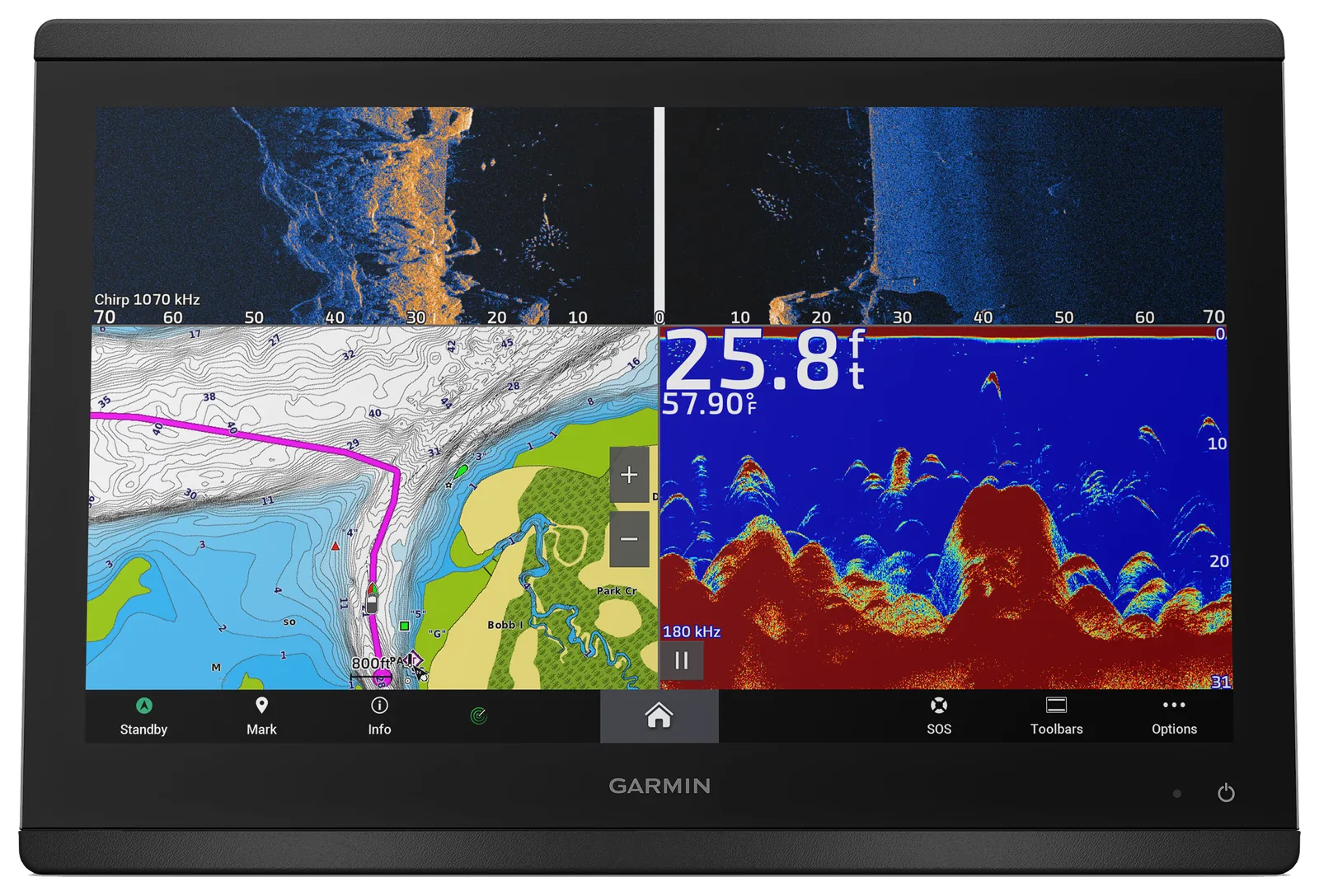
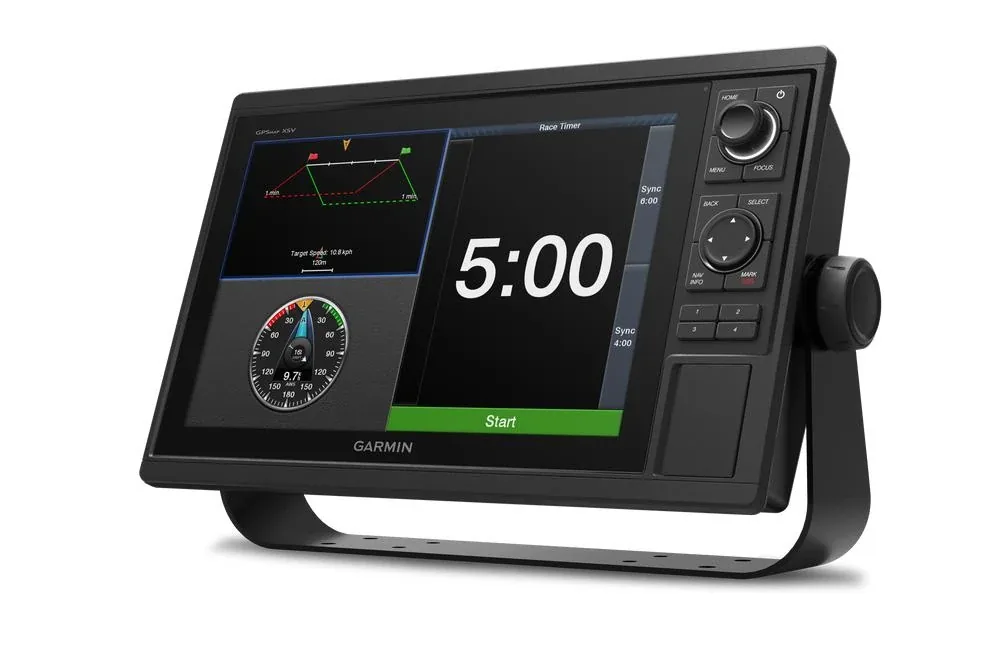
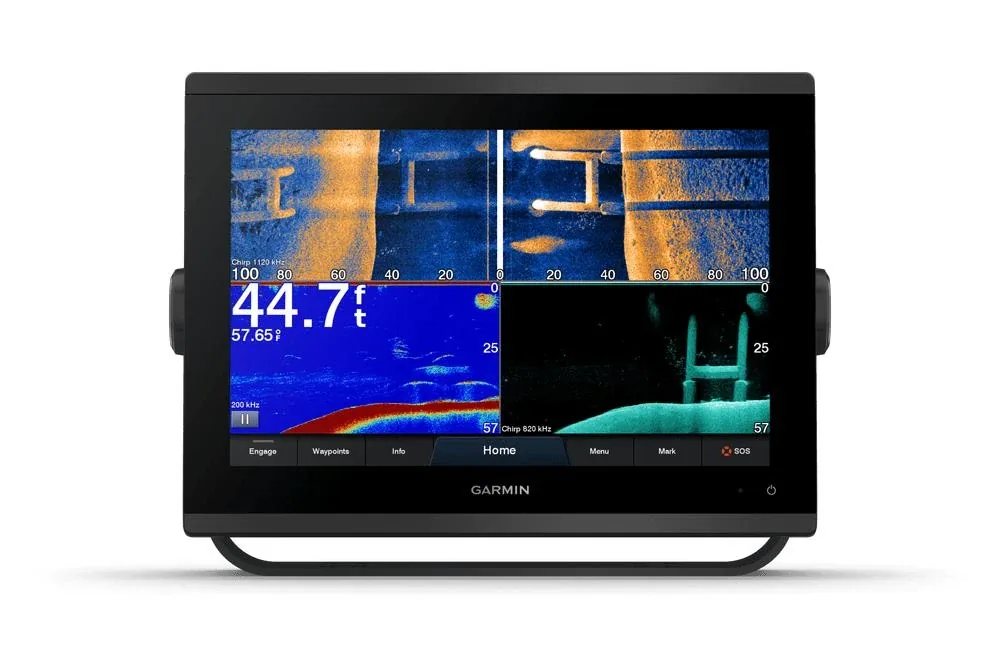
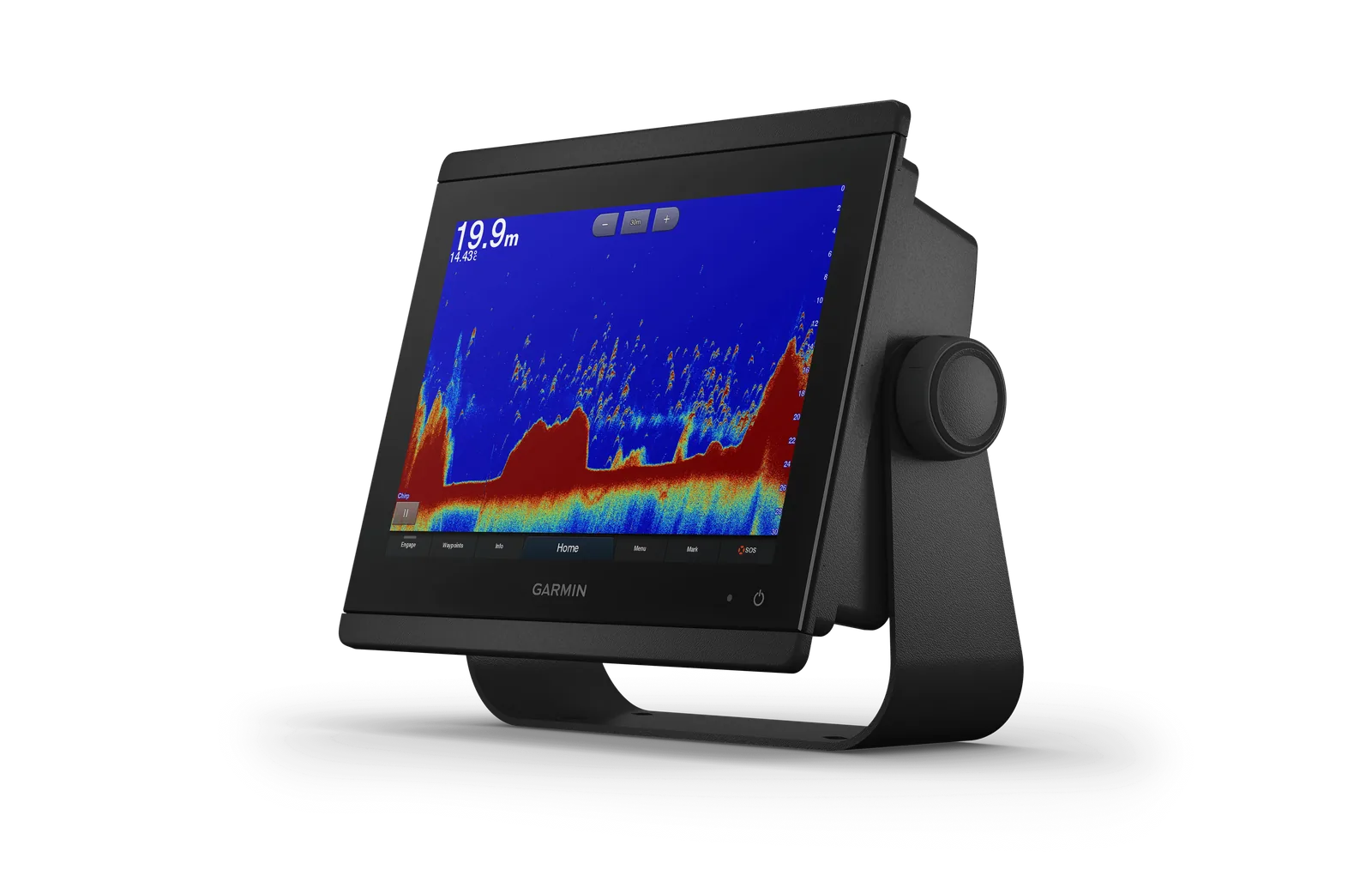 Garmin GPSMAP 8412xsv 12" Chartplotter Sounder — tap to view
Offshore is a different job from inshore. You are running a long way out in weather, reading a chart at speed on a bright screen, watching a sonar return in 300 feet of water, and often arriving at a wreck or a ledge at first light with one shot at the drift. A plotter that is too small, too dim, or that cannot take radar later will cost you more than the difference in price.
Here are the four decisions that actually separate one unit from another, using the specs Garmin publishes on its chartplotter listings.
1. Screen size against helm space
Start with a tape measure, not a brochure. On a center console, the plotter has to sit within arm's reach of the wheel and still leave the compass, the VHF and the throttle clear. A 12-inch GPSMAP is not a 12-inch hole: the 1253xsv case measures 12.1" x 8.9" x 3.2", and the 1222xsv measures 14.1" x 8.9" x 2.7". You need that depth behind the panel, plus room to clear the cables, if you are going flush.
- Flush or bail mount. Both 12-inch units above list bail or flush mounting. Bail keeps the dash intact and lifts the screen toward your eyes; flush looks factory but means cutting, and the dash becomes the limit.
- Resolution matters more than diagonal. The 12-inch units publish 1280 x 800 pixels. At that resolution a 12-inch screen splits into chart plus sonar plus a data bar without the numbers turning into mush.
- How far you stand from it. At a leaning post you are a step away from the screen; on a twin-station boat the upper helm is further. Buy the biggest screen your helm fits rather than the biggest you can afford, and check the physical case size on the listing before you commit.
2. Built-in sonar, or a black-box sounder
Garmin's GPSMAP line is sold both ways. An xsv model (GPSMAP 1042xsv, 1222xsv, 1253xsv, 1643xsv) has the sounder inside the display and lists sonar type as 2D, down scanning and side scanning. A non-sonar model such as the GPSMAP 1643 is chartplotter only.
The sonar numbers that matter offshore, as published on the xsv listings:
- 1 kW traditional and 1 kW CHIRP transmit power. That is the power class that holds bottom in deep water. Low frequency (around 50 kHz) punches deep; the higher CHIRP bands give you separation on structure and bait.
- Dual-frequency 50/200 kHz capable and dual-beam 77/200 kHz capable, so older transducers still work.
- GCV and GSD black-box sonar support, so you can add a separate sounder module later instead of replacing the display.
- ClearVü CHIRP built-in on the GPSMAP 1022xsv and 1222xsv class.
If you already own a good thru-hull transducer, buy the display that takes it, not a bundle with a transom mount you will never bolt on. Match the connector and the frequency band first; the transducer guide covers mount, frequency and power, and the transducer department lists what is in stock.
3. Can it take radar later?
The GPSMAP xsv listings carry a Garmin Radar compatible: Yes line, and that is the spec to check if radar is a next-season plan rather than this-season. Radar needs a network port, not just software: the 12-inch xsv units publish two Garmin Marine Network ports, which is what lets you run a display at the helm and share radar, sonar, charts and camera video to a second screen.
The dome-or-open-array question follows your range, not your budget:
- Dome (radome): GMR 18 HD3, Garmin GMR 18 HD+, GMR 24 xHD and the Fantom 18x / 24x class. Compact, one cable, fine for spotting weather cells, other boats and channel markers at center-console range.
- Open array: GMR 1234 xHD3, 2534 xHD3, 434 xHD3 and the 6-foot 2536 xHD3. Narrower beam, better target separation and longer range, and a much bigger footprint on the hardtop.
See the full radar department or the Garmin radar category for the models currently listed.
4. Will an autopilot connect to it?
Every model above lists NMEA 2000 compatible: Yes, which is the bus Garmin's Reactor 40 autopilots talk over. The plotter is the route source and the heading display; the autopilot is a separate purchase, and the part that decides which one you need is under the deck, not on the dash.
Garmin's Reactor 40 line splits by steering: a hydraulic corepack with SmartPump for boats with hydraulic steering, and a mechanical, retrofit or solenoid corepack for cable and other systems. Compact Reactor 40 packs are the smaller-helm option. Many packs ship with the GHC 50 instrument, or you can buy the corepack alone if you already have a control head. Check what your boat has before ordering: hydraulic, mechanical, solenoid, and the ram or pump already fitted. The Garmin autopilot category lists both, and the autopilot department covers the other brands.
Which size for which boat
| Helm | Real models in the catalogue | Why |
|---|---|---|
| Small center console, tiller or single screen | GPSMAP 743 and 743xsv (7"), GPSMAP 943 (9"), ECHOMAP Ultra 2 10" 102sv | Fits a narrow dash, keeps the compass clear, LiveScope compatible on the 743 and 943 |
| Typical offshore center console, single helm screen | GPSMAP 1042xsv (10"), GPSMAP 1243 and 1222xsv / 1253xsv (12"), GPSMAP 9010xsv (10"), 9013xsv (13") | 1 kW sonar, two network ports, room for a split chart-plus-sonar view |
| Sportfisher, twin helm screens or glass bridge | GPSMAP 8412xsv (12"), 1643 (non-sonar), 1643xsv, 8416xsv / 8616xsv (16"), 9017xsv (17") | Garmin Marine Network shares radar, sonar, charts and camera video across displays |
Note the difference in that last row: the GPSMAP 1643 is chartplotter only. If your sonar already lives in a black box, a non-sonar display is the cheaper way to a big screen; if it does not, take the xsv version.
Charts, mapping and the small print
Preloaded mapping varies by model, and the listing says which. The GPSMAP 1253xsv ships with BlueChart g3 coastal maps; several other GPSMAP and ECHOMAP units ship with Garmin Navionics+ mapping. Others show preloaded maps as none, and take a card in one of their SD slots. If you fish a specific canyon, ledge or wreck field, plan the card as part of the purchase and check the region on the navigation charts page.
Also check the boring lines: IPX7 water rating, power draw (the 1222xsv lists a typical 2.2 A at 12 V and a maximum of 2.9 A, which matters on a small house battery), AIS target display, and wireless connectivity if you want the plotter on a tablet at the helm.
A five-minute checklist before you buy
- Measure the dash cutout and the depth behind it. Write the numbers down.
- Decide flush or bail mount, and whether the screen needs to tilt.
- List what you already own: transducer model and connector, radar model, autopilot, VHF.
- Decide whether radar and autopilot are this year or next. If next, buy the unit with the network ports and NMEA 2000 now.
- Choose sonar or non-sonar based on whether a black box is already aboard.
No chartplotter is a fit until it is checked against the boat it is going on. Deepline reviews your hull, helm space and existing gear before it invoices, so the unit that arrives is the one that mounts and connects. Send your boat, your dash measurements and your current transducer model through contact, or browse the full chartplotter department and the Garmin chartplotter category.