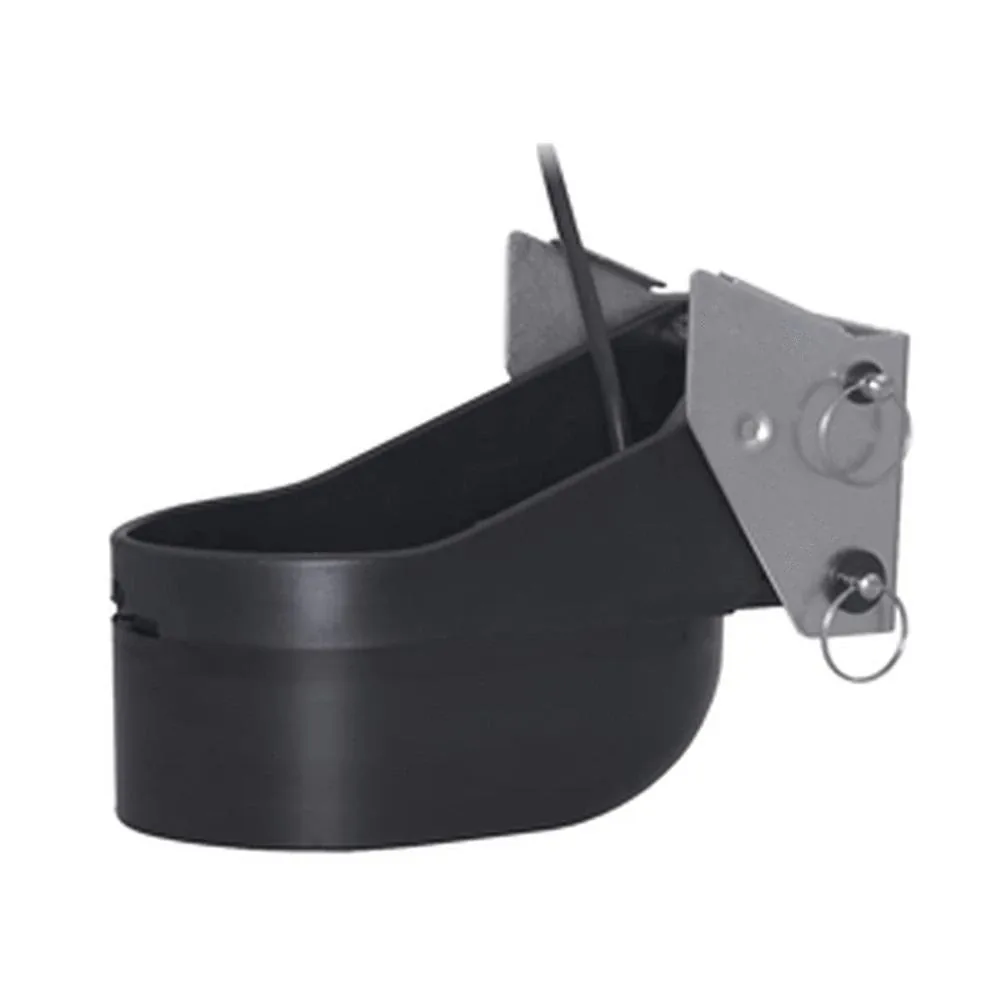
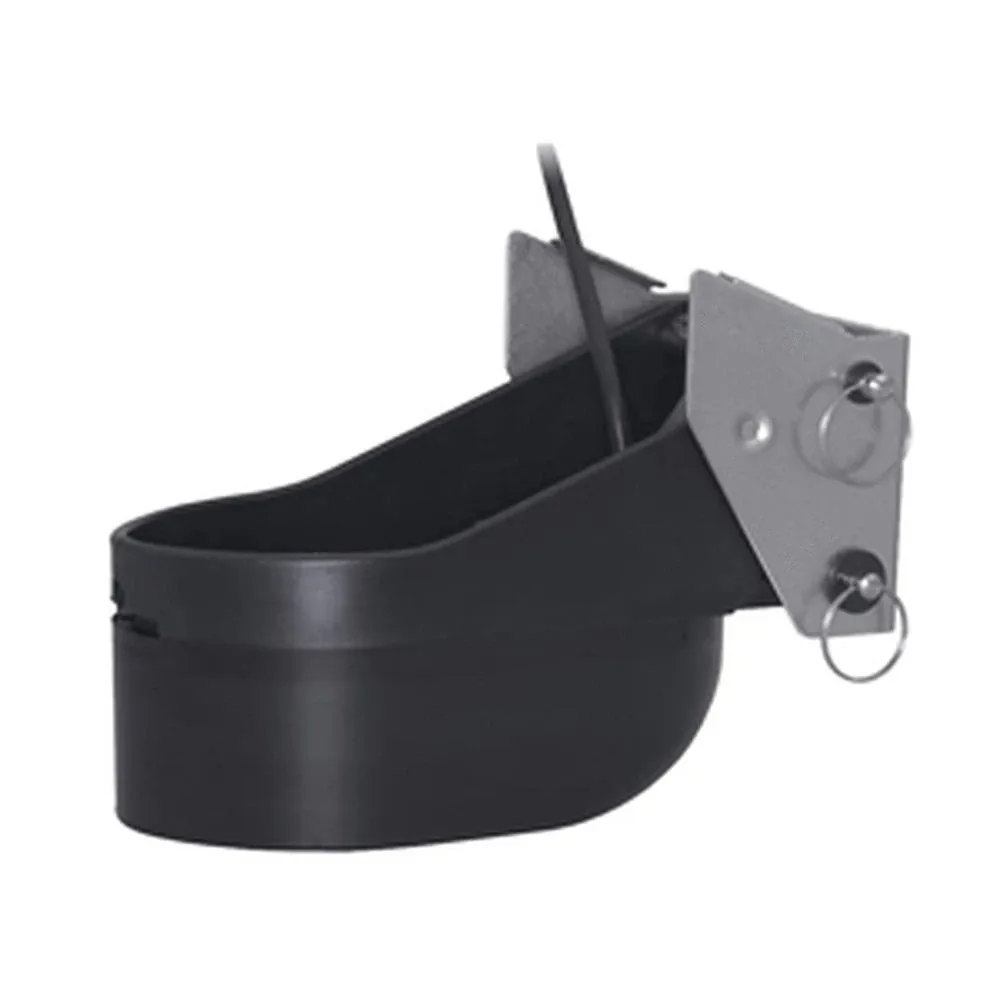
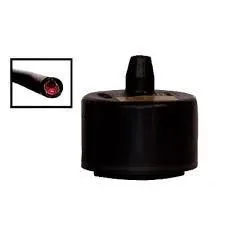
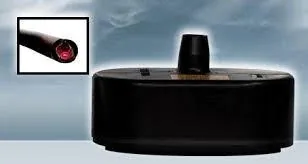
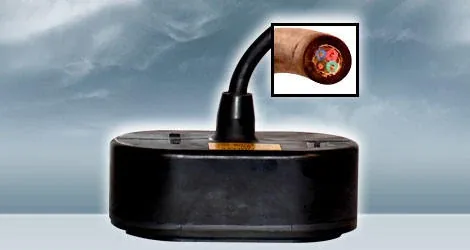
 Furuno 50/2001T - 50/200kHz Transducer Rubber Housing — tap to view
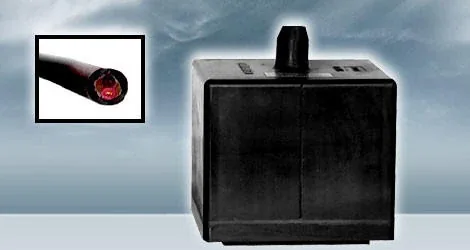
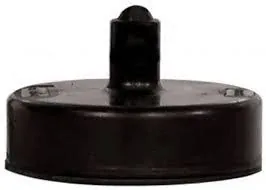
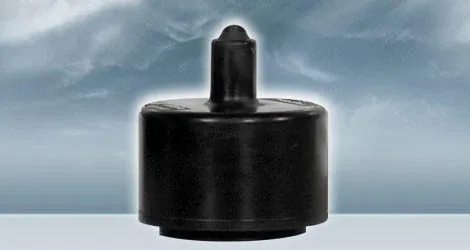
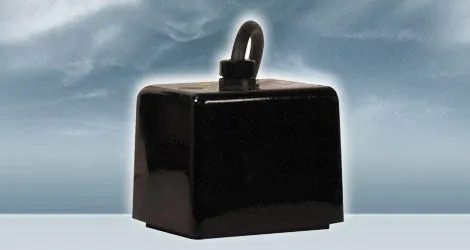 Furuno 28BL-6HR - 28kHz Transducer with Rubber Housing (Replaces 28F-18) — tap to view
What sets your depth limit
Three things, in this order: the frequency you transmit, the power going into the water, and the sounder's ability to drive the transducer you picked. Screen size comes last. A 7-inch head driving a 1 kW 50 kHz transducer will hold bottom in 1,200 feet of ocean; a 16-inch display driving a 600 W transom puck will not, whatever you do with the gain.
If you want the general ground rules on mounts, frequencies and connectors, they are in the transducer guide. This page is about the deep-water end of the catalog: the low-frequency, high-power transducers built for bottom fishing in 500 to 2,500 feet, and the sounders that run them.
28, 38 or 50 kHz
Sound at 28 kHz loses far less energy on the round trip to the bottom than sound at 200 kHz. Furuno has always built transducers at 28, 38, 50, 88 and 200 kHz so the skipper can pick the trade-off, and for bottom fishing the low end is where you live.
- 50 kHz is the deep all-rounder. It reads bottom past 1,000 feet at 1 kW and carries a 28-degree beam that shows bait and structure around the boat as well as the bottom under it. Most swordfish and tilefish boats run 50 kHz as the working frequency.
- 38 kHz buys more penetration for the same power. When 50 kHz starts going soft and noisy in 1,200 feet plus, 38 kHz keeps a cleaner bottom trace.
- 28 kHz is the deep-drop frequency. It is the one that still sees bottom when everything else has given up, and the one that gives the least target separation. You pick it for depth, not for detail.
- 200 kHz stays in the system for the shallow end: tight beam, crisp detail, useless past a few hundred feet.
A 50/200 kHz dual-frequency transducer covers inshore and mid-depth work well, but it is a compromise transducer. If your fishing is bottom in 800 feet and deeper, a dedicated 28 or 38 kHz element alongside a high-frequency one beats a single dual-frequency unit every time.
What each power rating buys
Furuno publishes general guidelines with a wide spread: roughly 800 to 1,200 feet at 600 W, 1,800 to 2,500 feet at 1 kW, and 2,500 to 4,000 feet at 2 kW. Salinity, water temperature, bottom hardness and sea state all move those numbers, so treat them as a class of performance rather than a promise.
The mechanics are worth knowing. Halving the frequency gains you more depth than doubling the power does, and doubling the power buys roughly 20 to 25 percent more depth. That is why a 28 kHz 1 kW transducer out-reads a 50 kHz 2 kW unit in the same water, and why the two levers are usually pulled together on a serious deep boat.
One hard rule: the sounder's output must never exceed the transducer's rating. A 2 kW output into a 1 kW transducer will damage it. Match the watts in both directions.
Beam angle matters more down deep
At 1,500 feet a 31 by 34 degree beam from the Furuno 28F-8 is covering an enormous circle of seabed, and every fish inside it shows as part of the same smear. That is useful for finding bait and structure, and useless for telling a wreck from a rockpile.
Step up the power and the beam tightens. The 28BL-12HR is 3 kW at 16 by 21.5 degrees, the 50BL-24HR is 3 kW at 9 by 14 degrees, and the 50F-38 is 5 kW at 8 degrees. Narrow beams put more energy on target, hold a cleaner bottom line, and make it possible to stay over structure in current. Wide to find, narrow to hold: most deep boats end up with one of each.
The transducers that fit this job
| Model | Frequency | Power | Beam | Mount |
|---|---|---|---|---|
| Furuno 28F-8 | 28 kHz | 1 kW | 31 x 34 degrees | Tank or chest, rubber housing, 15 m cable with no plug |
| Furuno 28BL-6HR | 28 kHz | 2 kW | 22 x 32 degrees | Tank, FRP housing |
| Furuno 28BL-12HR | 28 kHz | 3 kW | 16 x 21.5 degrees | Tank, FRP housing |
| Furuno 38B-9HR | 38 kHz | 2 kW | - | Tank |
| Furuno 38B-15HR | 38 kHz | 3 kW | - | Tank |
| Furuno 50B-6B | 50 kHz | 1 kW | 28 degrees | Tank or chest, rubber housing, 15 m cable with no plug |
| Furuno 50B-9B | 50 kHz | 1 kW | 12 x 28 degrees | Tank or chest, rubber housing |
| Furuno 50BL-24HR | 50 kHz | 3 kW | 9 x 14 degrees | Tank, rubber and FRP housing |
| Furuno 200B-8B | 200 kHz | 2 kW | 5.5 degrees | Tank or chest, for the shallow half of a split |
| Furuno TM-260 | 50/200 kHz | 1 kW | - | Transom bracket, 10-pin plug |
The tank-mounted low-frequency units are heavy, in the region of 13 lbs for the 28F-8 and 6 lbs for the 50B-6B, and they are not something you bolt to a hull. They live in a tank or sea chest built into the boat, in a hole cut below the waterline. Above 3 kW you are into the 5 kW 28F-38M and the 10 kW 28F-72, which only the largest sounders can drive.
Matching the transducer to the sounder
Two routes into deep water:
- A dedicated sounder. The FCV-295 and FCV-1150 are the classic deep-water heads, and Furuno's own accessory list for them runs from the 1 kW 50B-6B all the way to the 10 kW 28F-72. The FCV-588 and FCV-628 handle the 1 kW single-frequency and 50/200 transducers, and are the usual choice for a smaller deep boat.
- A black box on the network. A DFF3-UHD TrueEcho CHIRP network sounder behind a TZtouch multifunction display takes the higher-power low-frequency transducers and renders on the glass you already have. That is how a boat with a 16 or 22 inch display ends up running 28 kHz properly.
Check the interface before you buy, because the watts are not the only thing that has to line up. The TZtouch3, for example, transmits 50/200 kHz CW and 40 to 225 kHz CHIRP, shows a range down to 1,200 m, and rates its own sounder connection at 300/600 W or 1 kW. Its transducer specification also notes that some Furuno transducers need the MB-1100 matching box, which has a 10-pin connector. Fit the wrong box or skip it and a 3 kW transducer is just ballast.
The other thing that catches people out is the cable. Most of the tank-mounted transducers ship with 10 or 15 meters of cable and no connector at all, because the run and the termination are part of the install. That is a job for whoever installs the tank, not a plug-and-play swap.
If you cannot cut the hull
A lot of deep fishing is done from trailered center consoles and boats with cored or foam-filled hulls that nobody wants to hole. The Furuno TM-260 is the answer in this catalog: 1 kW at 50/200 kHz, transom bracket, 10-pin plug, no tank and no fairing block.
Be honest about what it costs you. A transom transducer sits in aerated water, so it can lose bottom at cruise and in a following sea, and its 1 kW of 50 kHz is a 1,000 to 1,200 foot tool rather than a 2,000 foot one. It also has to be mounted where it stays wet, clear of strakes, tabs and the lower unit. For a boat that already has a hole in the hull, a bronze thru-hull such as the Furuno 235DT series or the 200B-5S sits in solid water and holds bottom far better in a seaway, and the 50/2001T gives you both frequencies in one housing at 1 kW.
Reading bottom at 1,500 feet
The screen behaves differently down there, and a few habits save a lot of guessing.
- Run manual gain. Auto gain tends to lift the noise floor at depth and paint clutter as fish; set the gain by hand until the bottom line is solid and the water column is clean.
- Set the range in feet, not on auto. Auto range keeps rescaling and hides how the bottom is changing.
- Slow the picture advance at depth. The echoes are weaker and further apart in time; a slower scroll lets you read them.
- Expect a soft, wide bottom trace on a wide low-frequency beam. That is the beam, not a bad installation.
- Watch for the deep scattering layer at night. It looks like a false bottom and it moves.
Before you order
Send the display or sounder model, the depth you normally fish, and the hull material. Deepline checks the transducer, its power rating, the cable and the connector against your head unit before an invoice goes out, and if the match needs a matching box or a different power class it will say so before you pay. Nothing is charged on the site.
Browse the Furuno transducers, the Furuno sounders and the rest of the transducer range, or send the details and get the pairing checked.