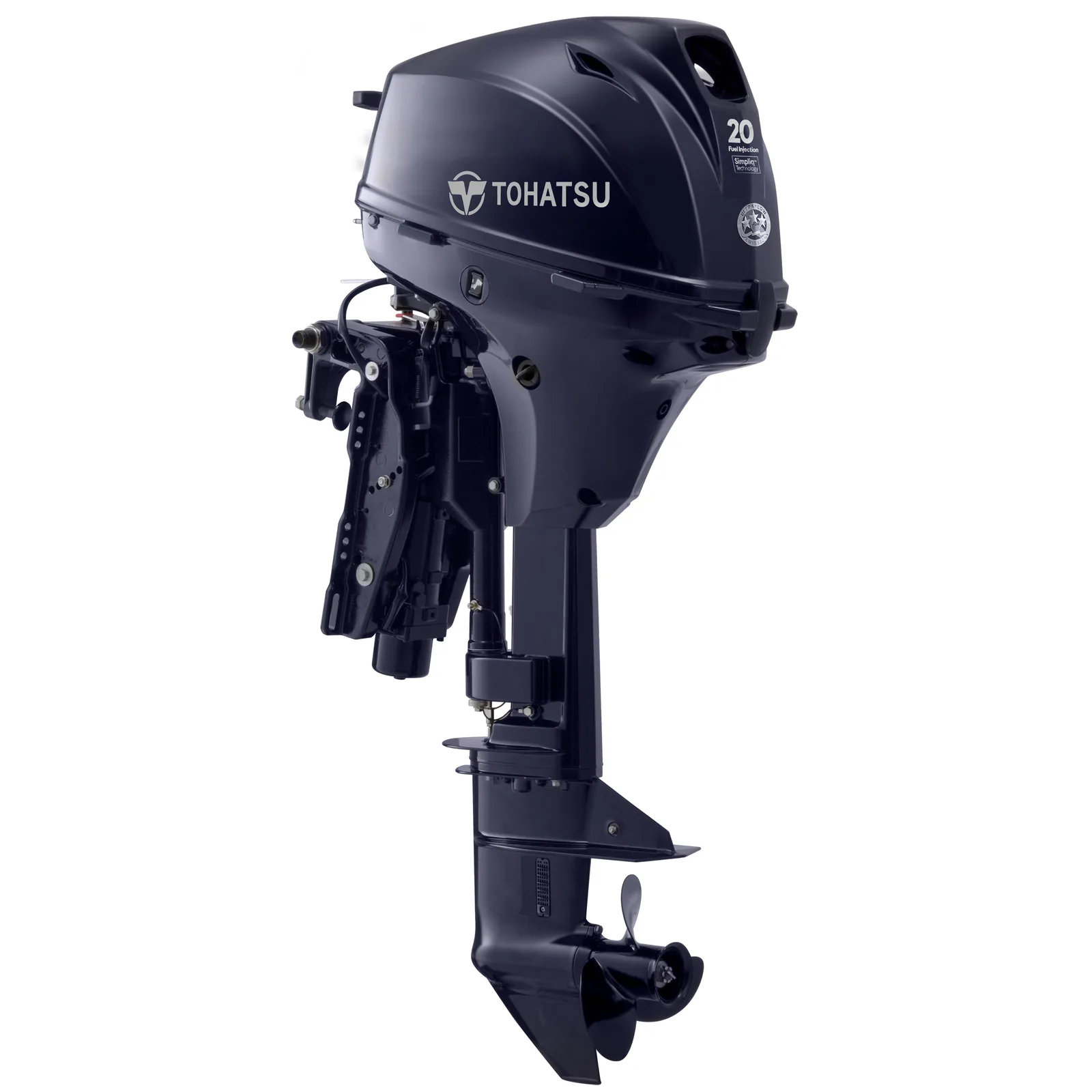
 Tohatsu 20 HP MFS20EEPTL Outboard – Remote Steer — tap to view
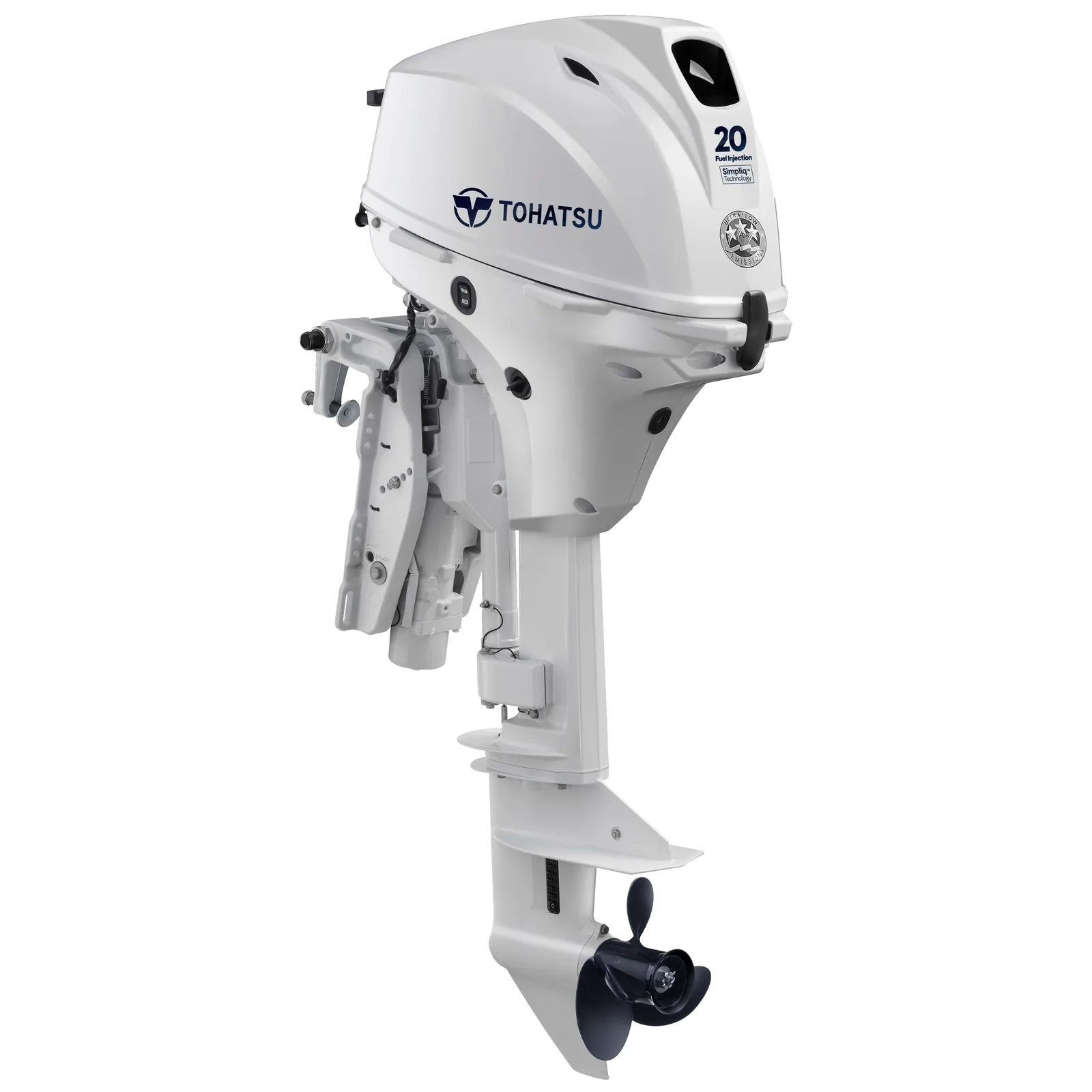 Tohatsu 20 HP MFS20EWEPTL Outboard – Remote Steer — tap to view
Why put the sounder in a separate box
Three reasons, and they are the only three that matter. The first is power: a display's built-in sounder is usually 600 watts, and a separate module can push 1 kW or more into the water. The second is channels: one box can run two independent CHIRP channels, or 3D, side and down sonar at the same time, without loading the display's own processor. The third is position: the module can sit in a dry locker a short cable run from the transducer, so you are not dragging a long transducer lead up to the helm and you are not forced to buy a new display to get better sonar.
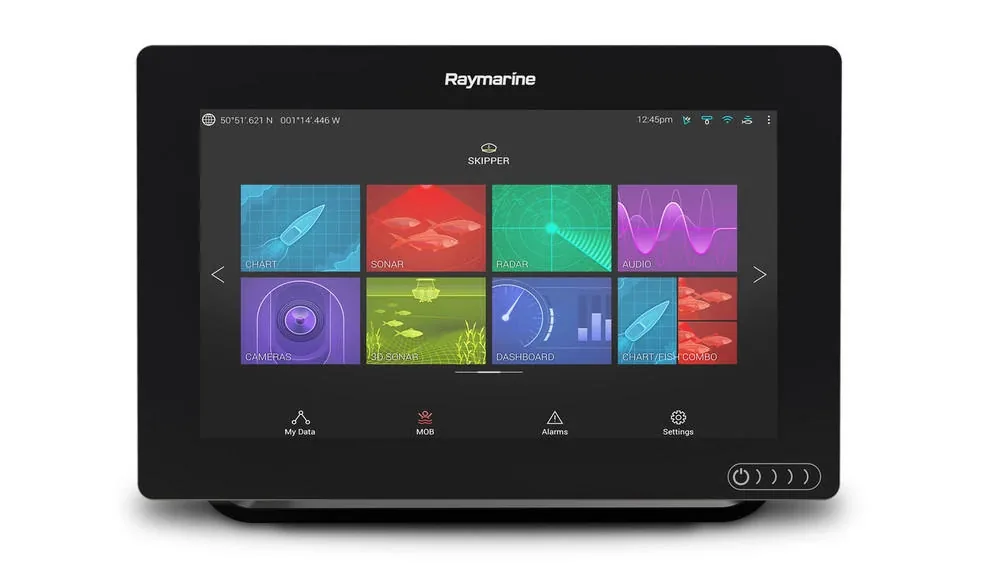
What a module does not do is replace your display. You still need a compatible multifunction display on the same network, and the sonar window appears there alongside your charts, radar and autopilot. If you are starting from nothing, a display with sonar built in is usually the cheaper way in — see the GPS chartplotters. A module makes sense when the display is already on the boat and the sonar is the weak part.
The Raymarine line, and what separates the four
| Module | Sonar | Power | Channels | Where it fits |
|---|---|---|---|---|
| CP370 | ClearPulse digital, 50/200 kHz | 1 kW | One | Straightforward coastal and offshore bottom and fish reading, and the direct replacement for a CP300 |
| CP470 | Wide-spectrum CHIRP, 25–250 kHz | 1 kW or 2 kW depending on the transducer | Two CHIRP channels from one transducer connection | Target separation inshore and offshore on a single CHIRP transducer |
| CP570 | Wide-spectrum CHIRP, 25–255 kHz | 2 kW per channel, 4 kW combined | Two fully independent channels | Two transducers run at once — tournament and charter work |
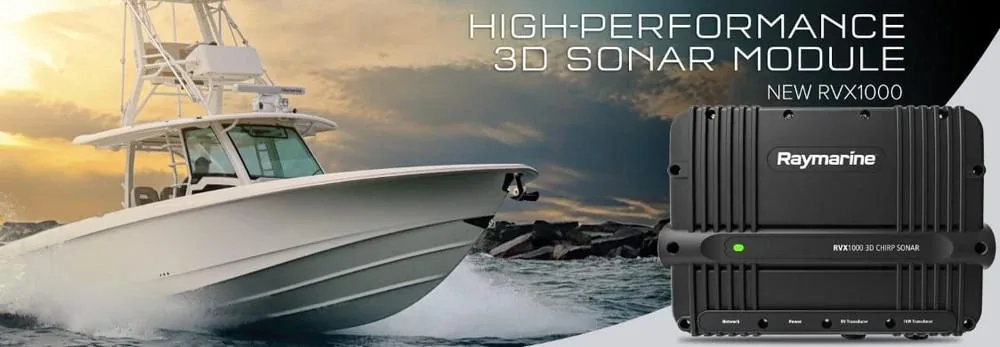
| RVX1000 | RealVision 3D, CHIRP SideVision and DownVision, plus 1 kW CHIRP | 1 kW on the deep CHIRP channel | Five | One box covering 3D, side, down and deep water |
CP370 ClearPulse
The plain one, and often the right one. The CP370 is a 1 kW digital module running 200 kHz for inshore work and 50 kHz for offshore, rated to track bottom down to 5,000 ft (1,500 m). ClearPulse handles gain and filtering itself, so there is less to tune. It is not CHIRP, and it should not pretend to be: what you get is a strong, simple, dual-frequency picture that reads well at speed and in rough water.
CP470
The CP470 is the CHIRP step up. It runs two CHIRP channels across 25–250 kHz, sweeps a band of frequencies instead of pinging single ones, and gets the target separation that comes with it — bait balls that show as bait instead of a smudge, and a thermocline you can see. Power is 1 kW or 2 kW depending on which transducer you connect, and Raymarine rates it to 10,000 ft (3,000 m) with a matching transducer. The listing states compatibility with Raymarine a/c/e/gS Series displays.
CP570
Same idea, more of it, and built for two transducer cables. Each of the CP570's two channels is good for 2 kW, 4 kW combined, across 25–255 kHz. In practice that means a low-frequency transducer for deep bottom and a high-frequency one for the top of the water column, both live at once, on split screens you build yourself. It is a 12/24 V box drawing about 30 W maximum, IPX6, and it carries Airmar's transducer ID so it recognises what is plugged in.
RVX1000
The RVX1000 is the odd one out and the most useful for inshore fishing. It is essentially the sonar half of an Axiom Pro in a remote box: RealVision 3D, CHIRP SideVision, CHIRP DownVision, a low-power high-frequency CHIRP channel and a 1 kW deep CHIRP channel, five in total, on its own quad-core processor. Raymarine positions it as a sonar upgrade for eS and gS Series displays — older screens that never had 3D and now can.
The transducer decides more than the module does
This is where most of these orders go wrong. A module cannot make a transducer do something it was not built for, and the cable matters as much as the ceramic.
- CP370 wants a 1 kW, 50/200 kHz transducer. A 600 W transducer will not deliver 1 kW, and a CHIRP transducer will not turn the CP370 into a CHIRP sounder.
- CP470 and CP570 want CHIRP transducers — low, medium or high CHIRP, single or dual element, standard or wide beam. A plain 50/200 kHz transducer will run, but you are paying for CHIRP and not getting it.
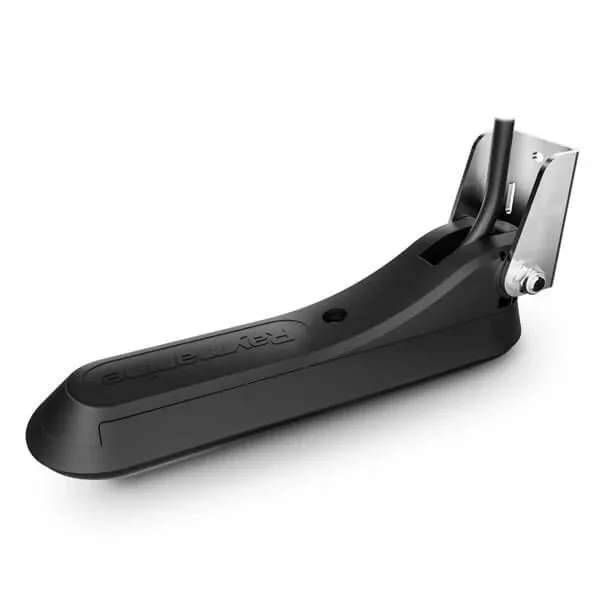
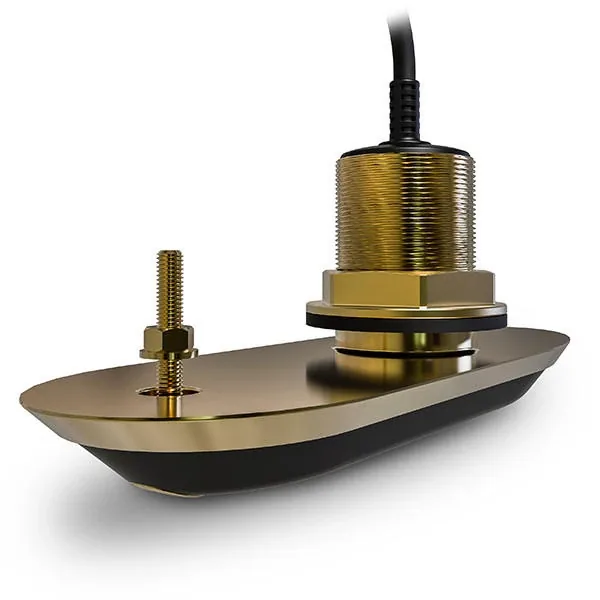
- RVX1000 wants RealVision 3D transducers. The RV-100 is the transom-mount option and the RV-200 the bronze thru-hull; a standard sounder transducer will not produce 3D, side or down imagery on it.
Frequency, beam width and mount decide how the picture looks far more than the box does. The transducer guide covers mount types, 50/200 against CHIRP, and how power and beam angle change what you see, and the Raymarine transducers page lists what is available to pair with each module.
Five things to check before you order
- The display model and its software version. Not the series — the model, and the Lighthouse version on it. This is the single question that decides whether a module will be seen on the network at all.
- A free RayNet port. Each module needs a network connection, and if the helm already runs radar, an autopilot and a second display, you may need a network switch as well as the module.
- The transducer already fitted. Read the part number off the cable tag, not the box the boat came with. If it is a 600 W transom-mount, the module budget has to include a new transducer.
- Power at the mounting spot. A 12/24 V feed with a fuse, close to where the box will live. The CP570 draws about 30 W maximum; it is not a load you want on a shared accessory circuit.
- Software that matches. Raymarine's own software notes are blunt about this: the latest CP470 and CP570 firmware drops support for a/c/e/gS Series displays running Lighthouse II or III unless the module is downgraded to the older release, and an Axiom updated past v3.14.88 needs its modules updated too. It is a firmware question, not a hardware one, but it decides whether the install works on the day.
Where the box goes
A dry locker or console, above the waterline, within a short cable run of the transducer, with the RayNet cable going forward to the helm. Not in the bilge, not where it takes spray, and not somewhere you cannot reach the transducer connector without emptying the boat. The transducer cable is the one lead you cannot extend cheaply, so the module follows the transducer, not the other way round.
What a module will not fix
It will not fix a transducer mounted in prop wash or behind a strake — that is a mounting problem and the picture will still break up at speed. It will not add sonar to a display from another brand; these are Raymarine modules speaking RayNet to Raymarine multifunction displays. And it is not forward-facing live sonar, which is a different product for a different job on a different boat. If any of those is the actual problem, a module is the wrong purchase and we will say so.
Tell us your display model, its software version and the transducer you have — or the one you are considering — and we will match the module, cable and transducer before you pay. Send us the details or read the FAQ.