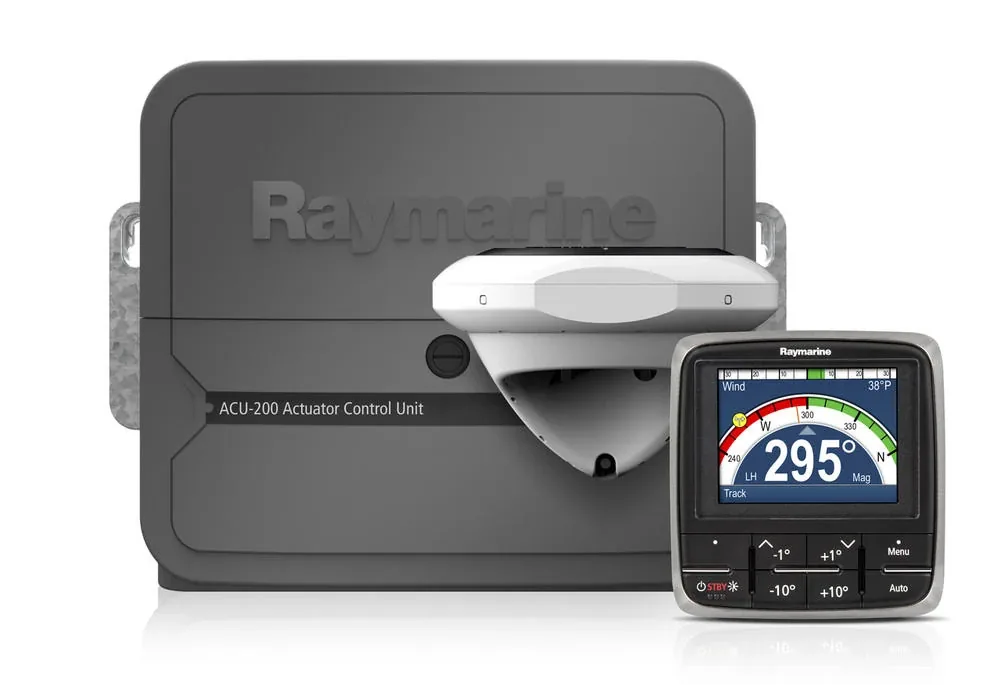
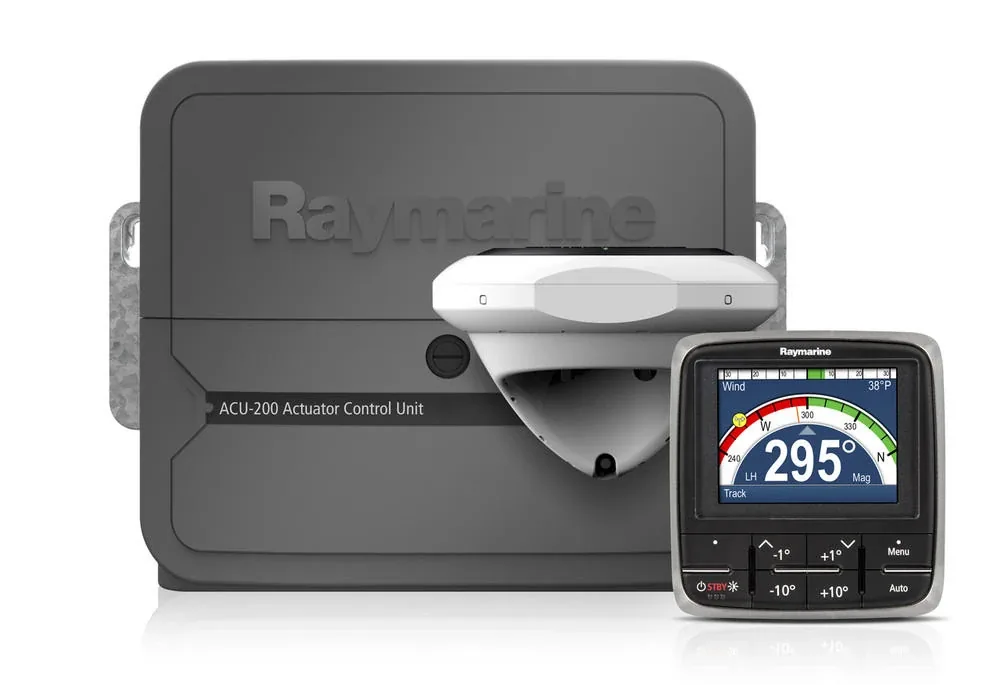
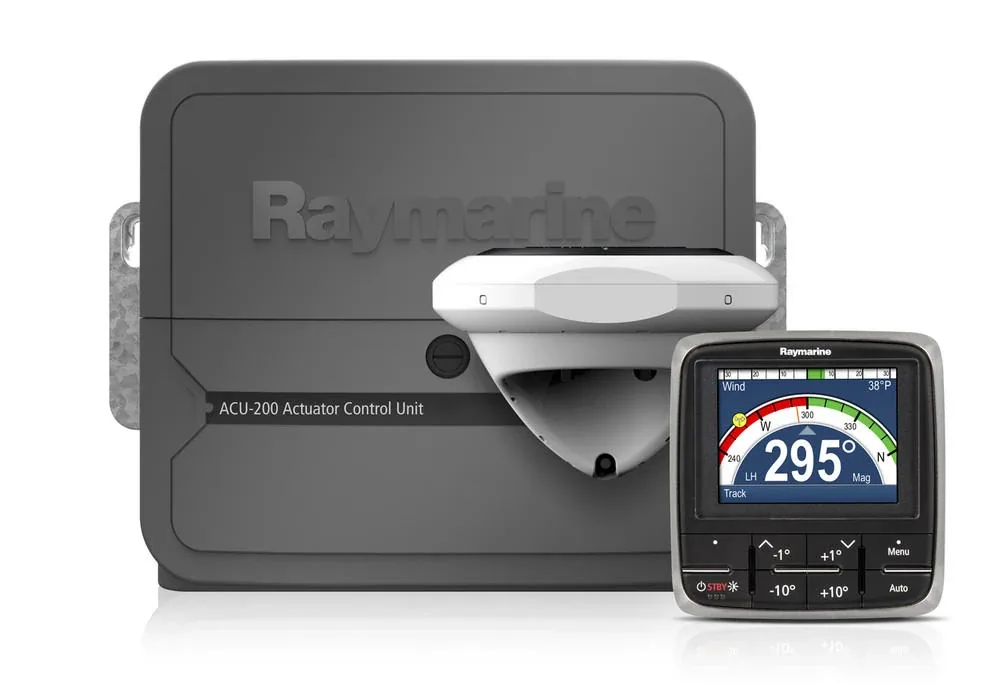
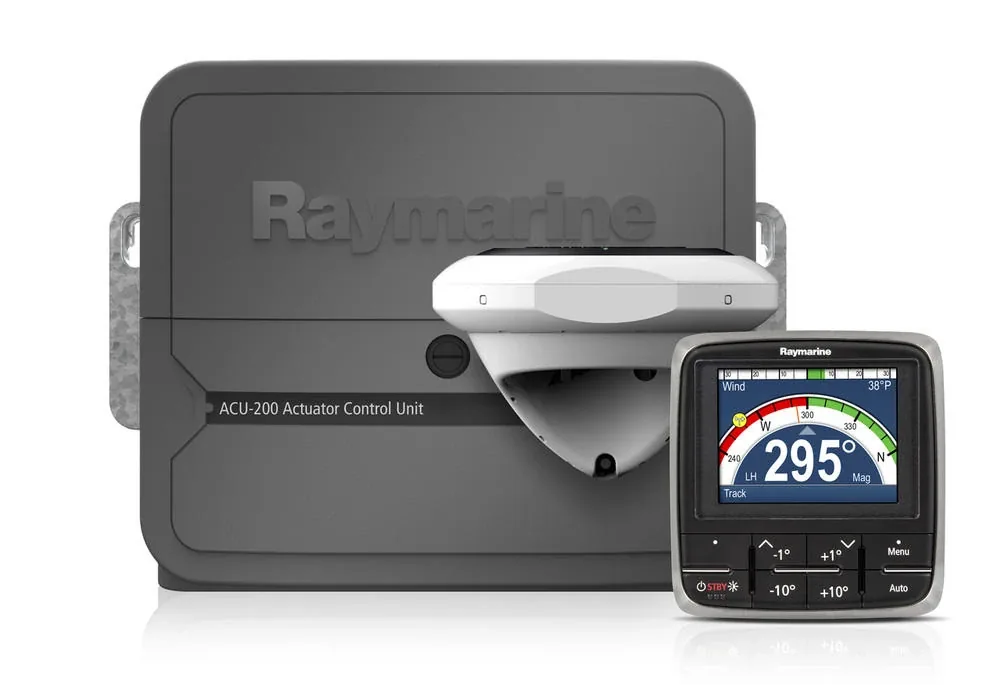
 Raymarine Evolution Hydraulic Pilot with p70Rs control head, ACU-200, EV1 Sensor Core, EV1 Cabling kit & 1.0 litre 12vdc Hydraulic Pump — tap to view
 Raymarine Evolution Autopilot EV-200 Linear with p70s control head, ACU-200 & Type 1 Mechanical Linear drive — tap to view
Start with the dash, not the spec sheet
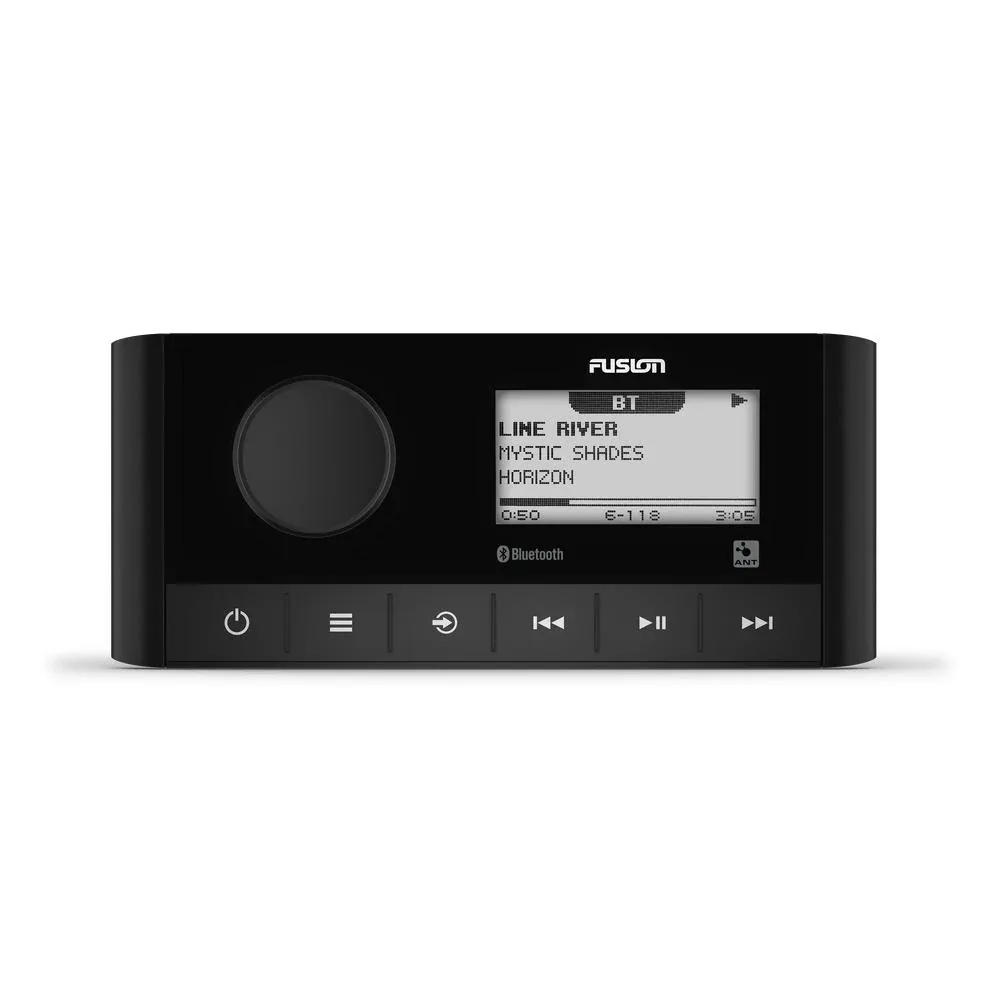
A marine stereo fails at the mount long before it fails at the speaker. Measure the opening you have (width, height) and the depth behind the panel before you compare anything else, because the electronics in the 7-inch class of head units are not the same size. Two units from the current range show the spread: the Fusion MS-RA60 body is 2.68 x 6.18 x 4.06 in (68 x 156.9 x 103.2 mm), while the Apollo SRX400 is 70 x 110 x 122 mm with a narrower, deeper case. If your helm was built around a round gauge or an old radio, the second shape often drops in where the first will not.
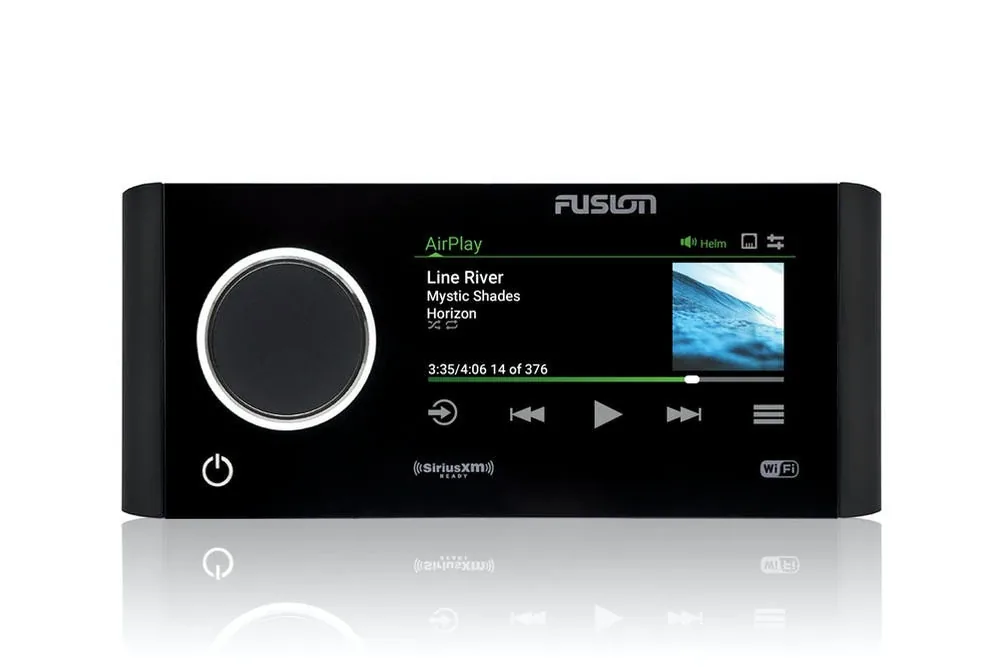
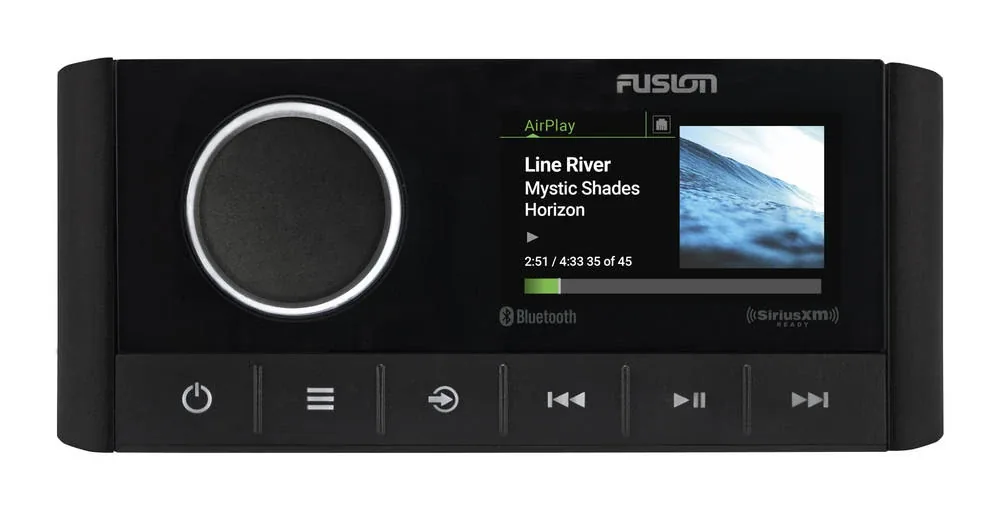
The front of the unit is what you read in sunlight. The MS-RA60 uses a 2.30 in perimeter-bonded monochrome dot-matrix LCD. The SRX400 and RA210 both publish a 2.7 in optically bonded colour LCD, which is easier to read at an angle with sunglasses on.
Both water ratings you will see on these listings, IPX6 and IPX7, cover the front panel only, when properly installed. The back of the stereo is not sealed. Mount it where spray runs off rather than into it, and leave a drip loop in the wiring so water cannot track down the cables into the case.
Count the zones before you count the watts
A zone is an independent volume control. One zone means the whole boat gets louder together. Two zones let you keep the cockpit at conversation level while the transom, the tower or the bow gets the music. On a center console with four speakers that is the difference between a stereo people tolerate and one they use all day.
These are the specifications as published on the Deepline listings, not catalogue marketing:
| Head unit | Zones | Built-in amp (RMS, 4 ohm) | Display | Wired for |
|---|---|---|---|---|
| Fusion MS-RA60 | 2 | 22 W RMS x 4 | 2.30 in monochrome LCD | 4 speaker outputs, Bluetooth, ANT, DAB+ |
| Fusion Apollo SRX400 | 1 | 26 W RMS x 2 (43 W x 2 at 2 ohm) | 2.7 in colour LCD | Bluetooth, Wi-Fi, AirPlay 2, Ethernet, PartyBus |
| Fusion RA210 | 2 | 26 W RMS x 4 | 2.7 in colour LCD | NMEA 2000, USB, NRX remote, 4 speaker outputs |
The range goes further up than that. The Apollo RA670 and RA770, and the MS-RA70 series, are listed in the same department with the same treatment: the full spec sits on the product page, and you can read it there before you decide. The whole set is in Fusion marine radios, inside the stereos and audio department.
Match the amplifier to the speakers
Peak power is the number on the front of the box and it is close to meaningless. Rated power, in watts RMS at a stated impedance, is what the amplifier actually delivers. A 180 W peak head unit that publishes 22 W RMS x 4 at 4 ohm will run four ordinary marine speakers well and will not run a subwoofer at all.
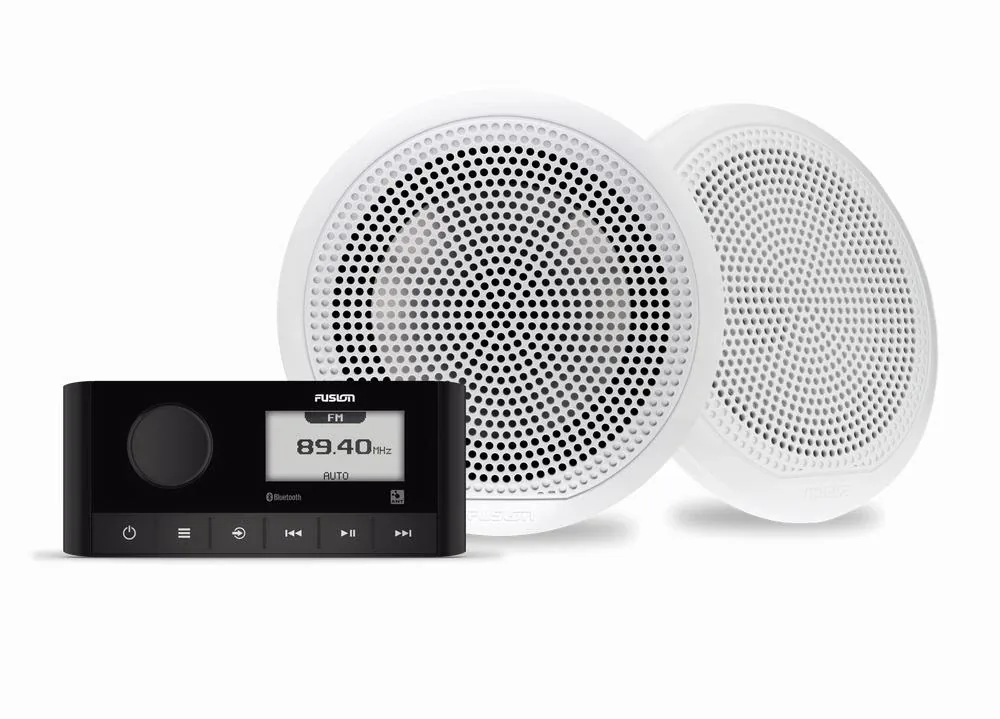
The clearest example in the catalogue is the Fusion MS-RA60K1SPG kit, which pairs an MS-RA60 with a pair of 6.5 in speakers. The speaker publishes 20 W RMS, 88 dB sensitivity, 45 Hz to 16 kHz, 4 ohm nominal, with a recommended amplifier rating of 20 to 40 W per channel. The head unit's 22 W RMS x 4 sits inside that window, so the pairing is honest: the amp is not straining, and the speaker is not being fed more than it can use.
Two things to check on any head unit before you buy speakers for it:
- Channel count. The SRX400 publishes two amplified channels, so it drives one pair. If you have four speakers, you want the four-output RA60 or RA210, or an external amplifier.
- Minimum impedance. The RA60 and RA210 list Class-D amplification with a 4 ohm minimum. The SRX400 is 2 ohm stereo-stable, which raises its output to 43 W RMS per channel with 2 ohm speakers. Mismatching this is how stereos shut down at volume.
Amp power also has to come from somewhere. Adding six speakers and a sub means pre-outs and a separate amplifier. The RA60 publishes one zone of RCA pre-out plus a mono subwoofer output, and both require external amplification; the SRX400 publishes one zone of line out and one mono sub out. From there an amplifier like the JL Audio XDM400/4, a four-channel Class D unit in the catalogue, takes the load off the head unit. The JL Audio range and the 6.5 in M6 speakers are where most of our customers building a bigger system start.
Bluetooth is table stakes — the display connection is the decision
Every unit here streams Bluetooth, with published range around 10 meters (30 ft on the RA60). What separates them is how you control them once the phone is in a dry bag.
Fusion-Link is the control link, and the listings differ in what it reaches:
- Apollo SRX400: Fusion-Link control with an MFD and a smartphone. It also publishes Wi-Fi, AirPlay 2, UPnP, one Ethernet port and PartyBus over wired or wireless.
- RA210: Fusion-Link with an MFD, a smartphone and a Garmin watch, plus one NMEA 2000 port (LEN 1, 50 mA) and NRX remote compatibility.
- MS-RA60: Fusion-Link with compatible Apple and Android devices, and Fusion-Link Lite with a compatible Garmin watch. The listing does not claim MFD control.
So if you want track and volume changes on the glass you already have at the helm, the Apollo units are the ones that publish it. Send us the make and model of that display with your order and we check the pairing against the unit before we invoice. We do not promise a chartplotter match the listing does not state.
Power, fusing and the compass you forgot about
All of these run on 10.8 to 16 VDC, which is an ordinary 12 V boat system with the alternator running. Maximum current draw is where they part: 8 A on the SRX400, 15 A on the RA60 and RA210. Give the stereo its own fused circuit sized for that draw and for the length of run to the helm, rather than tapping the electronics bus. A stereo that browns out at volume is usually a wiring problem, not an amplifier problem.
The specification most people skim past is compass-safe distance: 100 mm on the SRX400, 150 mm on the RA60 and RA210. If your boat carries a magnetic compass or an autopilot heading sensor, keep the head unit and the speakers at least that far from it. Speakers contain magnets, and a stereo mounted next to the compass will cost you more in heading error than it gains in music.
Software updates differ too. The SRX400 and RA60 update over the air through the Fusion-Link app, while the RA210 lists USB. Worth knowing before you bury the unit behind a panel you would have to unscrew.
A short list by boat
- Tiller skiff, jon boat, one pair of speakers: the SRX400. Narrow case, two amplified channels, one zone. You will not use a second zone on a boat this size.
- Bay boat or center console, four speakers, helm and cockpit separate: the MS-RA60 or the RA210. Both give two zones and four speaker outputs on the built-in amp.
- Boat with six or more speakers, a sub and a tower: an Apollo RA670 or RA770 as the head unit, with the pre-outs feeding an external amplifier. Read the individual listings for the channel and zone count before you commit.
- Helm already full of screens: if volume belongs on the MFD, the Apollo units publish Fusion-Link control there. If Bluetooth from a phone is enough, the RA60 does the job for less hardware.
Warranty, shipping and the fit check
Every stereo here is new and carries the manufacturer's own warranty as published on its listing: 3 years on the MS-RA60 and the Apollo SRX400, 1 year on the RA210. Deepline adds no warranty of its own and does not install — a stereo is a cut-and-wire job for a marine electrician or a patient owner. What we do is check the order before it is invoiced: dash dimensions, speaker count, impedance and the display you plan to control it from. Nothing is charged on the site; you pay the emailed invoice, shipping is priced to your ZIP and confirmed on it first, and unused items in unopened packaging can go back within 30 days with no restocking fee. The shipping policy and the refund policy spell both out.