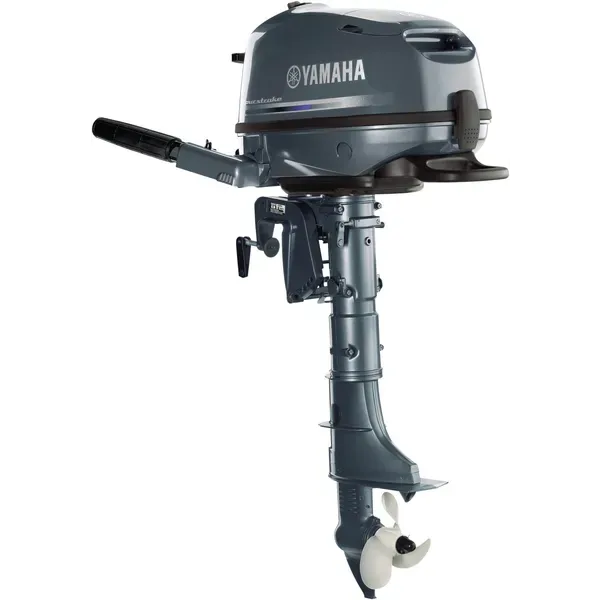
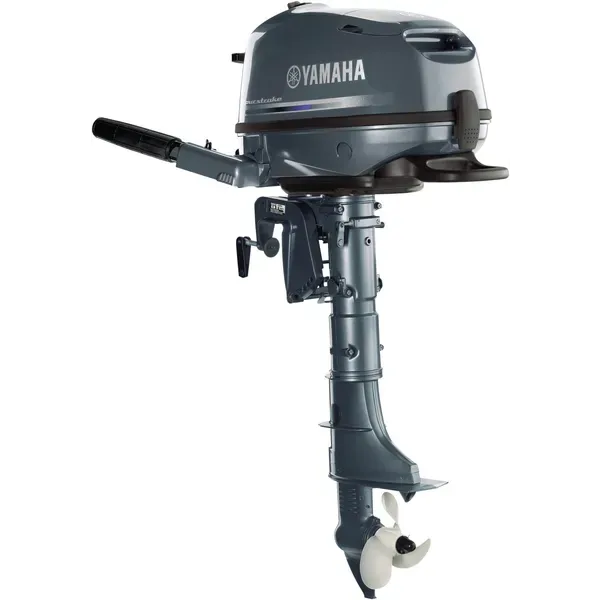
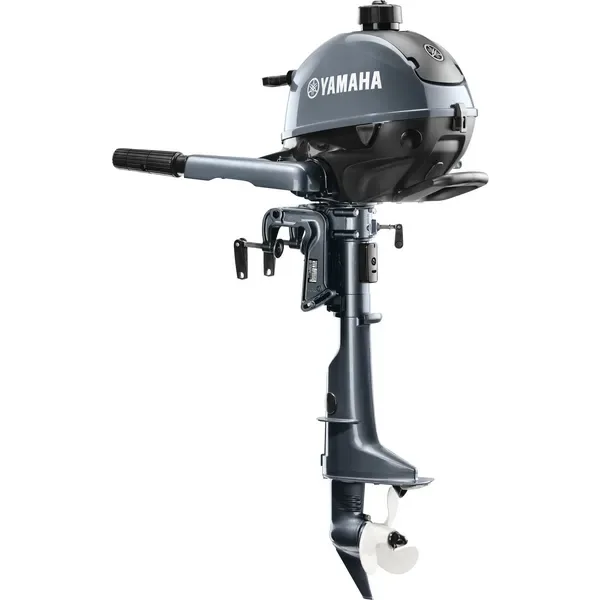
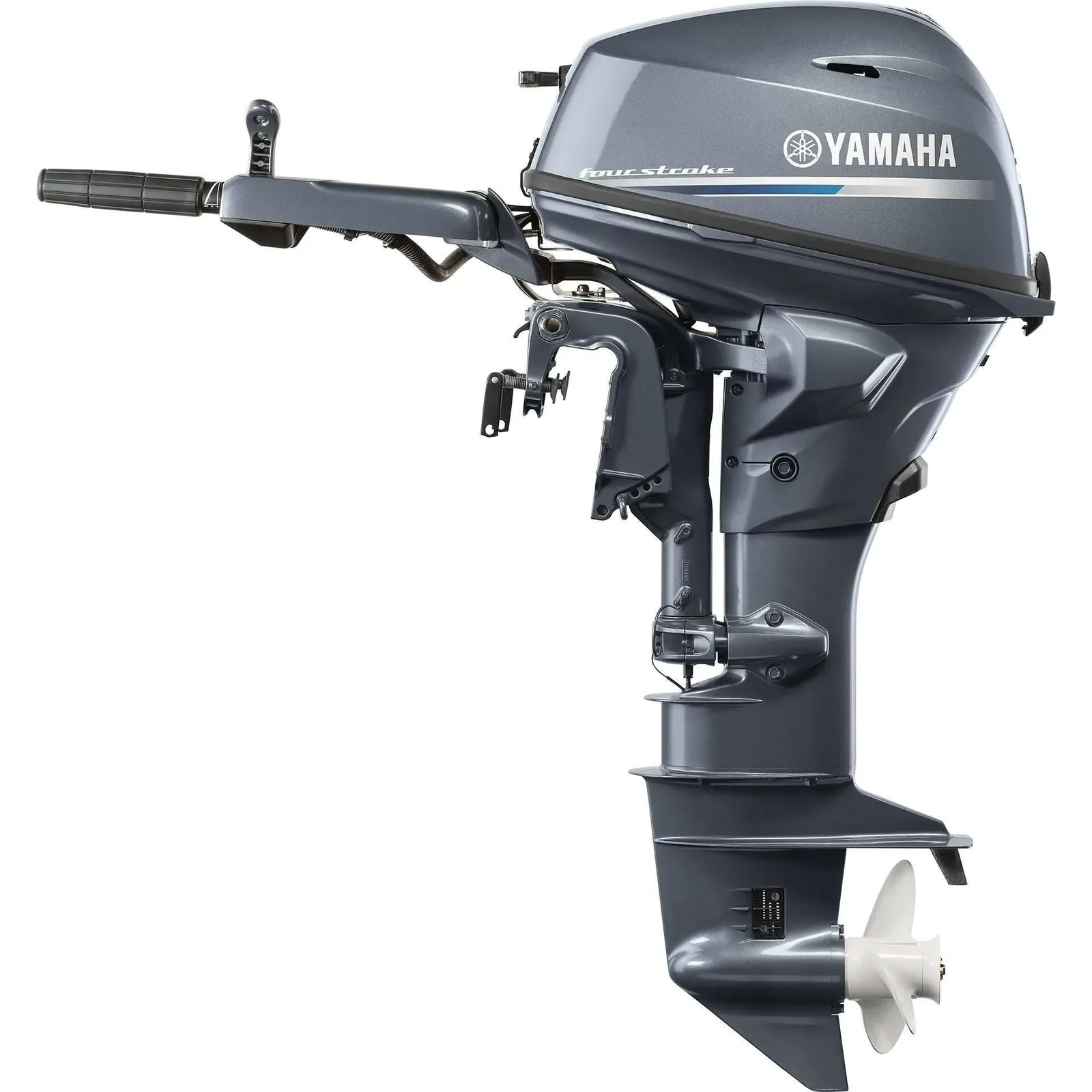
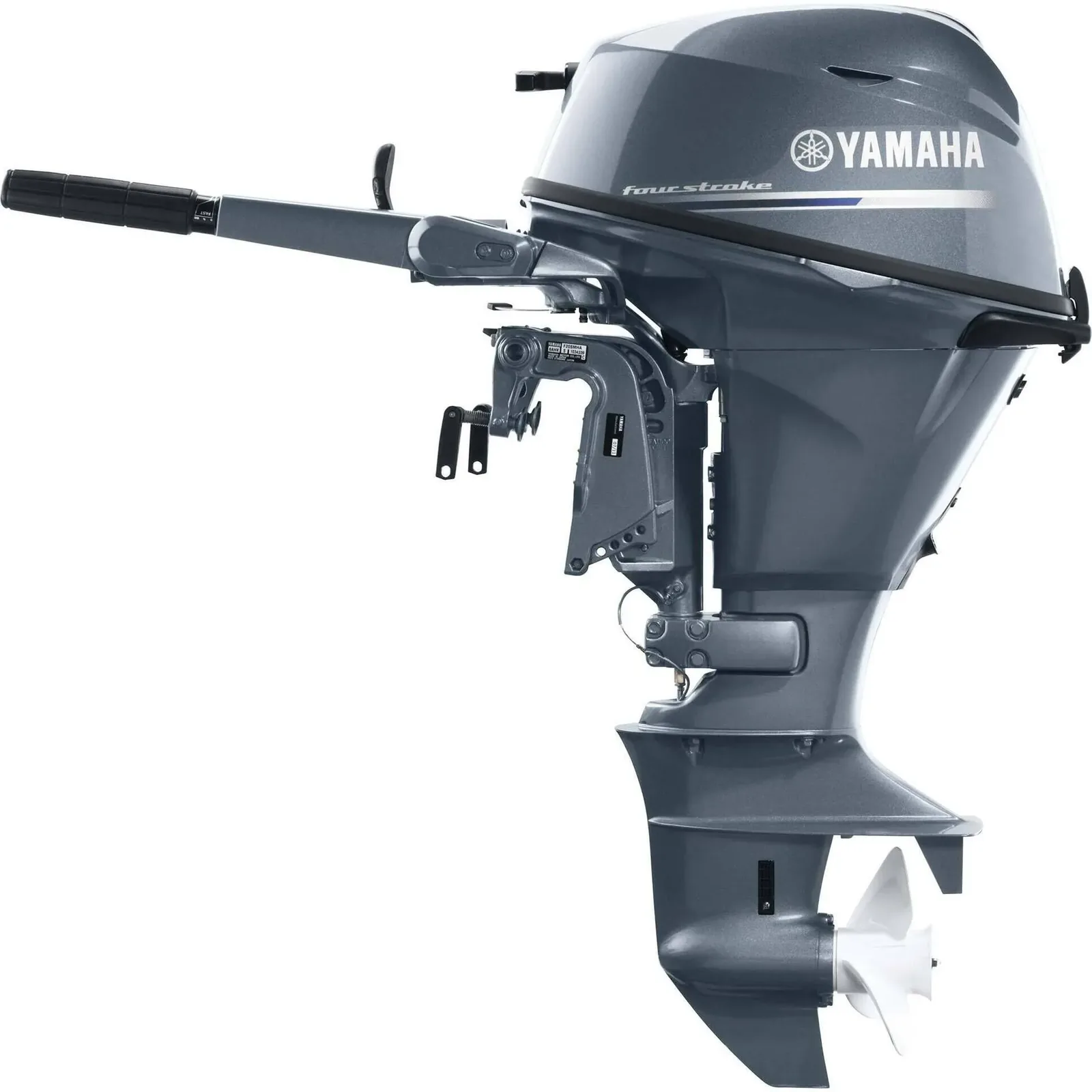
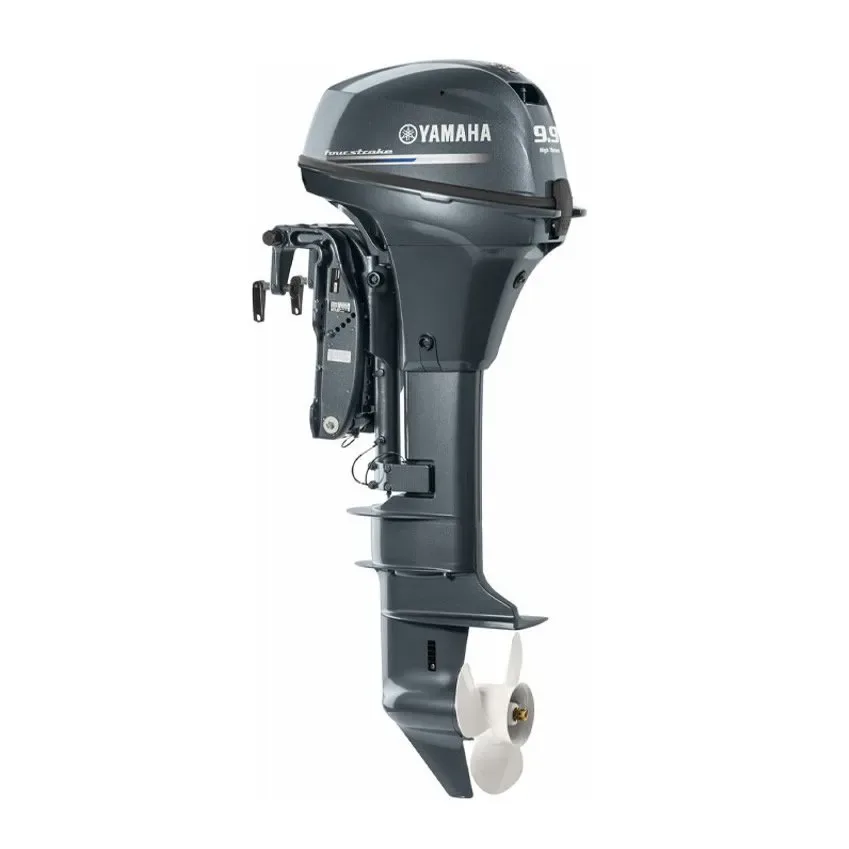
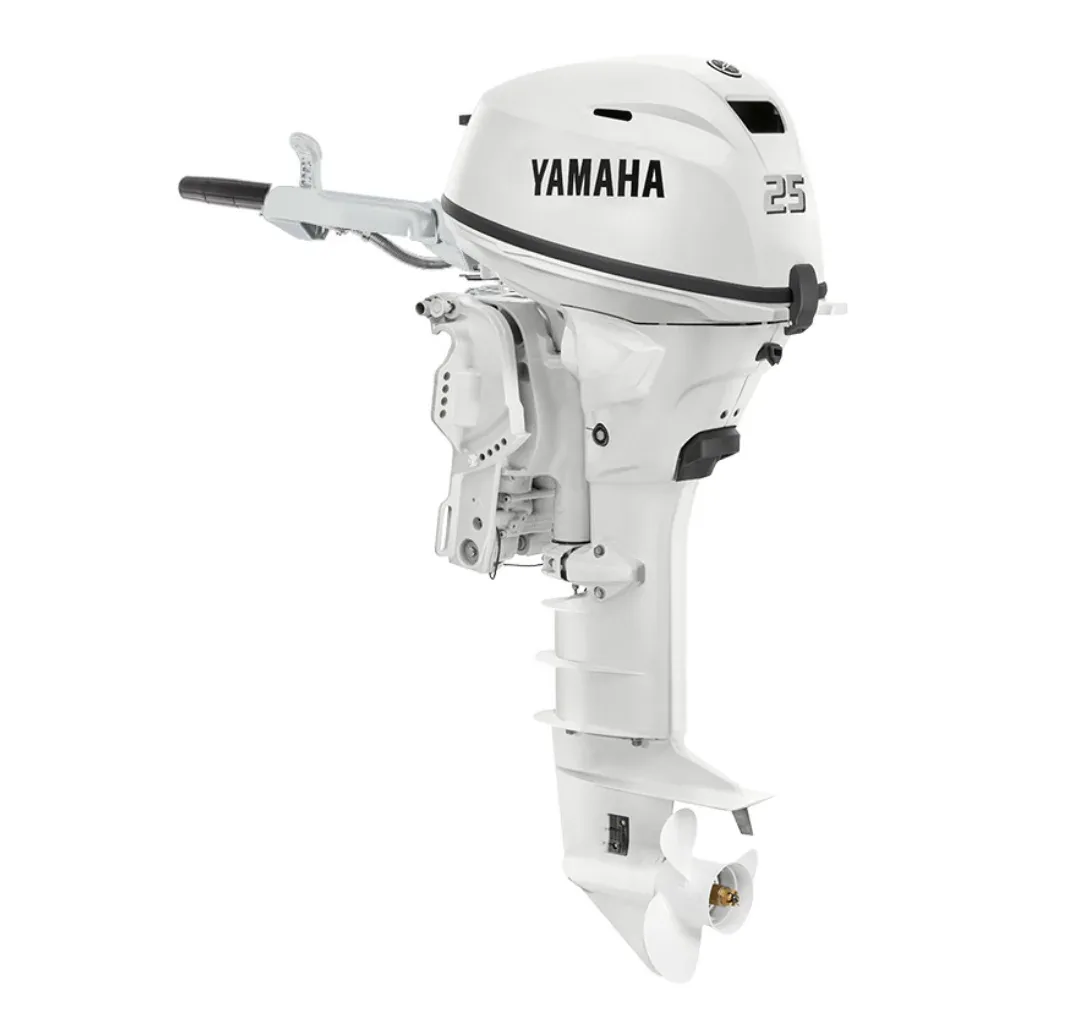
 Yamaha 25 HP F25LWTHC2 EFI OUTBOARD | 20″ Shaft | Electric Start | Power Tilt — tap to view
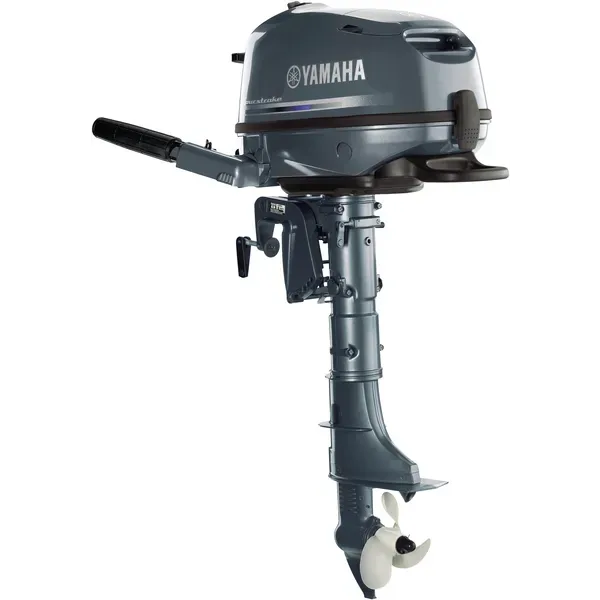
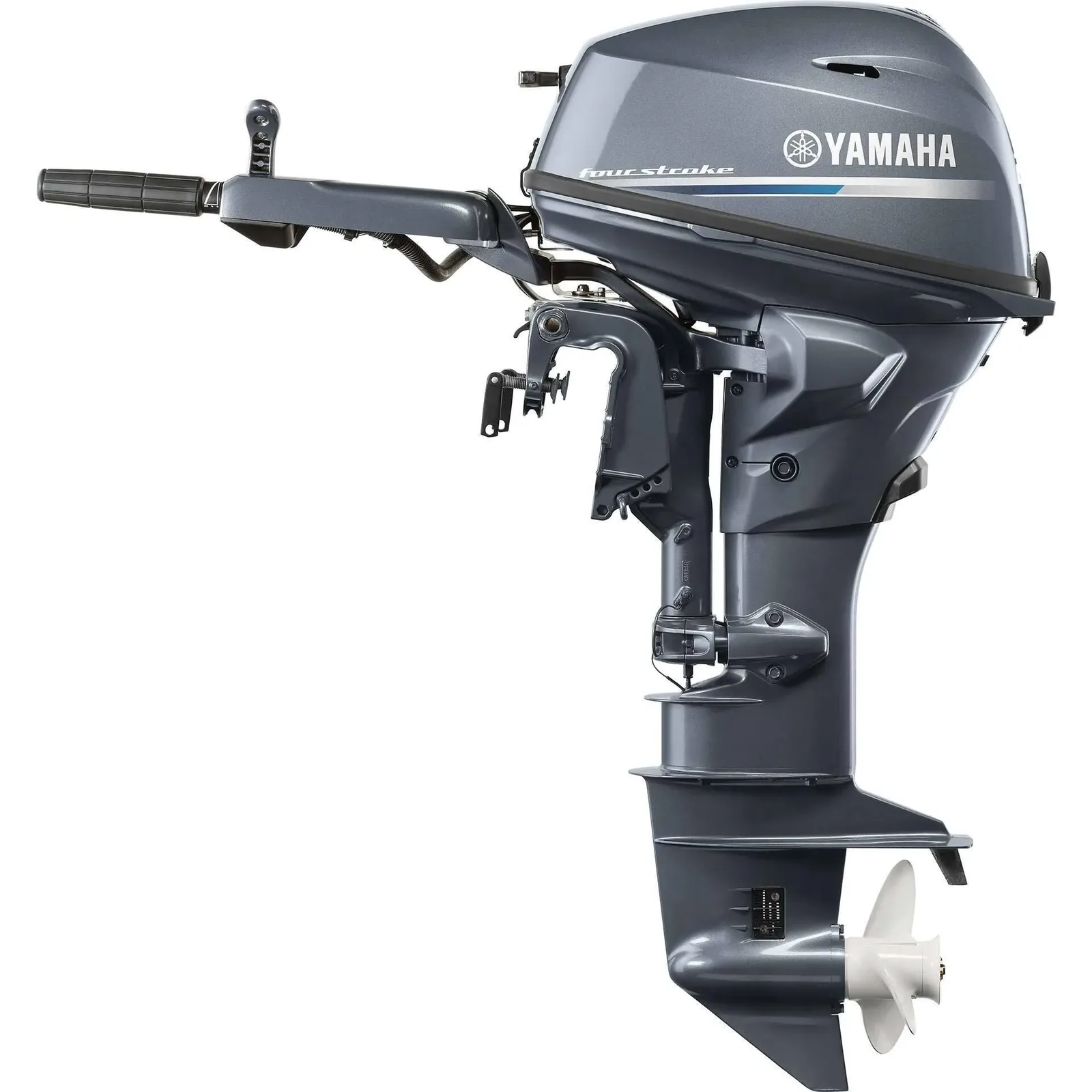 Yamaha 25 HP F25LMHC EFI OUTBOARD | 20″ Shaft | Manual Start | Manual Tilt — tap to view
Read your model's manual before you touch anything
Yamaha, Mercury, Honda, Suzuki and Tohatsu each publish their own lay-up procedure, and the differences are real: where the drain plugs are, whether the motor is fogged through the spark plug holes or through the intake, the oil spec, the gear lube capacity, and the trim position the motor should sit in for storage. A generic video will get you through the flushing and the fuel, then leave you guessing on the two jobs that cost money when they are done wrong.
Our own listings carry the model-specific numbers, which is a good place to check before you buy a jug of oil. Each Yamaha page shows the recommended oil (Yamalube, per the owner's manual) and the sump capacity. The same 25 hp block appears with two figures: the electric-start EFI carries 1.8 L, the manual-start version lists 1.1 L. Fill to the manual, not to a number from a forum thread.
1. Flush the cooling system
Salt, silt and brackish water sit in the water jackets and the telltale after the last trip. Flush with fresh water until it runs clean, using the threaded flush port if the motor has one or flushing muffs over the intakes if it does not. With a flush port the motor is usually left off; with muffs it usually runs so the water pump pulls water through. Check which applies to your model.
Outboards are self-draining when left standing upright, which is why most manuals do not call for antifreeze in the block. Do not pour automotive antifreeze through a marine cooling system: the wrong chemistry attacks seals and the water pump. What matters is that the motor goes away in the position the manual specifies, usually vertical with the leg down, so the water can leave. A leg left trimmed up with water sitting in the gearcase is how a housing cracks in a hard freeze.
2. Fuel: fill the tank, treat it, run it through
Ethanol blends pull moisture out of the air, and a tank left half empty has the most air in it to breathe through temperature swings. Fill the tank close to full, dose it with a marine fuel stabilizer at the label ratio, then run the motor long enough for treated fuel to reach the injectors or the carburetor bowl. Stabilizer that sits in the tank without being run through does nothing for the fuel already in the engine.
The Yamaha listings here put the ceiling at 87 octane and 10 percent ethanol, and that is a limit rather than a target. If ethanol-free fuel is available where you are, the last fill of the season is the one to use it on. Change the fuel filter, or the water-separating filter if the motor has one, as part of lay-up as well. It is inexpensive, and a clogged filter is one of the usual reasons a motor will not start in spring.
3. Engine oil and filter, now rather than in spring
Used oil holds combustion acids and moisture, and that sits against bearings and cylinder walls all winter. Four-stroke marine engines are typically serviced once a season or every 100 running hours, whichever comes first, so the end of the season is the natural time. Run the motor warm first so the oil carries the contaminants out with it, drain the sump, then fit a new filter with its O-ring wiped in fresh oil.
Check that the old filter's gasket came away with the old filter. A doubled gasket is a real failure mode, and it leaks oil once the motor is running again. Refill to the capacity in the manual, start the motor and check for leaks and oil pressure, then re-check the level after it settles. Use a marine four-stroke oil rated NMMA FC-W: it carries corrosion inhibitors that automotive oil does not.
4. Lower unit: the job that finds the trouble
Drain the gear lube into a clean pan and look at it before you dispose of it. Honey-colored and clear is fine. Milky or gray means water has been getting past a seal, and that has to be fixed before storage, not discovered in spring when the gears have sat in an emulsion all winter. Black with a metallic sheen means wear, while a little fine fuzz on the magnetic drain plug is normal.
Refill from the bottom hole with a gear lube pump until fresh lube runs out of the top vent, then fit the vent screw and then the drain screw, both with new gaskets. Those gaskets are the seal; reused and flattened, they are the most common way water gets into a gearcase over a winter.
While the drain is open, take the prop off. Fishing line wrapped behind the propeller takes out the shaft seal, and it is easy to miss with the prop fitted. Cut it away, inspect the seal, and grease the prop shaft splines before the prop goes back on, with the nut torqued to the manual figure.
5. Fog the cylinders
On a four-stroke, remove the spark plugs and spray storage fogging oil into each cylinder, following the can. Turn the motor over a few revolutions by hand, or on the starter with the plugs out and the lanyard pulled, so the oil spreads over the bores, then refit the plugs. Some EFI models call for fogging through the intake with a fuel-borne product instead, which is exactly the sort of thing the manual settles.
Fitting new plugs while they are out is cheap insurance. The Yamaha 20, 25 and 15 hp EFI models here list DPR6EB-9; the 9.9 high-thrust lists BR6HS-10. Gap them to the manual, and use a thread anti-seize only if the manual allows it.
6. Battery: off the boat, charged, above freezing
A battery left in a boat discharges over the winter, and a discharged battery can freeze and crack its case. Take it off, clean the terminals, charge it fully, and store it in a cool, dry place that stays above freezing. A charged battery resists freezing far better than a flat one. Top the charge up once a month, or leave a maintenance charger connected, and check the electrolyte level on a serviceable battery before charging it.
7. Grease, anodes and the outside of the motor
Grease every fitting on the tilt tube, swivel bracket and trim rams with marine grease. Look at the anodes: if an anode is half gone, replace it before storage so it is protecting the motor all winter rather than half of it. Wash the cowling with fresh water and mild soap, let it dry properly, and spray a corrosion inhibitor on powerhead fittings and electrical connectors. Touch up paint chips on the skeg and gearcase, check the trim fluid, and cover the motor loosely with something breathable. A tarp tied down tight traps condensation against the powerhead, which is worse than rain.
Why to check a motor before spring
Everything winterizing finds is cheaper to deal with in the fall. Water in the gear lube, a corroded connector, a water pump housing on its way out, a battery that will not hold a charge, a shaft seal cut by fishing line: all of it is a workshop job in November and a lost month in April, when every yard is booked and the first good weekends are already going by. A motor that sat all winter with an unresolved problem also gives you no clean record when you ask a manufacturer to look at it under warranty, since most warranties expect the maintenance schedule in the manual to have been followed. Keep the receipts for oil, filters and gear lube.
If the motor is old enough that the lay-up list turns into a rebuild quote, that is the point to price a replacement rather than another season of repairs.
Lay-up checklist at a glance
| Job | What you are checking | When |
|---|---|---|
| Flush the cooling system | Clean water out of the telltale, motor left to drain vertical | After the last run |
| Fuel | Tank filled, stabilizer dosed and run through the engine | Same day |
| Engine oil and filter | Capacity from the manual, no leaks after the restart | Motor warm |
| Lower unit | No milky lube, new drain and vent gaskets, no line behind the prop | Before the first freeze |
| Fogging and plugs | Cylinders coated, plugs gapped to spec | After the oil change |
| Battery | Fully charged, stored above freezing, topped up monthly | Storage day |
| Anodes, grease, paint | Anodes replaced if half gone, fittings greased, chips touched up | Storage day |
Buying a motor for next season
Deepline Marine is an online store that ships, based in Miami. We sell new Yamaha outboards from 2.5 to 25 hp, in tiller and remote steer, in 15, 20 and 25-inch shafts, and every one carries the manufacturer's own warranty. We do not winterize, service or install motors, and there is no showroom, pickup point or service bay: the lay-up and the rigging are yours or your own mechanic's.
What we do is check the order against your boat, your transom height and your existing controls before anything is invoiced, because a motor that does not fit the boat is a worse problem than a cold weekend. Nothing is charged on the site. You pay the emailed invoice by card payment link, ACH or wire transfer, or Zelle, and shipping is priced to your ZIP and confirmed on the invoice before you pay. Parcels are dispatched in 1 to 3 business days once payment clears, then 2 to 6 business days in transit to the East and Midwest and 3 to 8 to the Plains, Mountain and West; Alaska and Hawaii are quoted case by case. Unused motors in original, unopened packaging can be returned within 30 days with no restocking fee. Ordering before the season means the motor is on the transom and shaken down before the first decent weekend, rather than waiting behind everyone else's spring order.
Start with the whole range at outboard motors, or go straight to Yamaha outboards and the Yamaha brand page. Shopping by brand instead: Mercury, Honda and Suzuki. Shipping and returns detail is in the FAQ and the shipping policy.