Shipping to North Carolina
North Carolina sits in Deepline Marine's East & Midwest zone. Orders are dispatched in 1–3 business days once payment clears, then run 2–6 business days in transit. Shipping is priced to your ZIP code and confirmed on the invoice before you pay — nothing is charged on the website. Full detail is on the shipping policy page.
If you need it on the boat for a specific trip, order early enough to allow for the dispatch window, not just the transit window.
Offshore: Oregon Inlet, Hatteras and the Gulf Stream
The Outer Banks run is the reason a lot of North Carolina boats have a big screen at the helm. Off Hatteras the Gulf Stream swings in close — charter boats working Hatteras Inlet run roughly 10 to 15 miles to the blue water — and that short run puts mahi, yellowfin, blackfin and wahoo within reach of boats that would not consider a Gulf Stream trip anywhere else on the East Coast.
What that water asks of a display:
- A screen that splits. Chart, sounder and radar on one page when you are running an inlet in the dark or working a temperature break with other boats around.
- Enough sounder power for depth and speed. A 1kW CHIRP machine reads bottom at trolling speed far better than a low-power unit, and the 600W to 1kW transducers do the work.
- Radar that is part of the same network. Inlet traffic, unlit boats and summer thunderstorms are all radar problems.
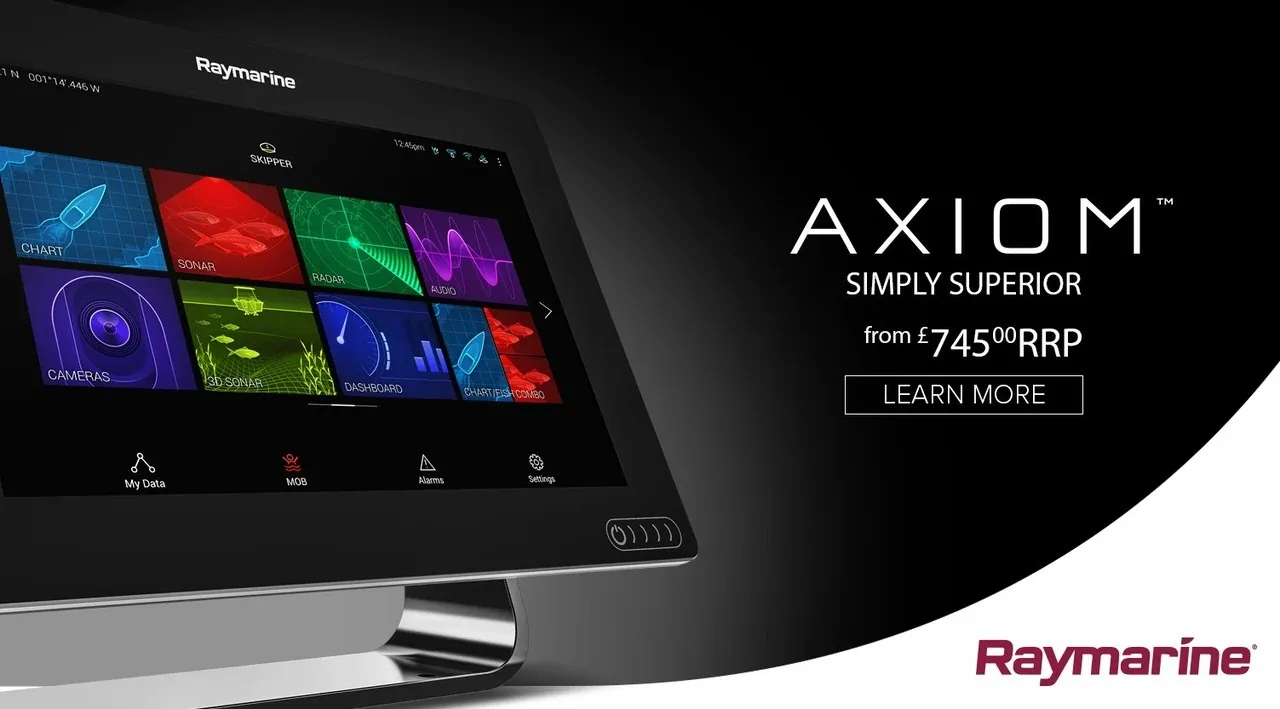
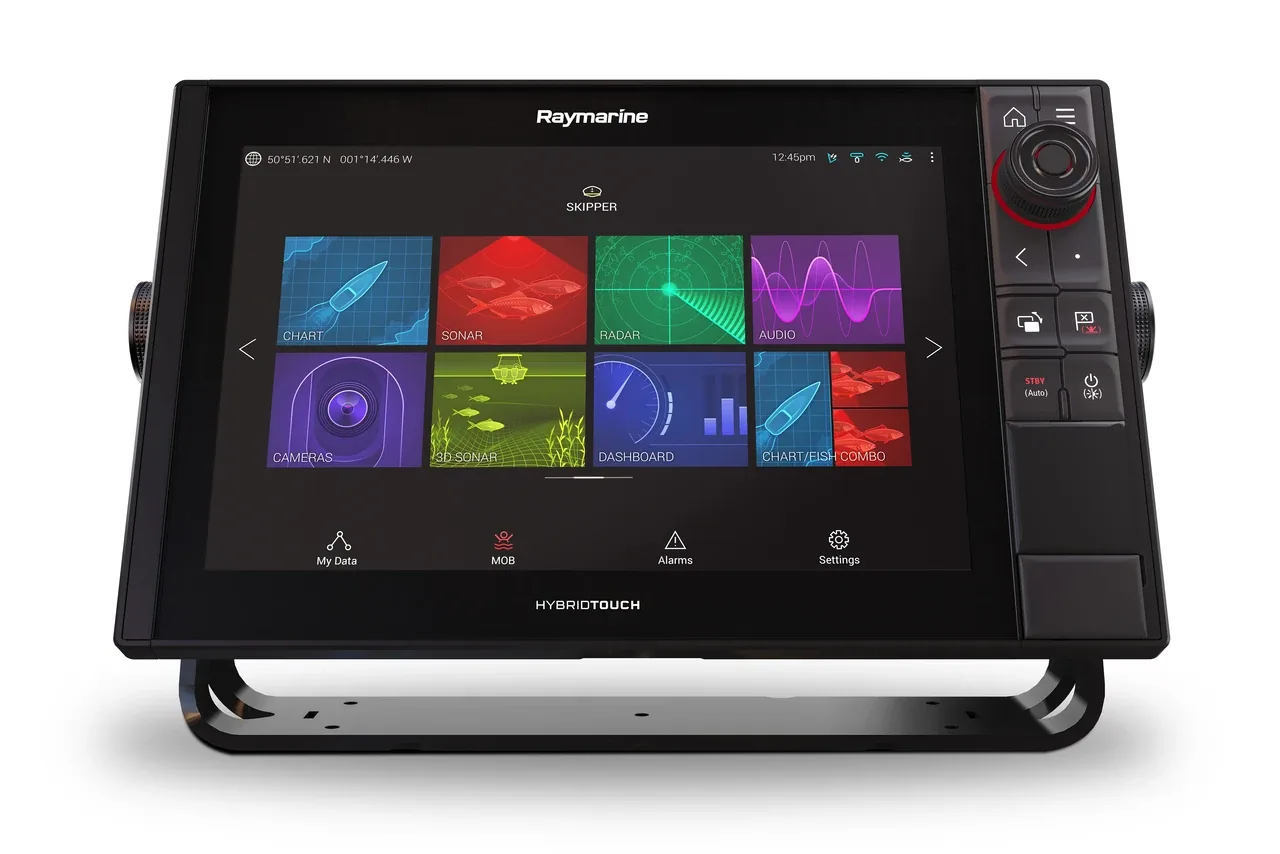
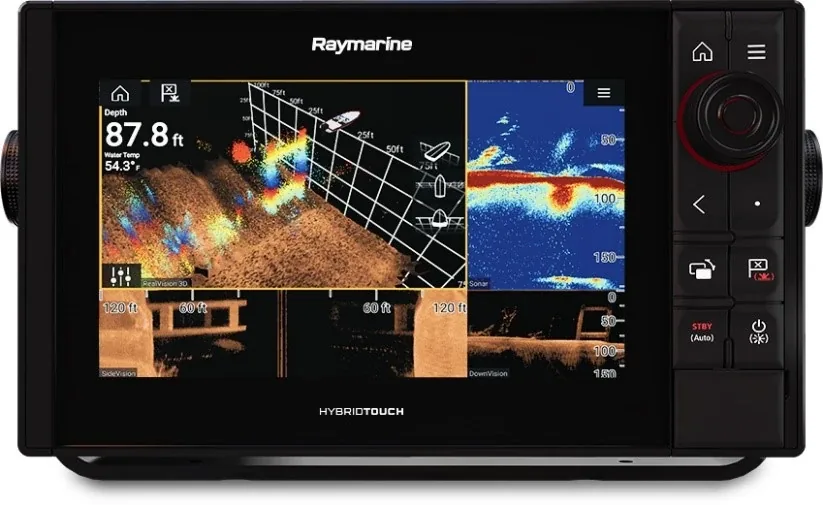
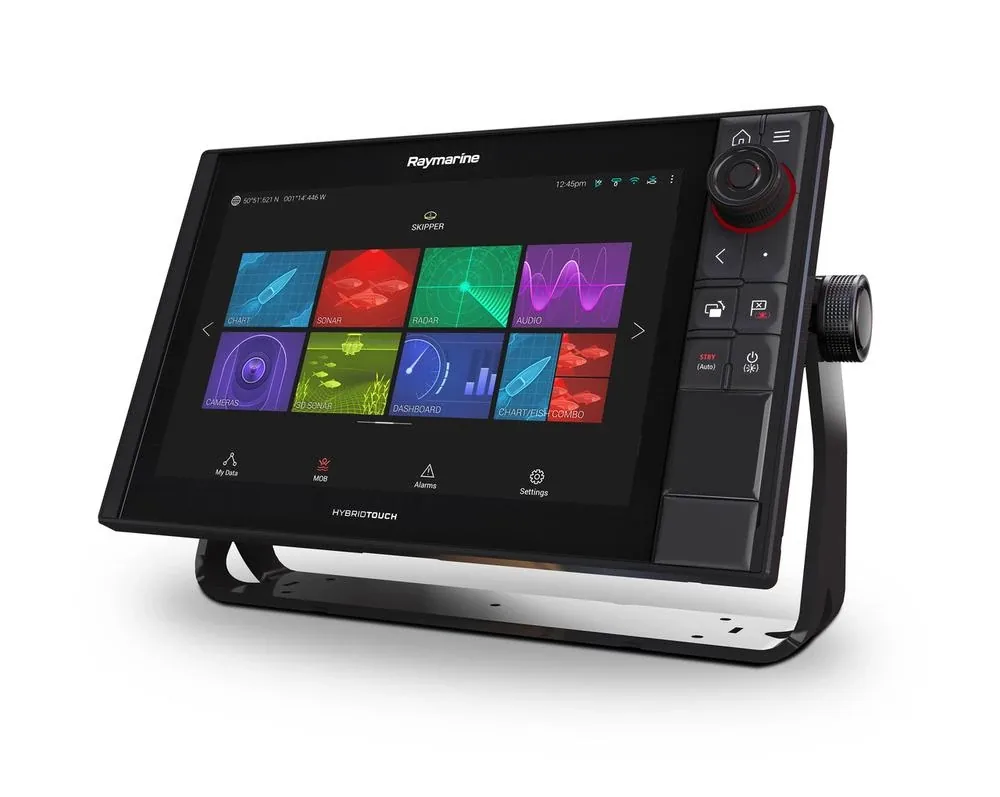
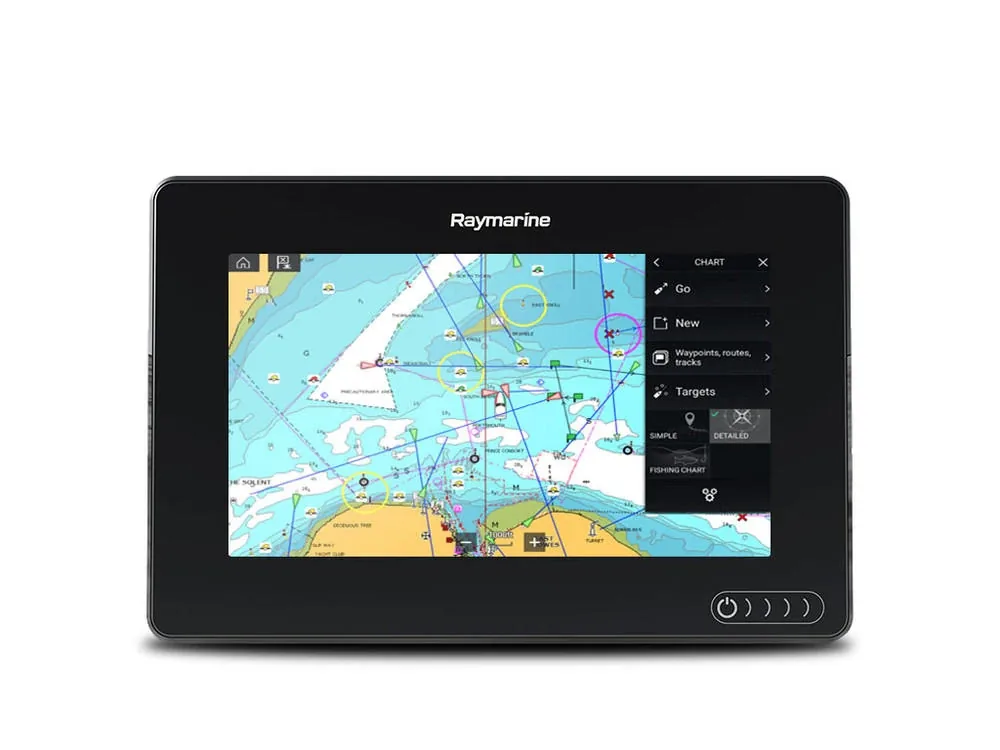
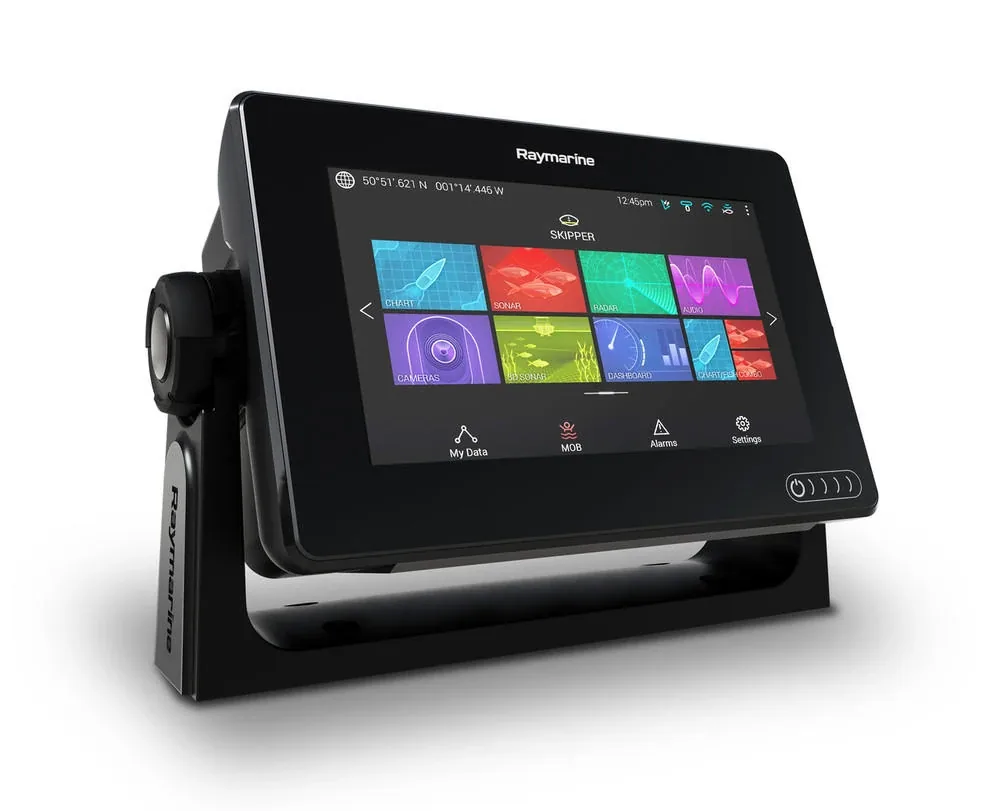
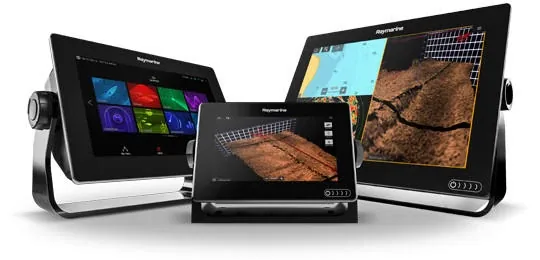
The Raymarine Axiom range in our Raymarine multifunction display category covers this well: Axiom 7, 9 and 12 as the standard units, and the Axiom Pro-S and Pro-RVX models at 9, 12 and 16 inches with sonar built into the display — Pro-S with High CHIRP conical, Pro-RVX with 1kW CHIRP plus DownVision, SideVision and RealVision 3D. One display running sonar, charts and radar, with the same network feeding an autopilot and AIS.
The sounds: Pamlico, Albemarle and the estuaries
Pamlico Sound is shallow, wide and mostly out of the ocean swell, which is exactly why it holds the red drum fishery it does. The fall drum run on the sound is a catch-and-release fishery for fish well over 50 pounds, and the same water fishes for speckled trout, flounder and bluefish through the year.
Shallow sound water changes what matters on a screen. Bottom definition at 3 to 12 feet beats deep-water power, side and down imaging help you find the edges of grass, oyster rock and channel drops, and the display wants to be readable in flat glare with the sun straight on it. A 7 or 9 inch unit with an integrated RealVision or CHIRP sonar, matched to a transom or trolling-motor transducer, is the usual fit for a bay boat or center console working the sounds. If you are choosing the transducer, the transducer guide walks through mount, frequency and connector.
Inland: Norman, High Rock, Jordan and Kerr
The Piedmont reservoirs fish nothing like the coast. Lake Norman on the Catawba north of Charlotte, High Rock on the Yadkin, Jordan and Falls around Raleigh–Durham, and Kerr up on the Roanoke at the Virginia line are bass, crappie and catfish water, and the anglers there are usually running a trolling motor and fishing structure.
For that water, side imaging and a chart with the lake's contour detail do more than raw depth power. A 7 or 9 inch Axiom with DownVision and SideVision, or a comparable unit from our fish finder and depth sounder department, is enough screen for brush piles, points and creek channels. Crappie fishermen should look at the live sonar and forward-facing options too — on a brush pile in 15 feet of water, seeing the fish before you cast is the whole game.
What to check before you buy
Most of the mistakes on a North Carolina boat are fit mistakes, not model mistakes:
- Transducer mount and hull. A thru-hull needs a fair, solid spot forward of the keel or props; a transom mount needs clean water and no strakes or steps in the way; an in-hull only works through solid fiberglass.
- Connector and sonar channels. A display with one sonar channel will not run a 1kW CHIRP thru-hull and a second transducer without the right module. This is where most mismatches happen.
- Network. Radar, autopilot, AIS and a second station all ride the same backbone, so decide the network before you decide the second screen.
- Screen size against the boat. A 16 inch display is right at a sportfisher helm and wrong on a 17 foot skiff.
Deepline checks compatibility against your display and boat before an invoice is sent — send the display model, the hull and what you want to add, through contact, and the order is reviewed before you pay. Products are new and carry the manufacturer's own warranty.
Where to start
If you are building a helm from scratch, start with the display and work outward: multifunction displays, then transducers, then radar and autopilots. If you already have a screen and need one part to match it, the question is always the same one, and it is answered on the FAQ page.