Three lakes, three different jobs
Most Missouri fishing happens on reservoirs, not natural lakes, and each one has its own sonar problem. Lake of the Ozarks is a boat-dock lake. Table Rock is deep and clear enough that fish show up suspended over water you cannot read with the naked eye. Truman was filled with the timber still standing, so the cover is everywhere and the water is often stained. One unit can cover all three, but the transducer and the screen size you pick decide how well.
Lake of the Ozarks: docks, brush and points
At roughly 54,000 acres, Lake of the Ozarks is a long main body with dozens of arms, and most bass and crappie are caught around three things: boat docks, brush piles and rocky points. That is a scanning job. Side imaging sweeps a row of docks and shows which slips sit over brush or a depth change instead of trolling past them one at a time. Down imaging shows what is directly under the hull when you stop and fish a brush pile.
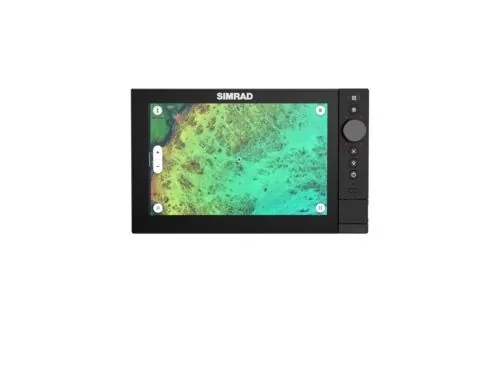
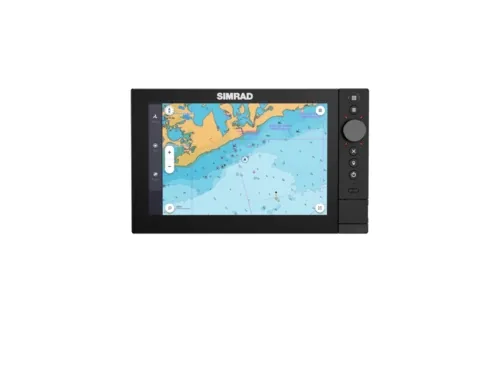
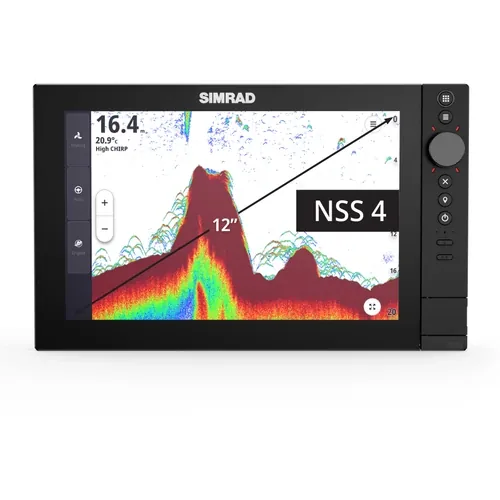
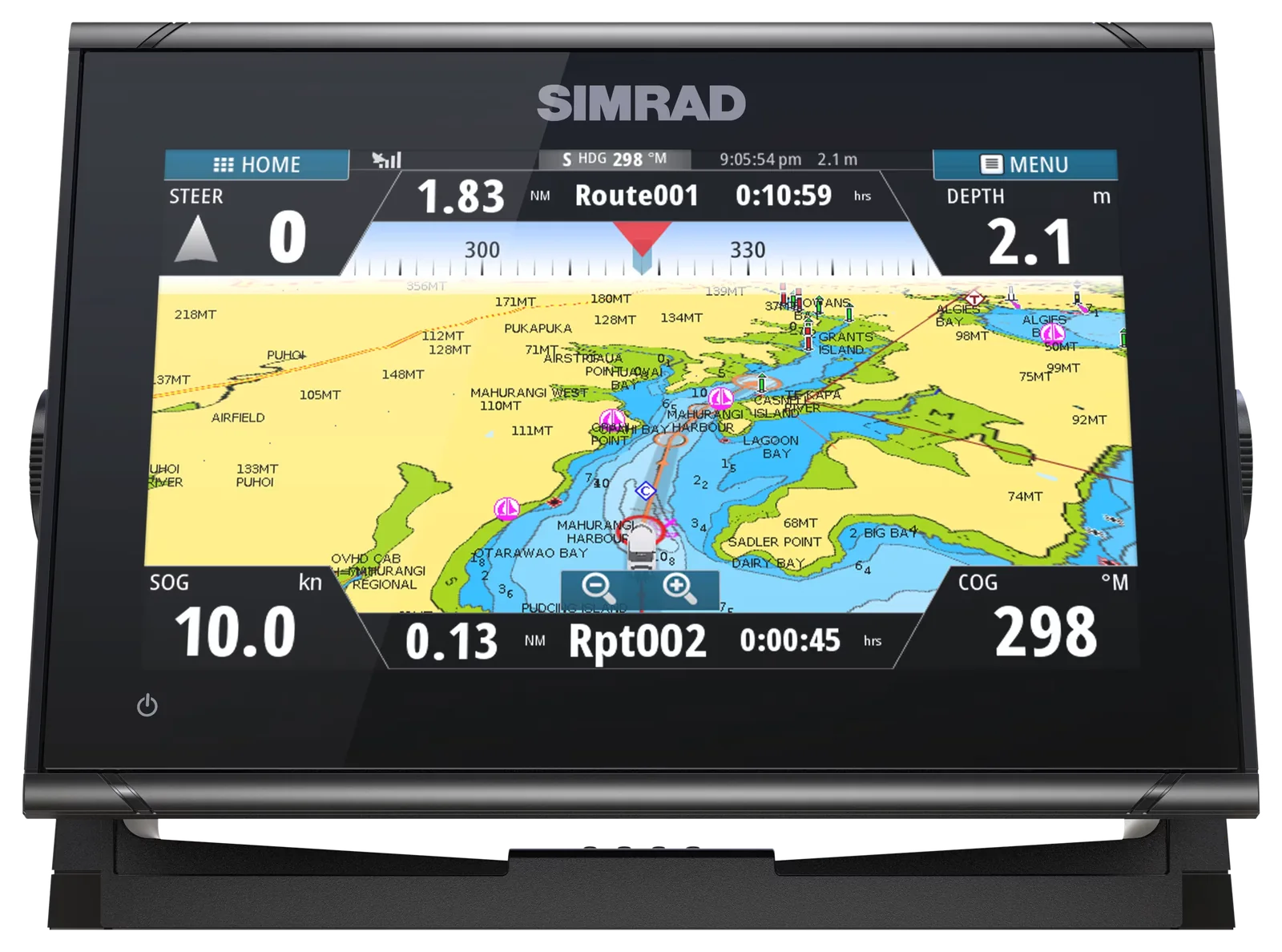
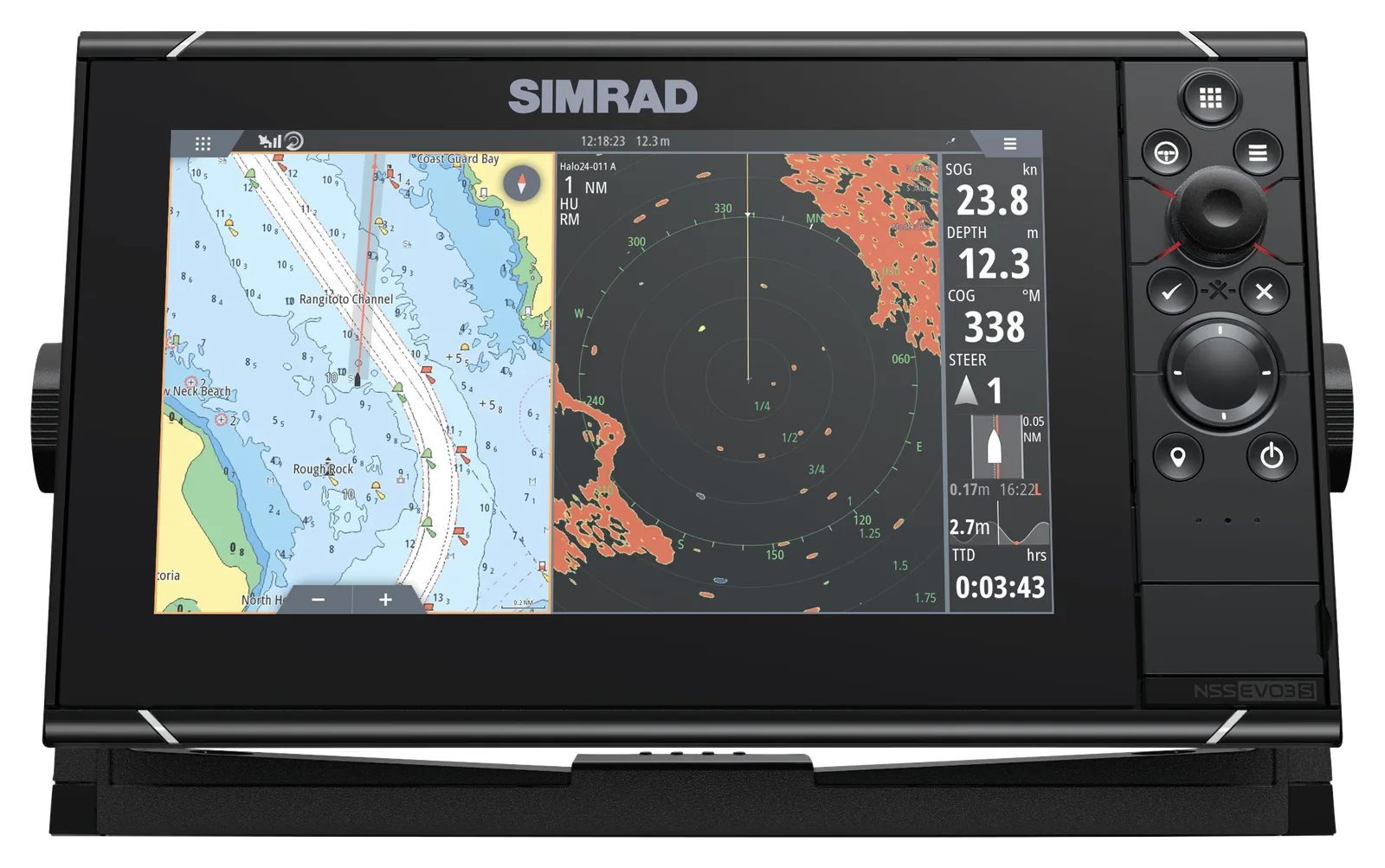
For this lake, plan on a unit that runs 2D, down and side scanning on one screen, and enough screen to keep the chart beside the side image. The Simrad GO9 XSE and NSS evo3S are 9-inch units with 2D, down and side scanning listed, both supplied with a C-MAP chart card. If you fish wide open dock flats and want the side image bigger, step up to a 12 or 16-inch NSS4.
Table Rock: deep, clear water
Table Rock is a highland reservoir on the White River, about 43,000 acres and 79 miles long, with deep water at the dam and visibility on the main lake that regularly runs well past 15 feet. The bass do not sit on the bank in summer. Largemouth, smallmouth and spotted bass move offshore to main-lake points, humps and bluff ends, often in the 10 to 25 foot range and deeper, and spotted bass commonly suspend over deep water following bait. Clear water makes them harder to see on screen, not easier: at high gain everything smears, so you need sonar with enough separation to show a fish as a mark beside the bait, not inside it.
This is where 2D CHIRP earns its place. A CHIRP sounder holds a clean bottom trace at speed and separates fish from brush and bait at depth. Boats that already have a display with no sounder built in can add a black-box sonar module; boats that want a dedicated sounder can run a Simrad S2009, a 9-inch CHIRP sounder with an HDMI output for mirroring to a second screen. For the last hundred feet of depth at the dam, low-frequency CHIRP and a transducer rated for it matter more than pixel count.
Truman: standing timber in stained water
Truman is the largest reservoir in Missouri at about 55,600 acres, and when it filled the trees were left standing. Average depth is around 20 feet, the upper Osage arm runs muddy after rain, and the lower lake and the Pomme de Terre and Tebo arms stay clearer. Crappie are the reason most people go: white crappie dominate the turbid upper lake, black crappie the clearer lower arms, and fish hold on standing timber, brush piles and channel edges from spring through winter.
In tight timber, side imaging is not the tool. The beams bounce off the nearest tree and the picture turns to noise. What works is a narrow 2D cone to mark a fish sitting against a trunk at 12 feet, and down imaging to show the shape of the tree and the brush around it. Add a chart card with the creek channels and you can follow the old river bed between stump fields instead of idling through them, which is also the safer way to run this lake.
Which Simrad unit fits which lake
| Unit | Screen | Sonar | Best fit |
|---|---|---|---|
| GO9 XSE with C-MAP DISCOVER | 9 in | 2D, down and side scanning | Ozark docks and brush; one compact screen at the console |
| NSS evo3S with C-MAP US Enhanced | 9 in | 2D, down and side scanning | The same job with a US chart card, on a boat with a NMEA 2000 network |
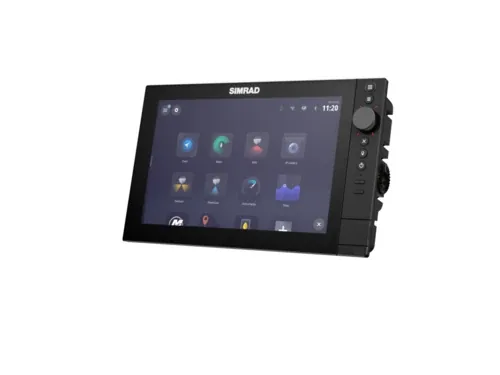
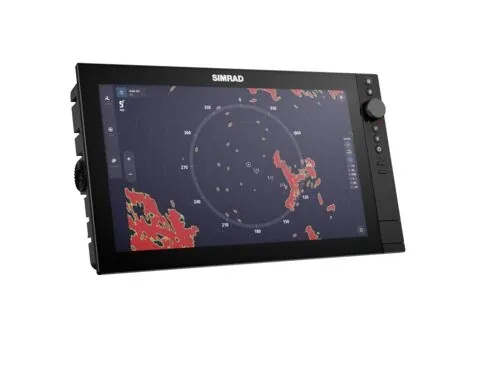
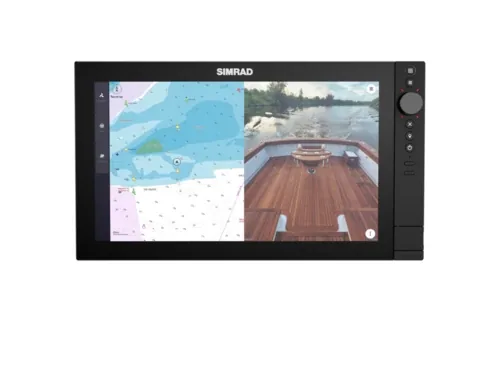
| NSS4 10, 12 or 16 with sonar | 10 to 16 in | Sounder built in | Split screens: side image, chart and 2D at once |
| NSS4 10, 12 or 16 no sonar | 10 to 16 in | Display only | Boats that already run a sounder or add a module |
| S2009 CHIRP sounder | 9 in | CHIRP, HDMI out | A dedicated sounder, or a second station mirroring the console |
| S5100 CHIRP sonar module | None | CHIRP black box | Feeding sonar to a display that has none |
Units, prices and photos for the range are on the Simrad fish finder and chartplotter page, and the wider range sits under depth sounders and fish finders and GPS chartplotters.
The transducer decides how it reads
Sonar is only as good as the transducer under it, and this is where most Ozark boats get it wrong. A transom-mount is the practical choice for a bass boat, jon boat or trailer boat that comes out of the water. A thru-hull or in-hull mount suits a boat that stays in a slip at the lake all season. Low-frequency CHIRP gets you depth and a bottom trace at Table Rock. High-frequency CHIRP gives the detail you want on Truman's timber at 15 feet.
Start with the mount and the frequencies in the transducer buying guide, then check the Simrad transducers that match your unit. If you already own a display and only need the transducer and cable, send the model number and the boat and Deepline will confirm what fits before you are invoiced.
Shipping to Missouri
Missouri is in the East and Midwest zone: orders dispatch in 1 to 3 business days once payment clears, then run 2 to 6 business days in transit. Shipping is tracked and insured, priced to your ZIP and confirmed on the invoice before you pay, and nothing is charged on the site. Pay by card payment link, ACH or wire, or Zelle. Units are new and carry the manufacturer's warranty. Unused items in their original unopened packaging can go back within 30 days with no restocking fee, and you can cancel any time before the parcel ships. Details are on the shipping policy and refund policy pages.