Where Minnesota ice anglers actually fish
There is no single opening date. Shallow, wind-swept water up north freezes first — Upper Red Lake is often fishable by late November — while deep basins like Mille Lacs take longer to lock up, and Lake of the Woods, on the Ontario border, can keep producing into late April. Buy for the water you fish first, not for the calendar.
The three lakes that drive most electronics decisions:
- Lake of the Woods — border water with Ontario holding walleye, sauger, yellow perch and northern pike. It is large, it is fished late into spring, and much of the access is over plowed roads run by resorts, so a unit with a chart and GPS earns its keep as much as the sonar does.
- Upper Red Lake — shallow, wind-driven and early to freeze, with walleye and crappie. Shallow water rewards a wide cone. Upper Red has its own walleye regulations, separate from the statewide book, so read them before you travel.
- Mille Lacs — 132,516 acres of walleye and yellow perch water with winter regulations set each fall and changing between December and spring. Check the DNR page for the current walleye and perch limits rather than relying on last year's.
Leech, Winnibigoshish and Cass round out the big-perch and walleye list. Same electronics job: mid-depth structure, fish tight to the bottom, and long days where a clear screen matters more than a large one.
Flasher, fish finder or live sonar
Three tools, three jobs. None of them is obsolete.
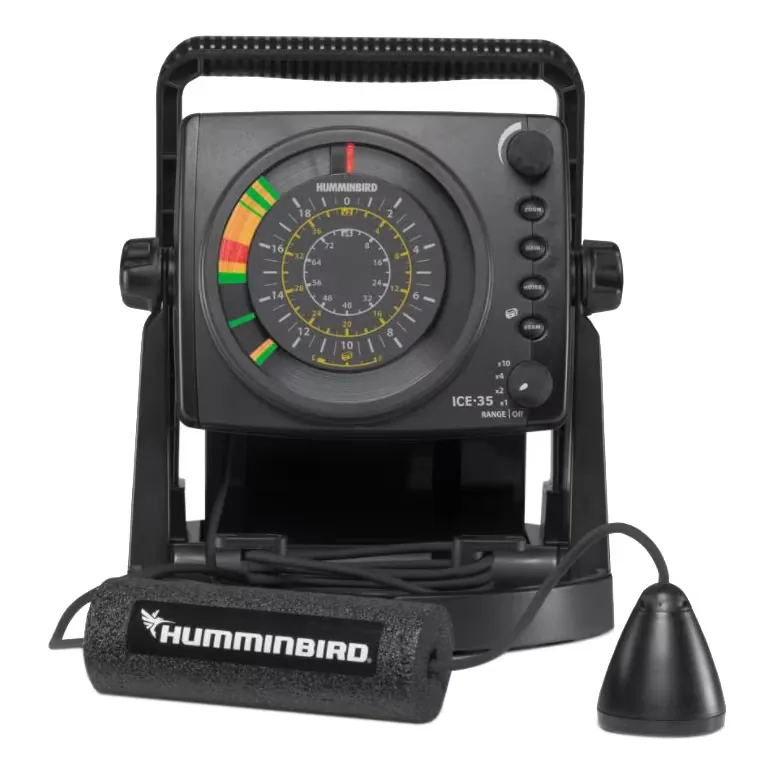
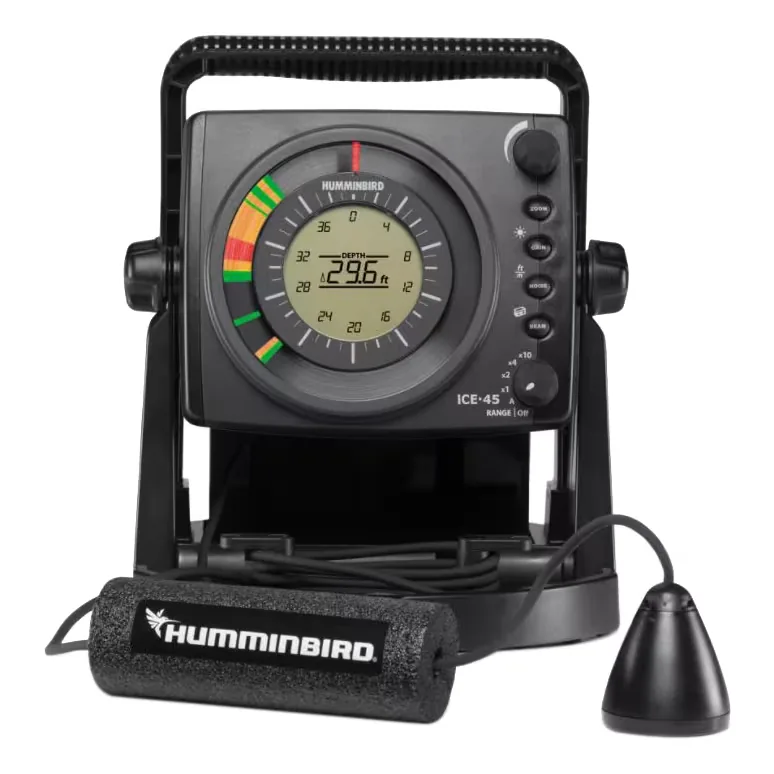
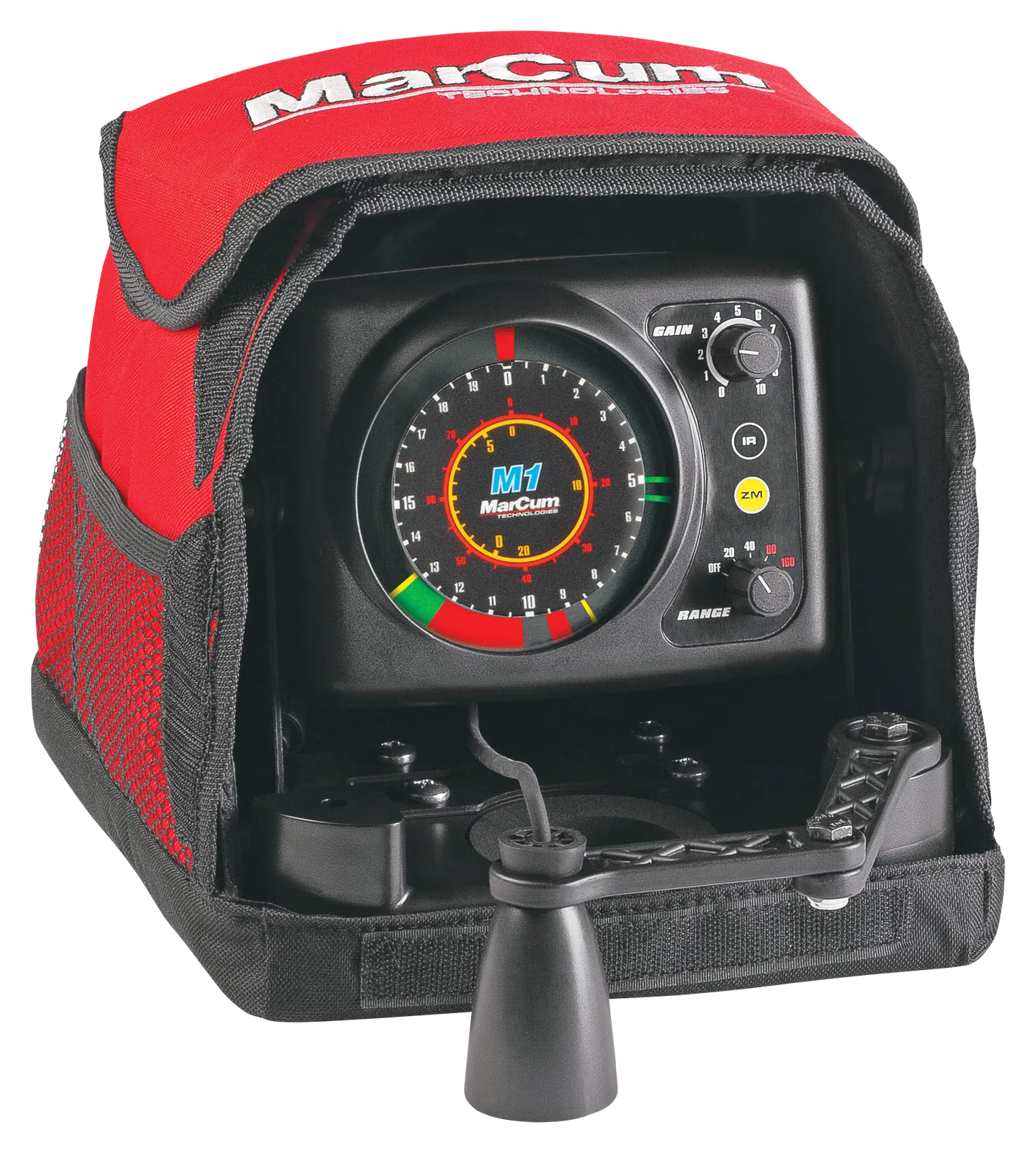
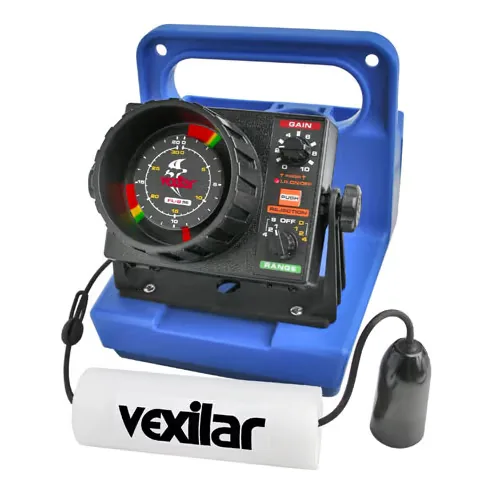
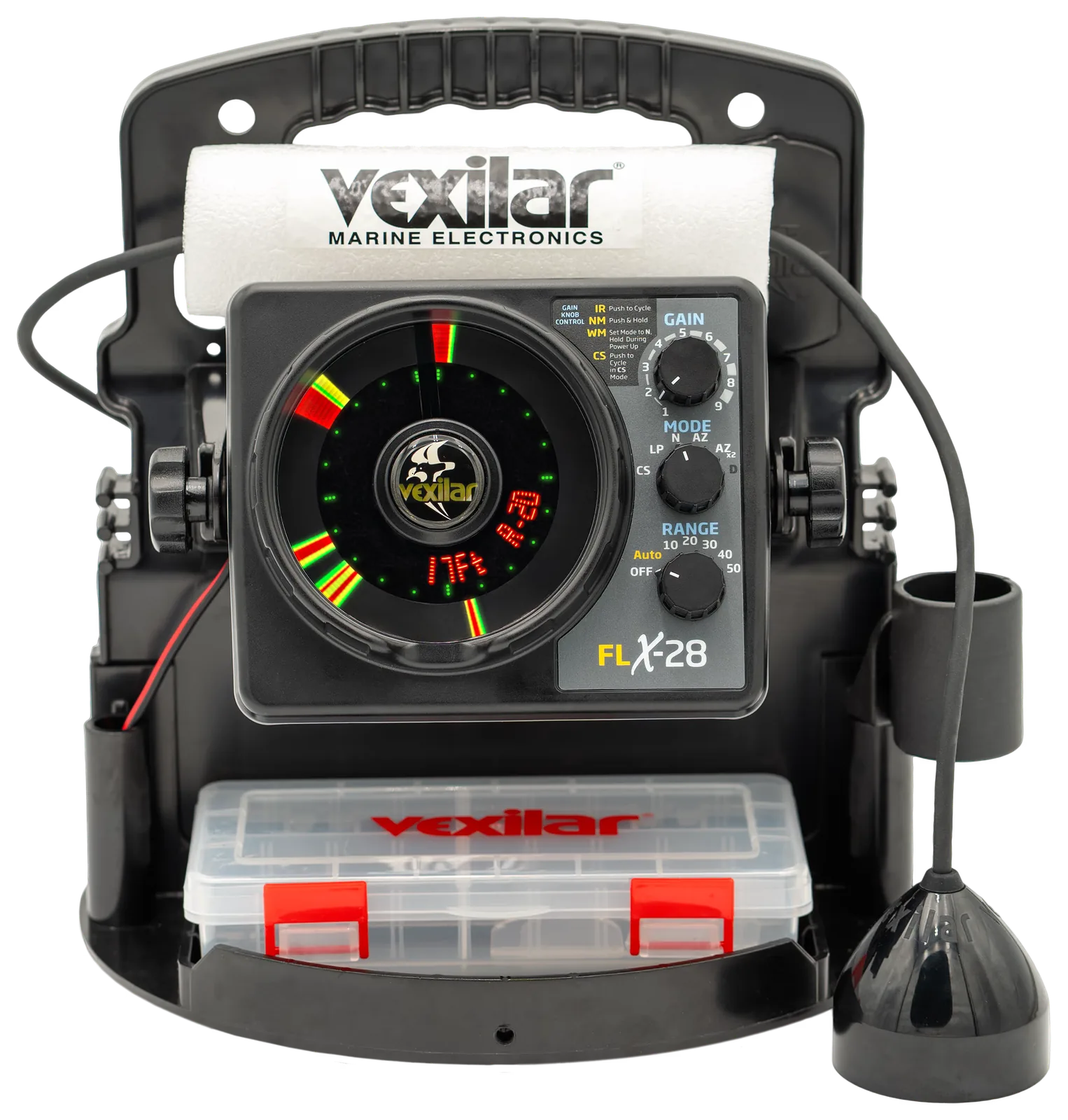
- Flasher. A real-time dial with no lag and no screen to interpret — the fastest read on whether the mark near your jig is a walleye or a smelt. The ice-fishing range includes the Humminbird ICE-35 and ICE-45, the Vexilar FL-8SE Genz Pack with a 19-degree Ice-Ducer and the FLX-28 Pro Pack, and the MarCum M1 with selectable 20, 40, 80 and 160-foot ranges. Best choice if you jig tight to bottom and want to watch the lure and the fish at the same time.
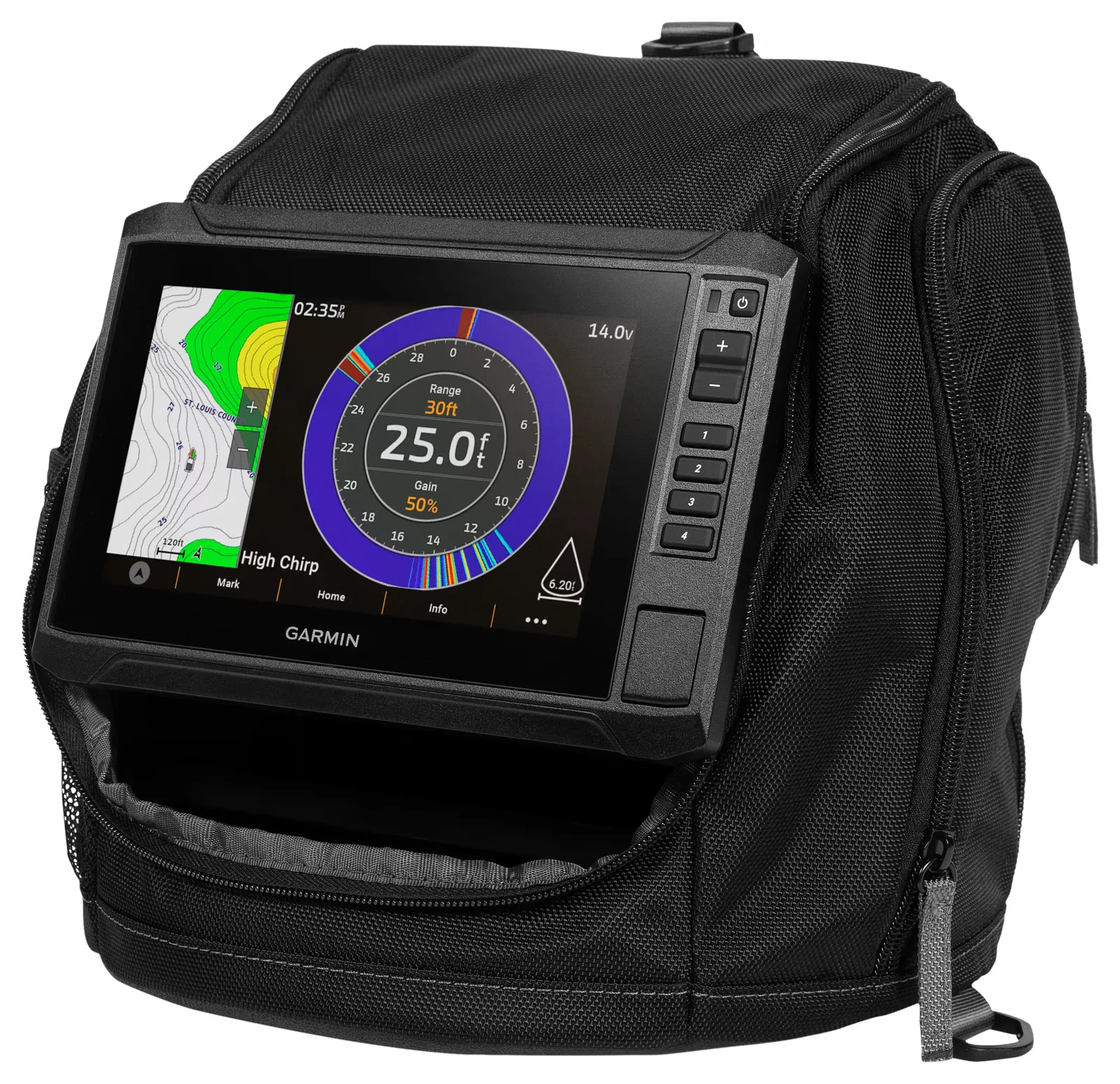
- Fish finder with GPS and a chart. A screen shows history — what passed through five seconds ago — and a plotter marks the hump you found so you can come back tomorrow. Garmin's ice bundles do this: the STRIKER Vivid 5cv bundle with the GT8HW-IF transducer and a lead-acid battery, the STRIKER Plus 4 bundle, and the ECHOMAP UHD2 7-inch sv bundle with the GT10HN-IF transducer and US freshwater charts. Best if you travel between lakes and fish structure you need to re-find.
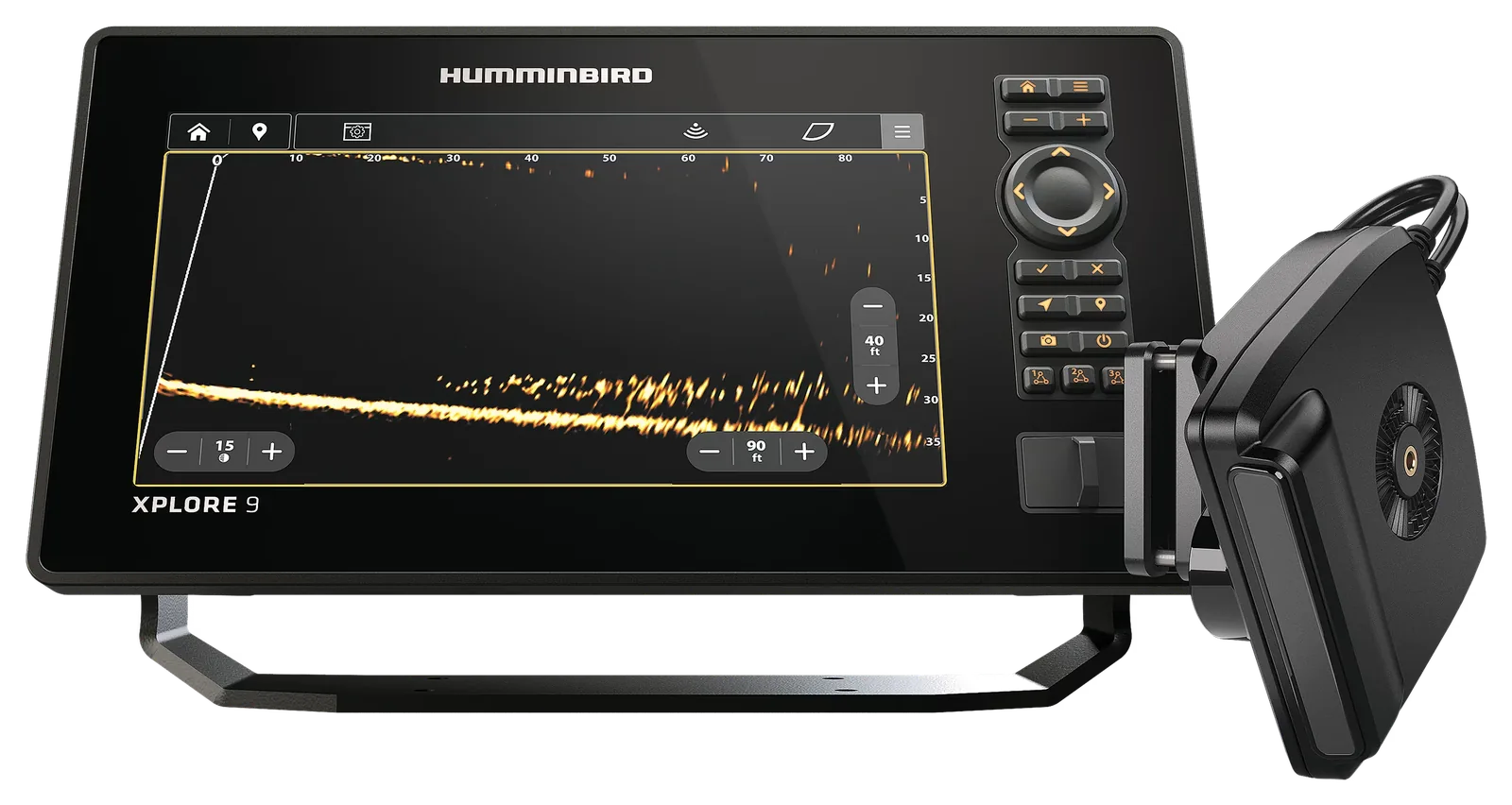
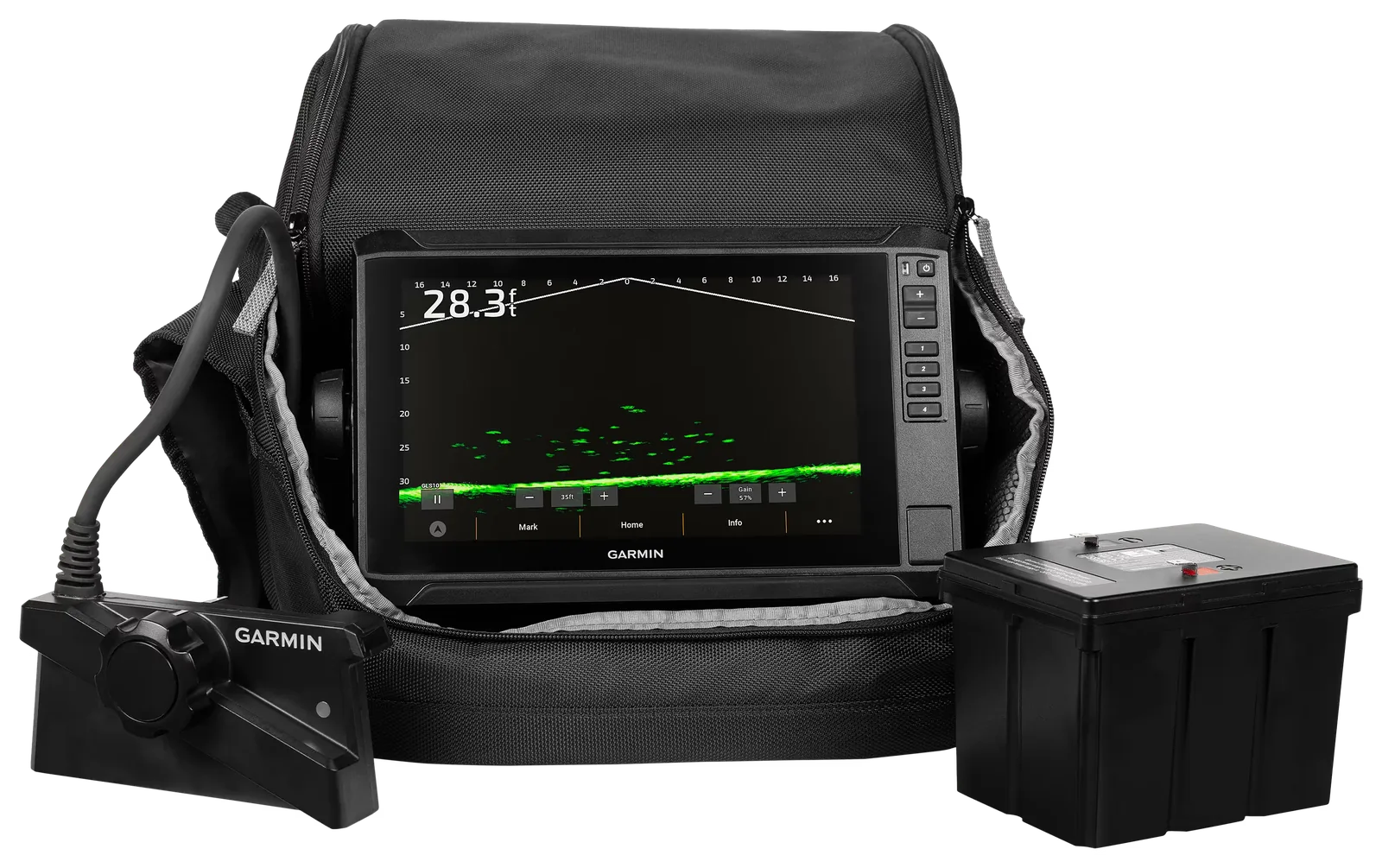
- Live sonar. Forward-facing sonar shows fish approaching and reacting to the lure, which is the difference on pressured fish. Garmin's ECHOMAP UHD2 LiveScope Plus ice bundle and the standalone LiveScope 2 HD ice transducer, or Humminbird's XPLORE 9 Ice ML2 combo, put it on the ice. More money, a steeper learning curve, and worth it if you fish the same basin hard all winter.
The cone angle decides more than the screen
On open water you can move the boat. On ice the hole is fixed, so beam width is your entire search area. A cone covers a circle on the bottom roughly twice the depth times the tangent of half the angle:
| Depth | 9-degree cone | 12-degree cone | 19-degree cone |
|---|---|---|---|
| 10 ft | about 1.6 ft | about 2.1 ft | about 3.3 ft |
| 20 ft | about 3.1 ft | about 4.2 ft | about 6.7 ft |
| 30 ft | about 4.7 ft | about 6.3 ft | about 10 ft |
Practical rule: 19 or 20 degrees for panfish and crappie in 15 feet or less, where seeing fish slide in from the edge of the hole is the whole game. 9 to 12 degrees for walleye and perch in 25 feet or more, where a wide cone turns the bottom into a smear and a small jig disappears. If you fish both, a dual-beam transducer on one cable — the XI 9 19 that ships on the Humminbird ICE series, for example — saves you buying twice. The transducer guide goes through mount, frequency and power in more detail.
An ice transducer is not a boat transducer
An ice transducer is built to hang level under the hole and shoot straight down. A transom transducer is built to sit at an angle against a running hull, and hung in a hole it reads poorly or not at all. That is why the bundles ship with the IF models — GT8HW-IF and GT10HN-IF on the Garmin side, the XI 9 19 on the Humminbird flashers, the Ice-Ducer on the Vexilars.
If you already own a compatible display, you may only need the ice transducer and a power lead rather than a whole new unit. Send your display model and the lakes you fish and we check the pairing — connector, sonar channels and whether the unit supports the transducer — before an invoice goes out.
Cold hands, cold batteries
Lithium and lead-acid batteries both lose capacity fast at zero. Carry the battery inside your coat until you set up, keep the unit out of the wind, and expect condensation on a screen moved from a warm truck into a cold shelter. In Minnesota you can fish two lines through the ice, which is exactly when a flasher or a live sonar unit beats a rod in each hand — you can watch the second line while you jig the first.
Getting it before the season
Minnesota is in our East and Midwest shipping zone: 1 to 3 business days to dispatch once payment clears, then 2 to 6 business days in transit. Shipping is priced to your ZIP and shown on the invoice before you pay, expedited included, and nothing is charged on the site — you pay the emailed invoice by card link, ACH or wire, or Zelle. Full detail is on the shipping page.
Order in late October or early November, not the week you plan to fish. Every unit is new and carries the manufacturer's own warranty, and unused gear in its original unopened packaging can come back within 30 days with no restocking fee — which matters if you order a single-beam flasher and find you wanted a dual beam. Anything faulty or damaged in transit, reported within 48 hours, gets a prepaid label and a replacement or refund.