Shipping to Michigan
Michigan sits in our East & Midwest shipping zone. Orders are dispatched 1–3 business days after payment clears, then run 2–6 business days in transit. Shipping is priced to your ZIP code and confirmed on the invoice before you pay anything — the site never charges a card at checkout. Payment is by card payment link, ACH or wire, or Zelle, once we have checked the order against your boat and display. Details are on the shipping policy page.
Nothing ships until compatibility is confirmed. Send your display model, your hull, and the transducer you already have (or a photo of the transom), and we match the connector, the sonar channels and the mount before the invoice goes out. That check matters in Michigan because the same boat gets used for 200-foot trolling water one week and an 11-foot inland lake the next.
Big water first: Lake Michigan and Lake Huron trolling
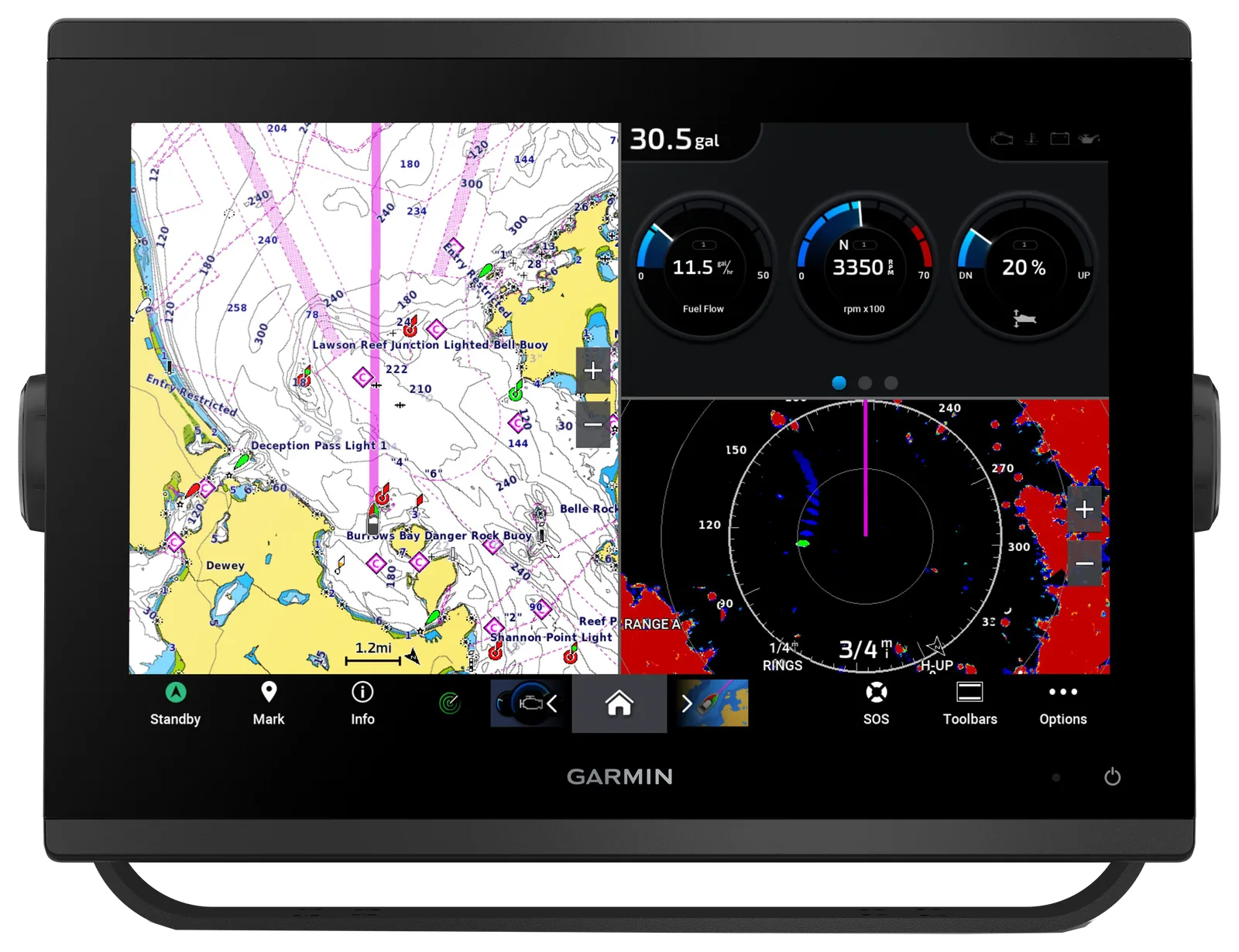
Trolling for chinook, coho, steelhead and lake trout is a navigation problem as much as a fish-finding one. You are running a fixed speed on a heading, often 2 to 3 miles offshore, watching two to four rods and a downrigger or leadcore spread. The screen has to show you the contour, the port entrance and your track at the same time, in sunlight, with spray on the glass.
- Screen size: 9 to 12 inches for most sport boats and center consoles; 16 inch units for a hardtop with a flush-mount dash. Under 7 inches you will be zooming instead of fishing.
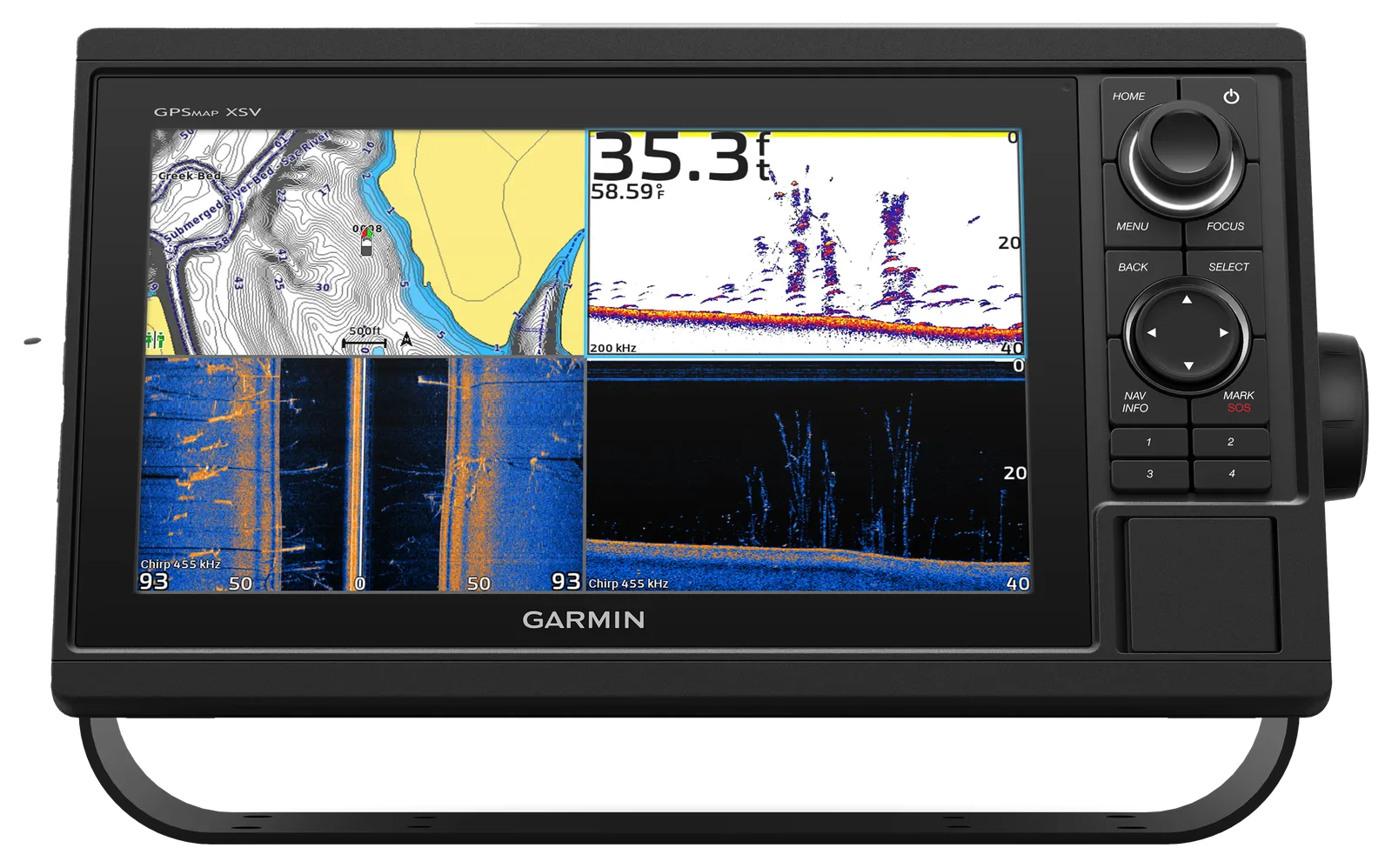
- Sonar power and frequency: a 1 kW sounder with low and medium CHIRP holds bottom and marks fish while you are moving. Traditional 50/200 kHz still works, but CHIRP separates a suspended salmon from a bait ball much more cleanly.
- Transducer: a thru-hull or in-hull mount is the usual choice on a fiberglass Great Lakes boat — it holds bottom at speed and does not get knocked off by a trailer or a net. Transom mount works on aluminum and on boats that get pulled often. The transducer guide walks through mount, frequency, power and connector.
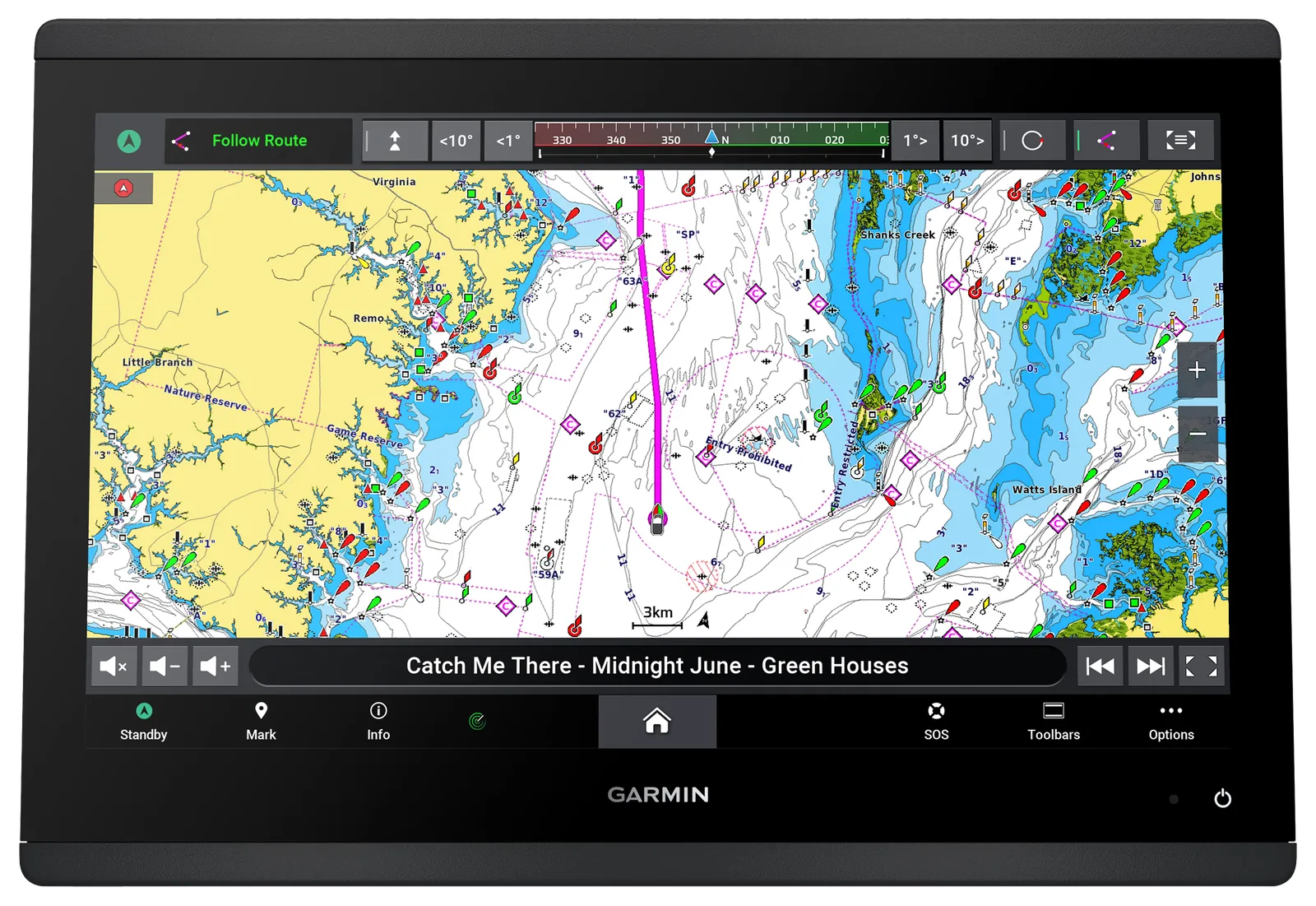
- Mapping: load the chart card for the whole lake, not just your home port. A day that starts at Ludington or Frankfort can end 20 miles up the coast.
What you are actually looking for: in summer, lake trout often sit 80–150 feet down over deeper water, while kings commonly hold 30–50 feet down over 100 feet or more. In spring and fall both come shallower, sometimes inside 30 feet. Salmon and trout key on water in the mid-40s, so a sounder that shows a temperature profile — or a display that takes a temp sensor — is worth more than another 2 inches of screen. Fish come up to the lure, so the mark you want is often a faint one 40 feet above the bottom, not the bottom itself.
Saginaw Bay: shallow, weedy, walleye
Saginaw Bay is the other half of Michigan fishing. The inner bay is big, shallow and largely featureless — a lot of walleye water sits in 14 to 20 feet, with fish anywhere from 5 to 45 feet depending on the week and the forage. Trolling crawler harnesses and crankbaits over those flats means you need a clean 2D picture at speed and a contour line you trust.
- 2D sonar and a fast GPS fix first: a 10 Hz receiver keeps the track smooth at trolling speed, which matters when you are working a weed edge or a reef.
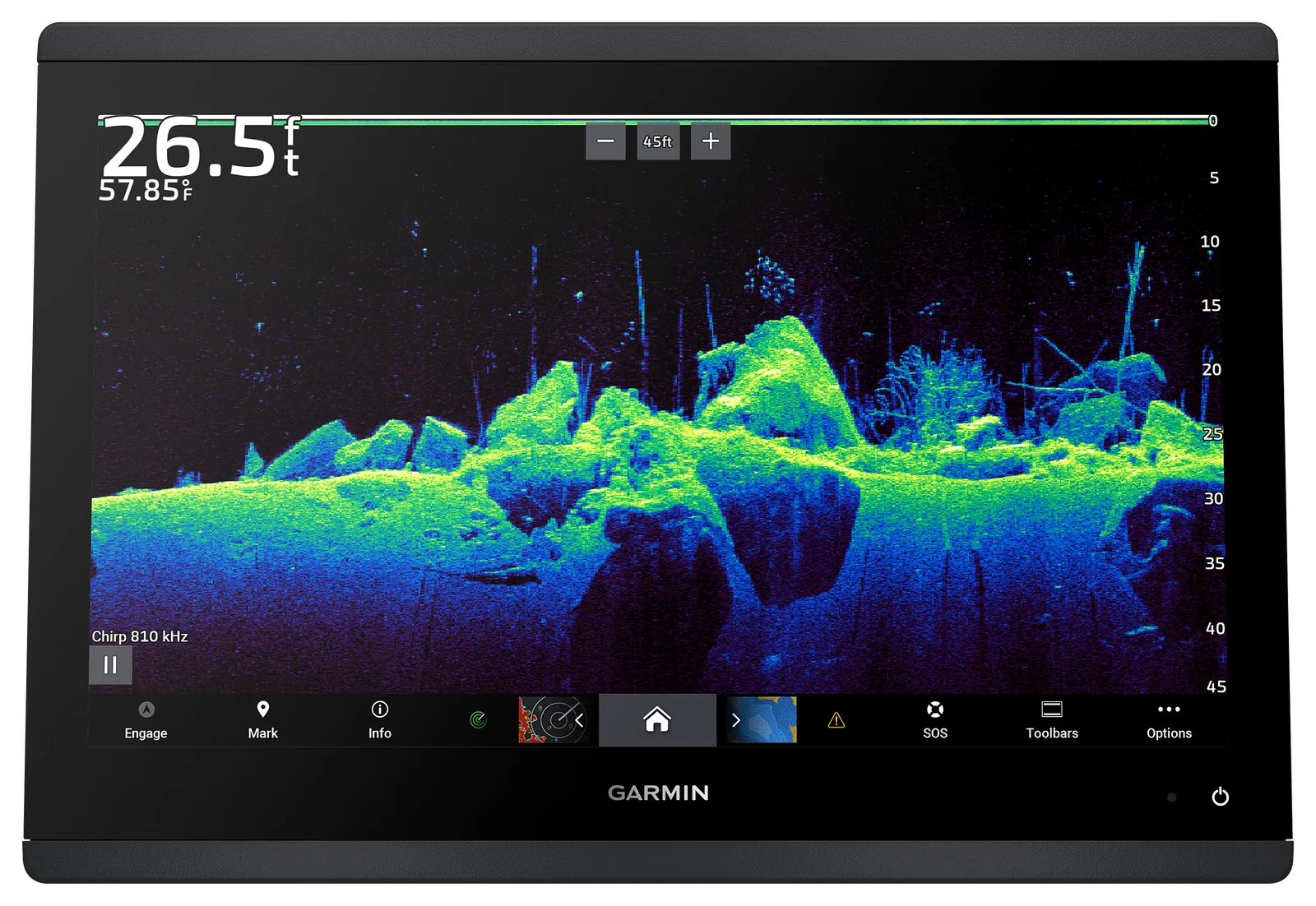
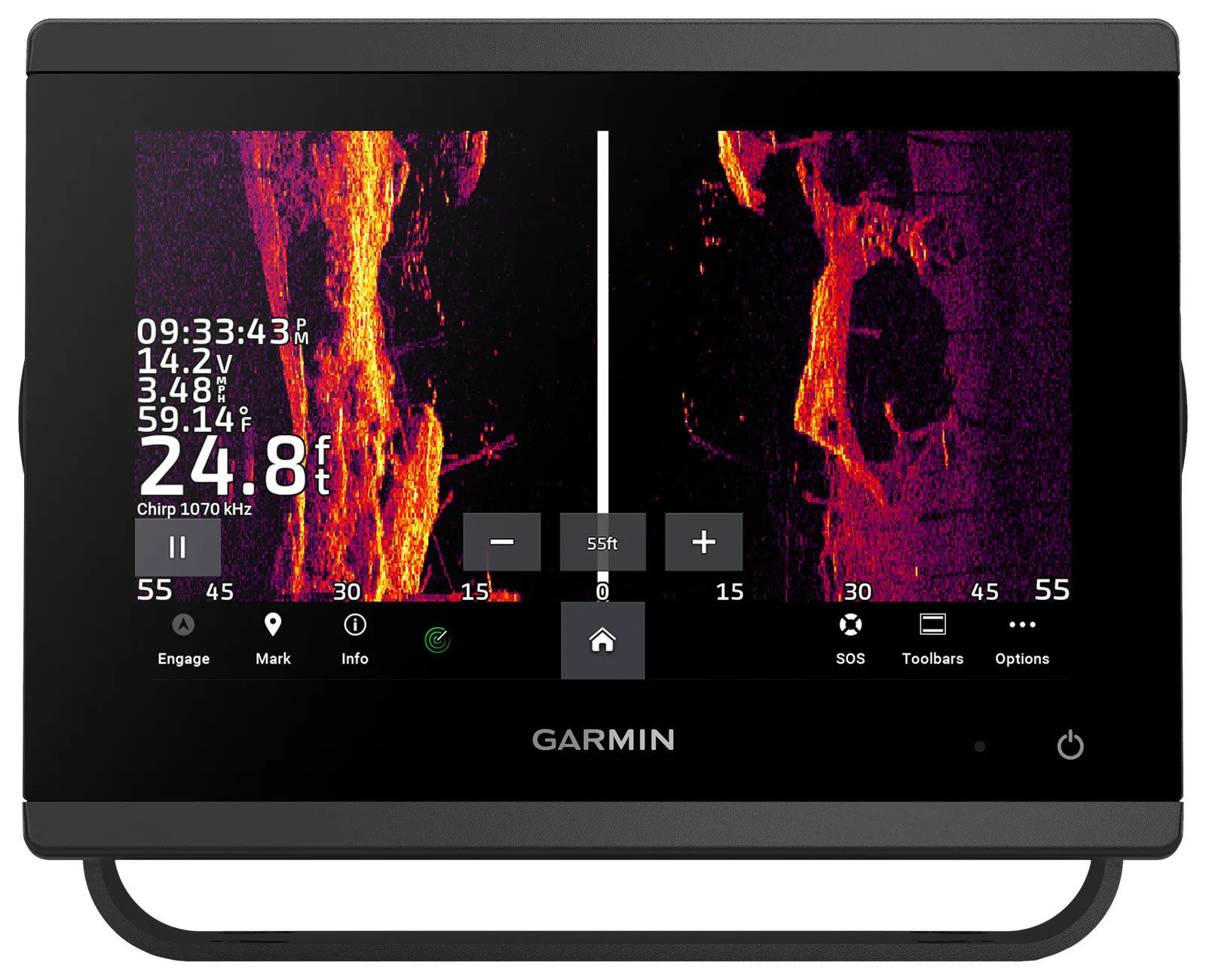
- Down and side imaging for the weed beds, the inner-bay reefs and the transition from sand to rock — that is where the fish sit when they are not suspended.
- Live or forward-facing sonar if you cast rather than troll: it shows fish position relative to the boat, which is the difference between seeing a mark and catching it.
Saginaw Bay also gets rough fast in a west wind. A display you can read through spray, mounted so it does not fill with water in a following sea, is not a detail.
Lake St. Clair and the Detroit River: shallow and featureless
Lake St. Clair averages about 11 feet, with the navigation channel cut deeper at roughly 27 feet. It is the best smallmouth water in the region and one of the country's better muskie lakes, and the bottom is mostly flat sand and hard bottom with sparse vegetation. Fish roam in schools following perch, crayfish and shiners. There is not much structure to read — so electronics carry the load.
- Side imaging to cover water: it lets you scan the flats and the channel edges instead of idling over them.
- Live sonar for the fish that hang on channel markers, the chain, and the current breaks in the Detroit River — small stuff that a chart will never show.
- Mapping with tight contours and a visible channel: on a lake this shallow, the difference between 4 feet and 6 feet is the difference between fishing and a lower unit repair. A chart card with a good Lake St. Clair survey beats a base map every time.
- GPS anchor and heading if you fish the river: current moves you, and a track you can repeat is how you stay on a spot.
Ice season in the Upper Peninsula and northern Lower
From late fall through winter, the fishing moves to hard water — the U.P. lakes, Grand Traverse Bay's protected arms, Houghton and Higgins, and the northern Lower lakes that freeze early. Two routes work:
- Add an ice kit to the boat unit. A carry bag, a battery and a dedicated ice transducer turns a portable or mid-size fish finder into a flasher you can drop hole to hole. Cheapest if you already own a unit with a compatible sonar port.
- Buy a dedicated flasher or portable. Faster to set up, simpler to read in a dark shanty, and it stays packed in the truck. The ice fishing category has flashers, portable units and ice transducers.
Either way, a winter unit wants a narrow beam for a clean read in 30 feet of water and a bright display at low temperatures. A wide beam on a flasher is a blur of noise.
Chartplotter, sounder, or both
Most Michigan buyers end up with a combination unit rather than two boxes:
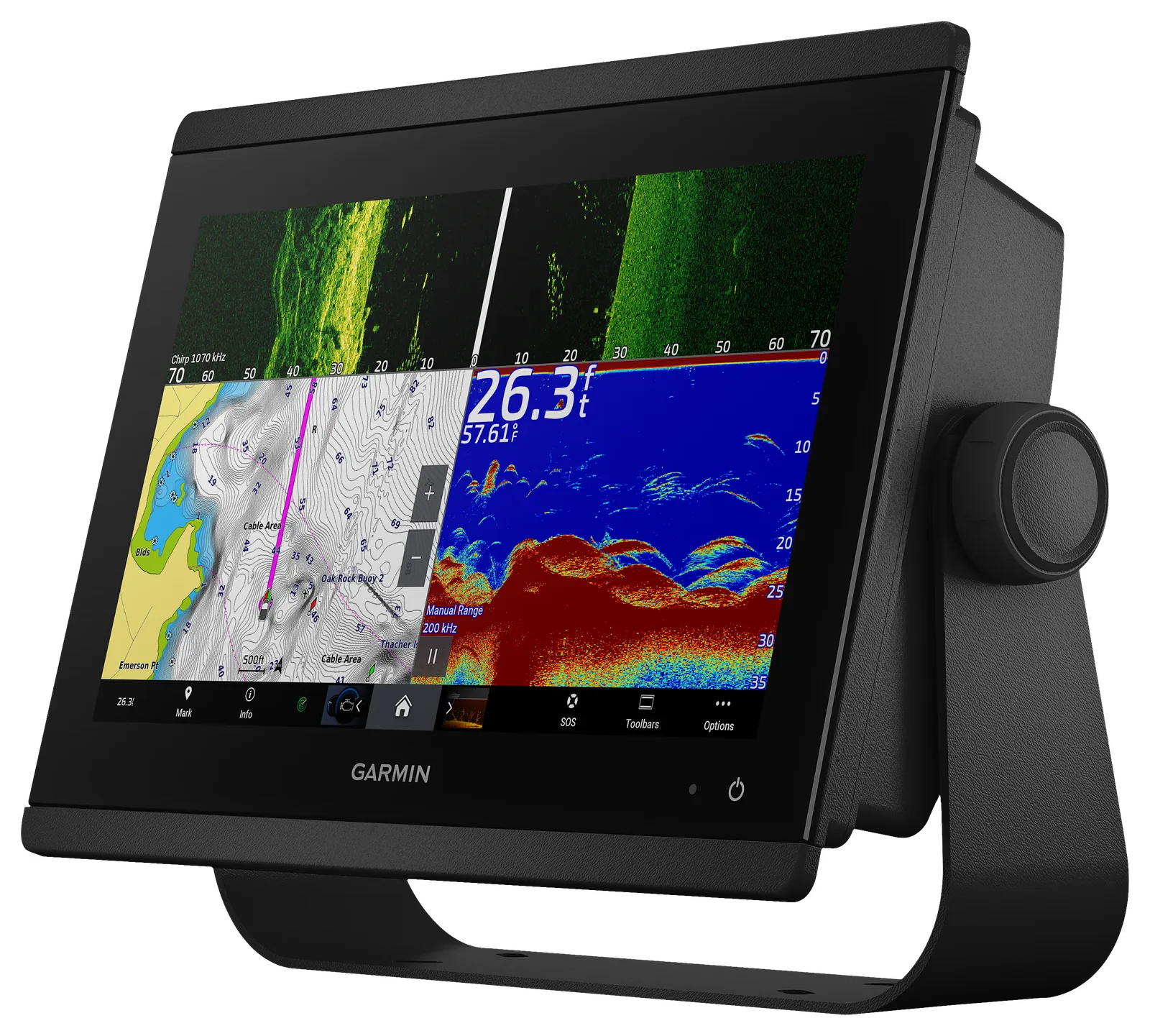
- Chartplotter with built-in sounder — one screen, one power run, mapping and sonar together. The default for a boat that does both trolling and structure fishing.
- Chartplotter only, plus a black-box sonar module — when you want the big display on the dash and the sonar box tucked away, or when you are adding a second station.
- Fish finder only — right for a small aluminum boat, a kayak or an inland lake where there is nothing to navigate.
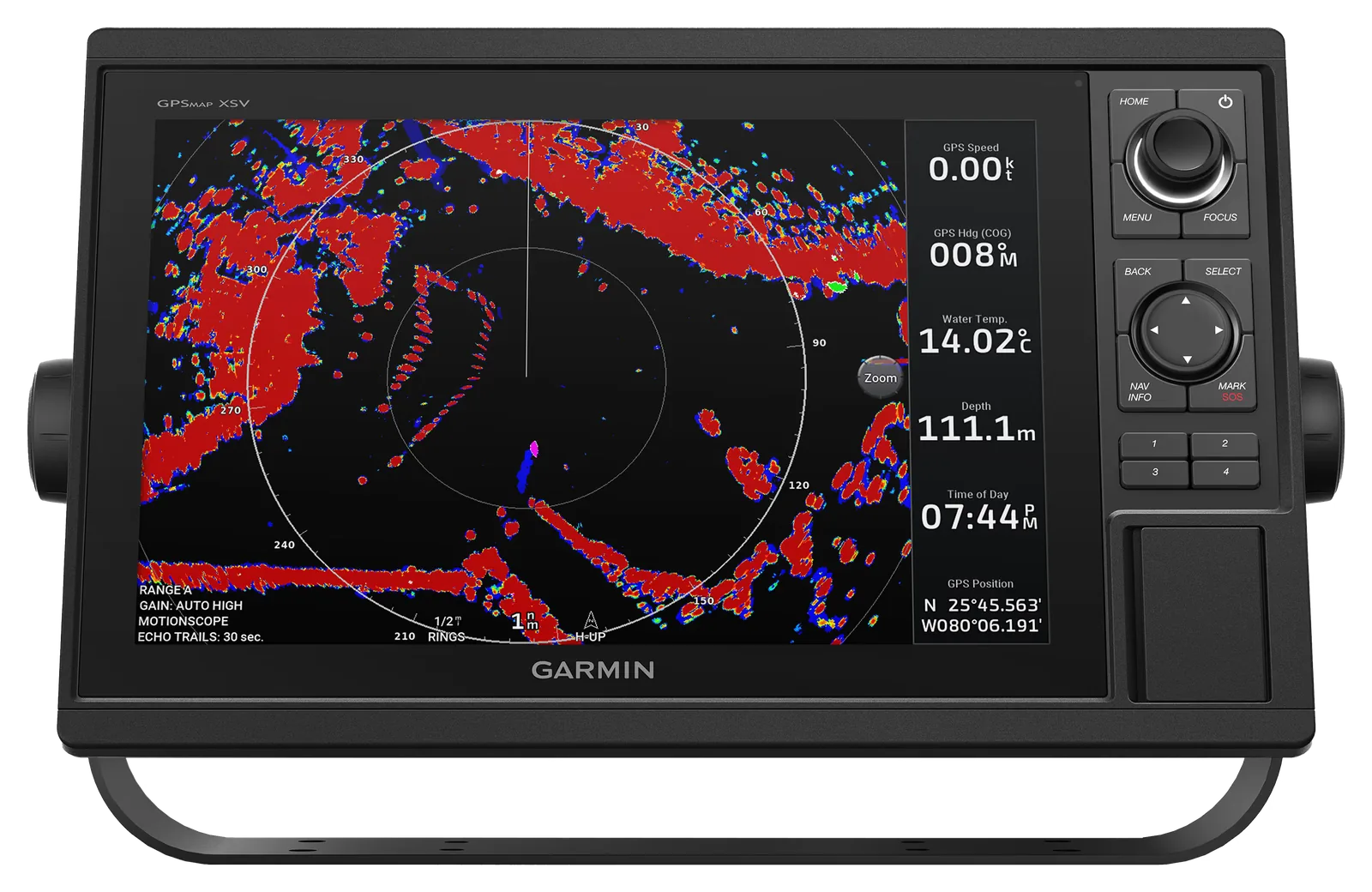
If you plan to add radar, an autopilot or AIS later, buy the display that networks now: NMEA 2000 for instruments and heading, plus the brand's own network for radar and shared sonar. Adding a radar to a unit that cannot take one is the expensive mistake. Start at GPS chartplotters or fish finders and depth sounders.
What to send us before you buy
- The display you own now, if any — exact model number.
- Boat: length, hull material, and how it is used (trolling, casting, ice, all three).
- Mount: transom, thru-hull, in-hull or trolling motor, plus a photo of the transom if you are unsure.
- Whether you need radar, autopilot or AIS to talk to it later.
Give us those four and we come back with a specific unit, the right transducer and the cable, checked against the boat before the invoice is sent. If a part will not fit, we say so before you pay, not after. Products are new and carry the manufacturer's own warranty. Unused items in original packaging can be returned within 30 days with no restocking fee — see the returns policy. For anything not covered here, the FAQ answers the common ones, and contact gets you a person.