The TVA reservoirs: find the ledge, then fish it
Chickamauga, Watts Bar and Douglas all fish the same way in summer and fall. Bass pull off the bank and stack on channel ledges, humps and creek-channel bends, and crappie school on brush piles and standing timber. You are not looking for a single fish on the screen — you are looking for the edge, the depth it sits at, and the cover on it.
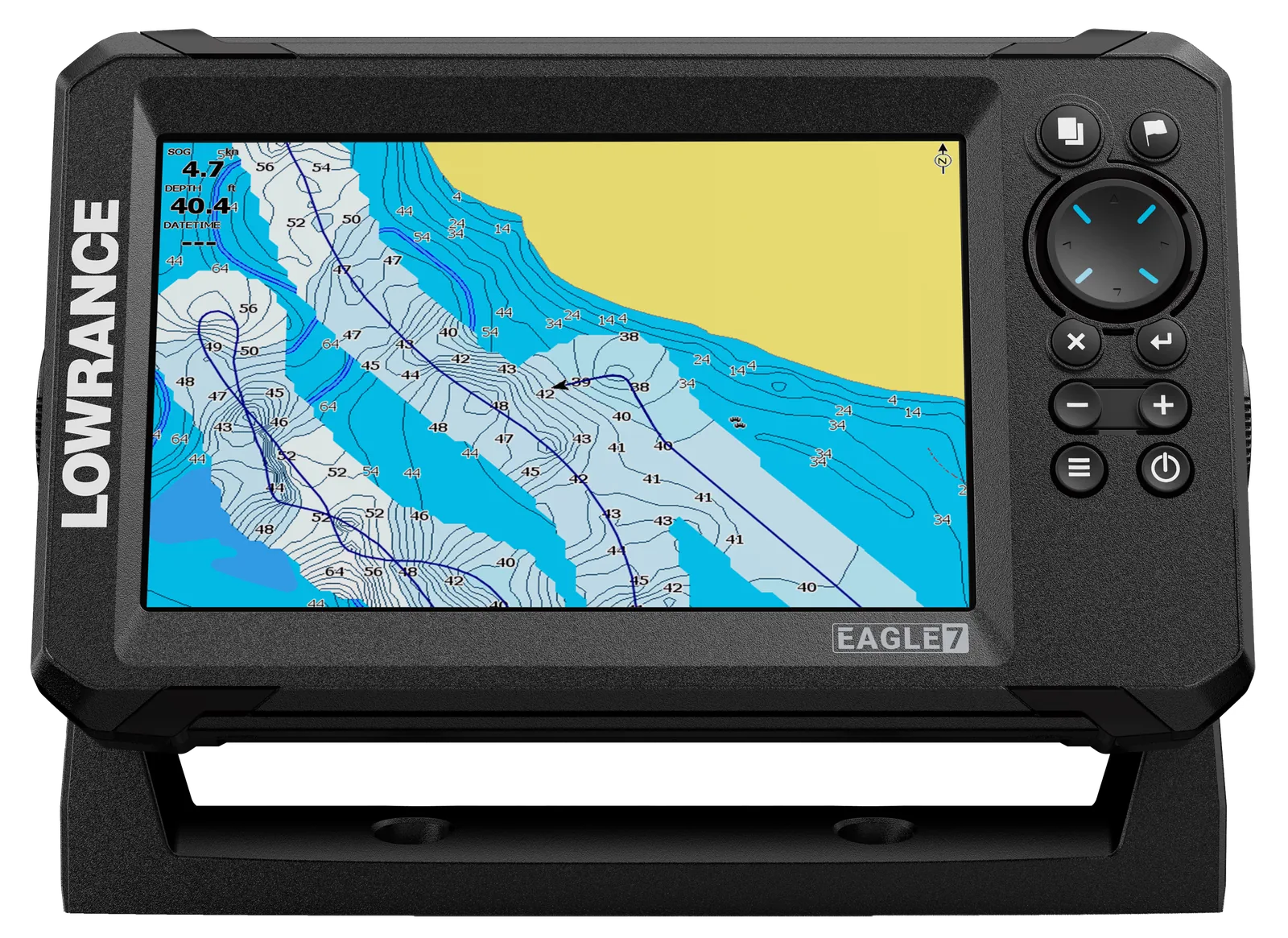
On Chickamauga, the lower end around Dallas Bay and Harrison Bay holds a big complex of shallow, fertile spawning water, and Soddy, Possum and Sale creeks feed it. Post-spawn and through summer, the bass move out to ledges and humps in roughly 15 to 25 feet. That is exactly the depth band side imaging was built for: run a pass parallel to the ledge, scan 100 feet to each side, and mark the spots where the contour bends or the brush sits. Down imaging then tells you whether the marks are fish or timber.
Watts Bar: crappie and brush
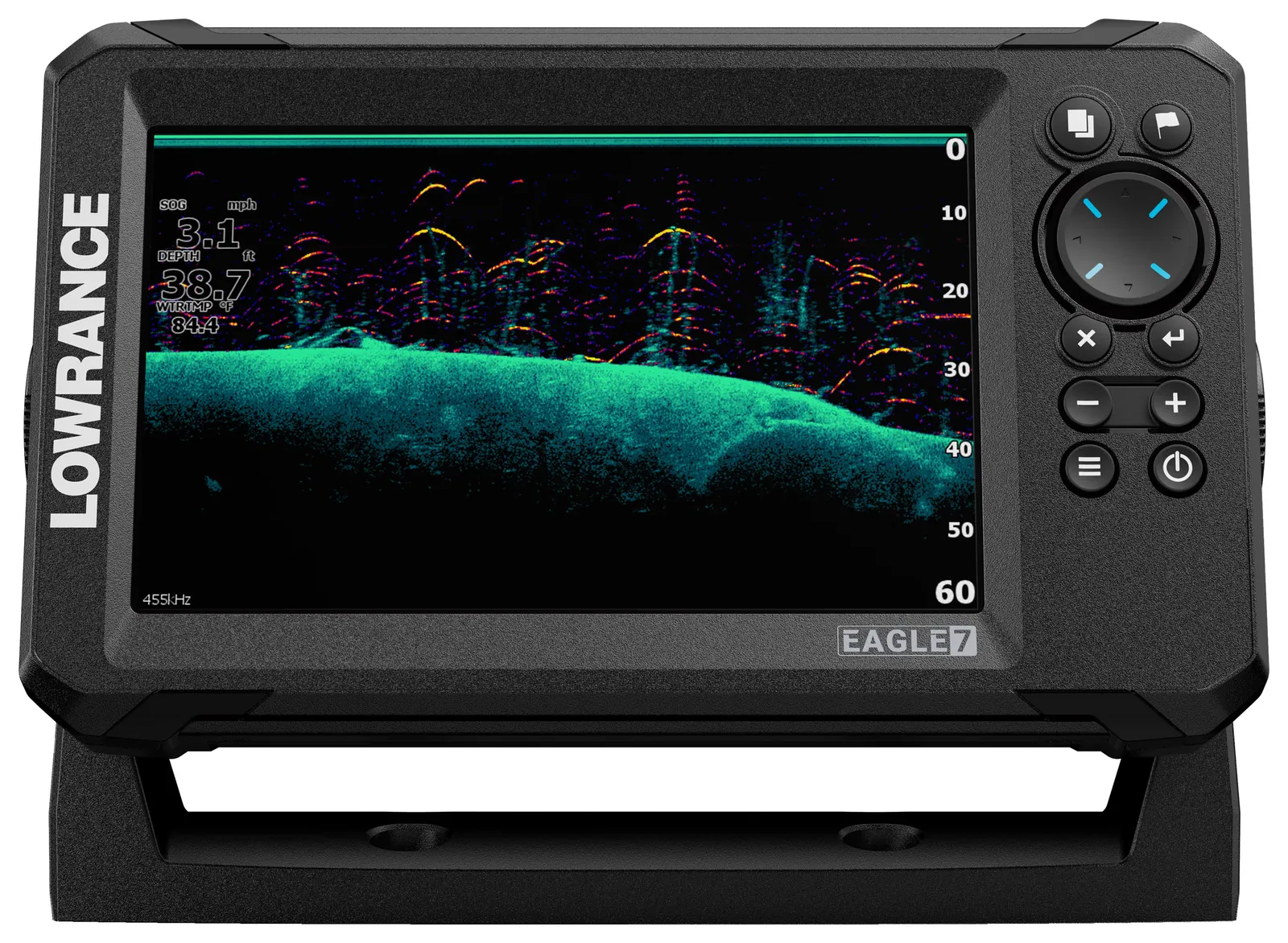
Watts Bar crappie move shallow in March and April, then drop back to deep docks and offshore brush once they spawn out. Trolling and spider rigging are the standard approaches, and both depend on reading a brush pile clearly enough to know how tall it is and where the fish are holding on it. High-frequency CHIRP and DownScan separate a crappie from the top of a brush pile at 12 feet; plain 2D sonar blurs the two together.
Douglas: deep, clear and stratified
Douglas is a different lake entirely. It runs about 30,600 acres with 555 miles of shoreline, and it can drop 60 feet from its summer pool to winter pool. It stratifies early — sometimes by June — and dissolved oxygen falls below the thermocline, so summer fish sit shallow on the lower end of the lake, often in less than 10 feet of water over a creek channel that is far deeper. That takes a sounder with a clean, narrow 2D return in deep, clear water so you can see the thermocline and the bait around it, plus enough screen brightness to read it in midday sun. The Flat, Muddy, McGuire and Nina creek embayments are the local starting points.
Side imaging versus down imaging on a ledge
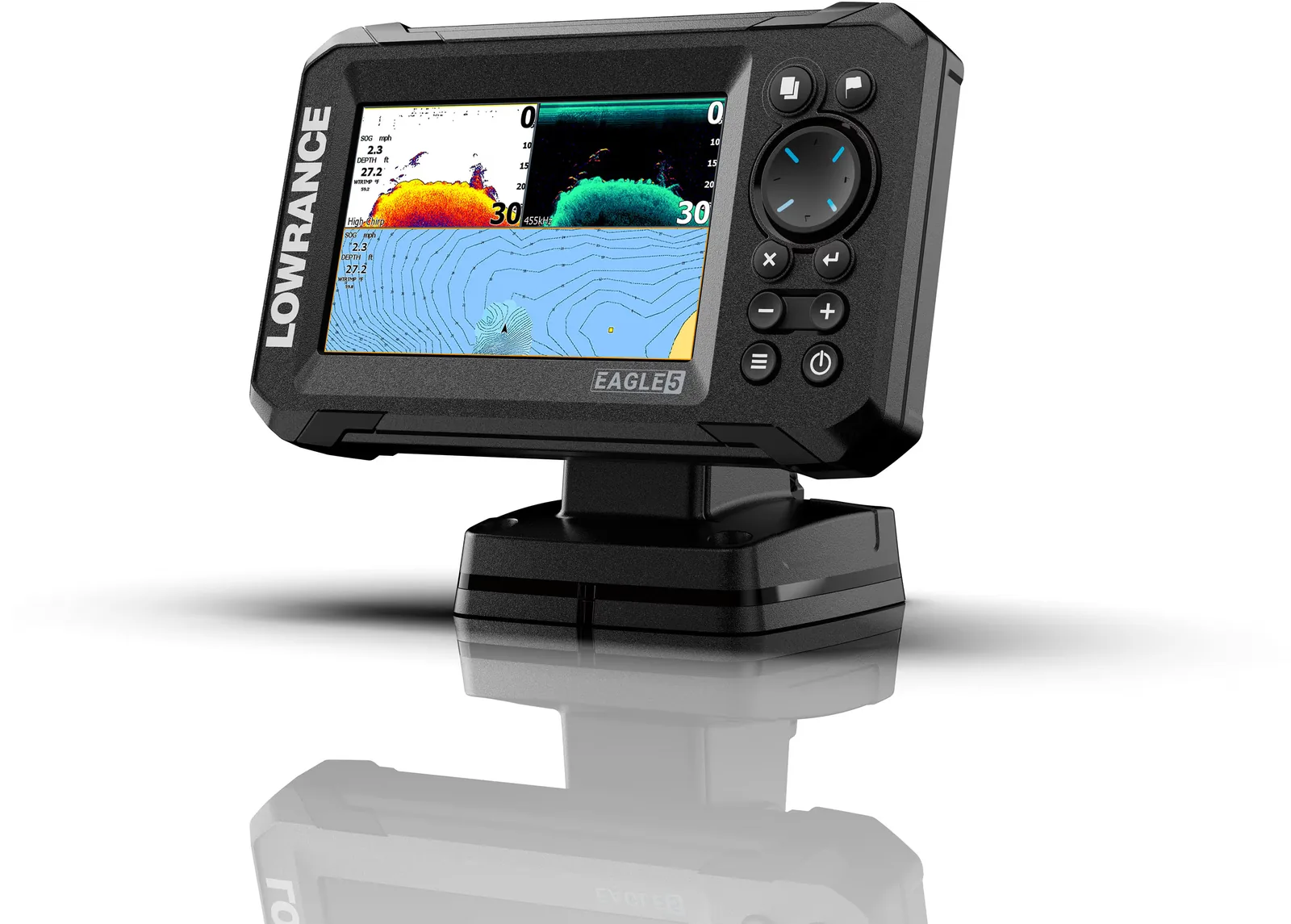
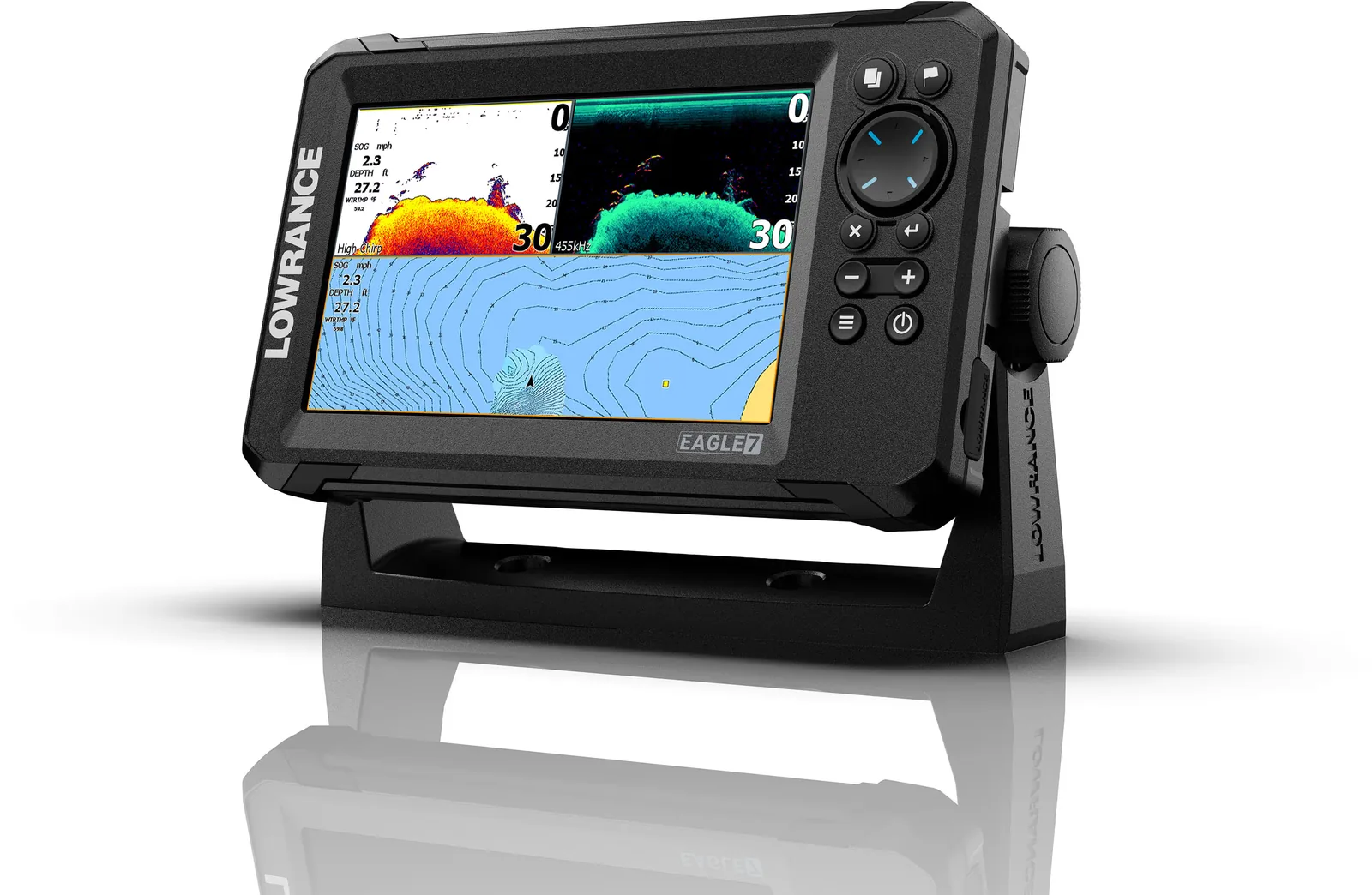
Short version: side imaging finds structure you did not know was there, and down imaging tells you what is on it. On a Tennessee ledge you want both, on one screen. Lowrance's FishReveal puts CHIRP and DownScan in a single view so a fish sitting tight against the bottom or inside a brush pile stays visible instead of vanishing into the return.
Reelfoot is its own problem
Reelfoot was formed by the New Madrid earthquakes of 1811 and 1812, when the ground slumped and the Mississippi backed up into the basin. It is Tennessee's largest natural lake and the only one of its kind in the state. About 68 percent of it is three feet deep or less, with stump fields, sunken cypress and four basins connected by ditches. The Lower Blue Basin takes the most crappie pressure; Buck Basin holds black crappie.
That changes the electronics brief:
- Wide cone, not narrow. In three to six feet of water a narrow high-frequency beam covers almost nothing. You want a wide-angle CHIRP element or the shallow-water setting pushed to its limit.
- Down imaging over side imaging. Side imaging needs water to scan through. Around cypress knees and flooded timber, down imaging is what separates a stump from a crappie holding beside it.
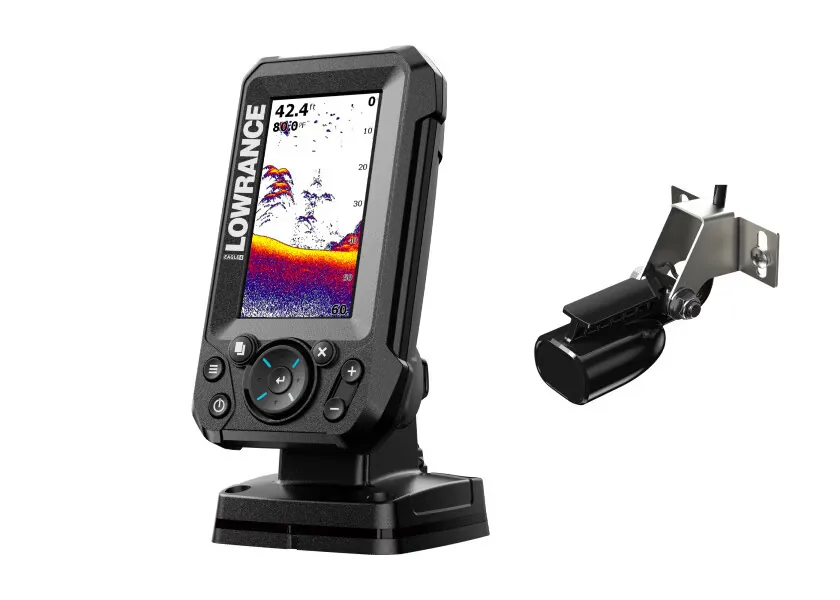
- A transducer that survives stumps. A transom-mount unit on a kick-up bracket is standard on Reelfoot. A rigid thru-hull or a low-mounted skimmer is a good way to lose a transducer on the first drift through a stump field.
- GPS with waypoints. A good stump field looks like every other stump field until you mark it. Save it, and you can come back to it next spring.
Which Lowrance units suit Tennessee
The Lowrance fish finder range splits into two useful groups for this state.
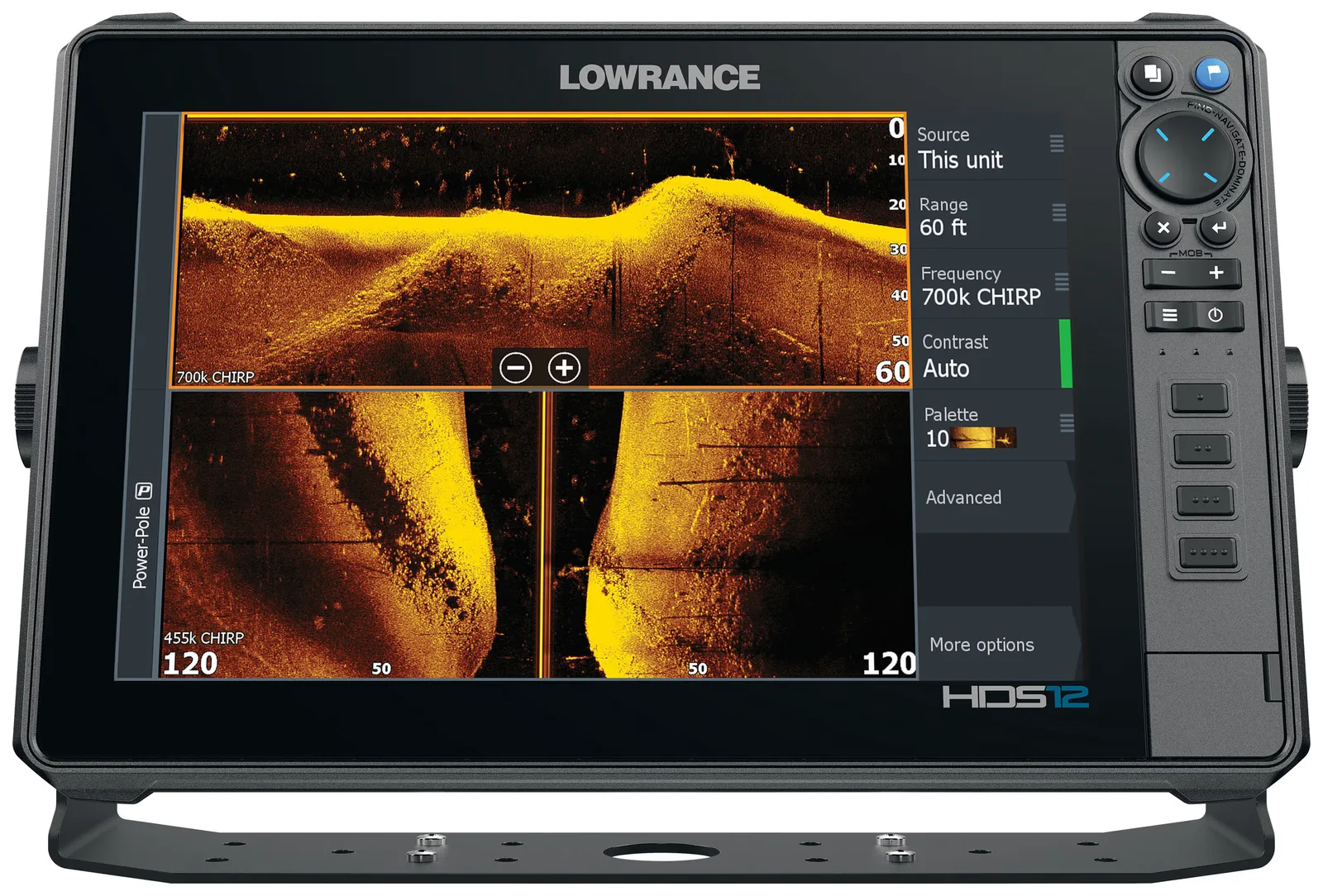
Elite FS (7, 9, 10 and 12 inch). 2D CHIRP, DownScan and SideScan on one display, FishReveal, GPS included, and ActiveTarget-ready if you later add live sonar. The most common choice for a bass boat or a crappie rig that fishes Chickamauga and Watts Bar through the year. The 9 and 12 give you enough screen to run side imaging and 2D side by side, which is what you actually do on a ledge.
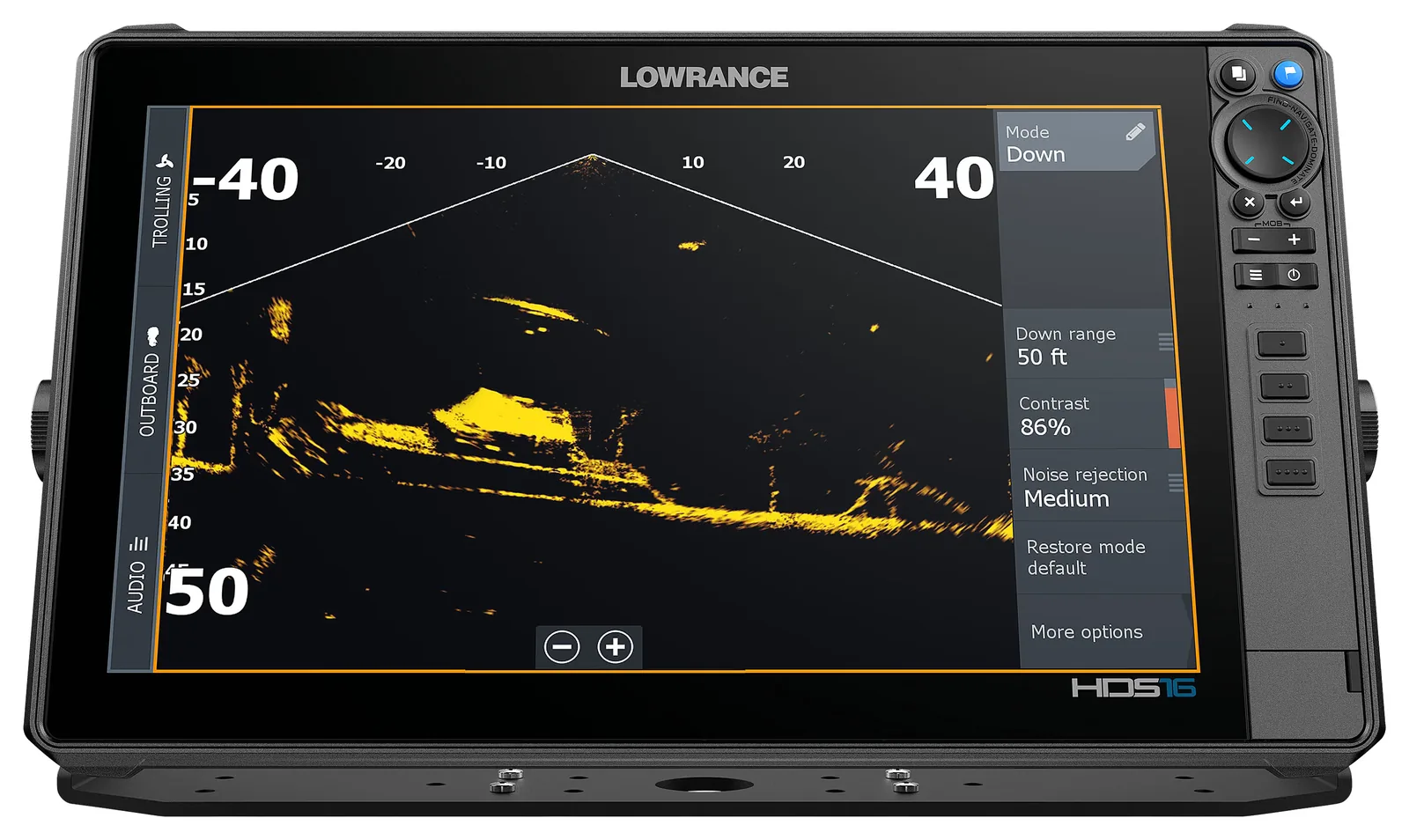
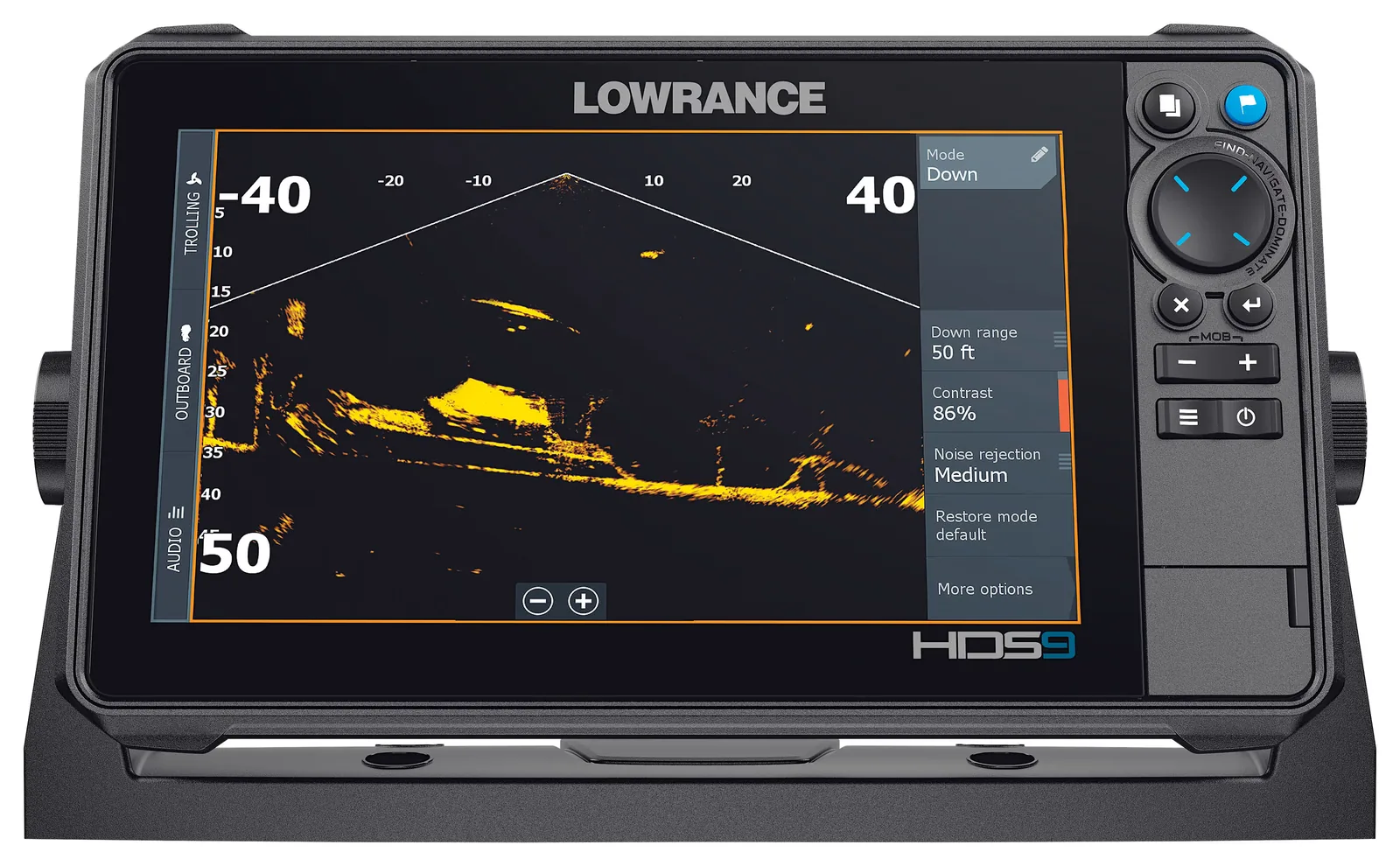
HDS PRO (9, 10, 12 and 16 inch). More sonar power and more transducer channels, plus the networking to sit at the centre of a boat with radar, an autopilot and a second display at the bow. Worth it if Douglas or Chickamauga is your home water and you fish deep, or if you are building the electronics out over a couple of seasons rather than all at once.
Both lines ship as display-only units or as bundles with a TotalScan or Active Imaging HD 3-in-1 transducer, so you are not guessing which skimmer matches the head unit. If you already own a display and only need the transducer, start with the transducer guide and then look at transom-mount transducers; if you want to add live sonar for crappie on Watts Bar or Reelfoot, the live sonar category is the place to start.
Mounts that make sense here
Most Tennessee trailers carry one of three setups. A transom-mount skimmer with a kick-up bracket handles Reelfoot stumps and TVA timber and still reads clean at 30 mph on Chickamauga. A trolling-motor mount keeps the transducer out of the way for spider rigging on Watts Bar and lets you scan the brush you are about to fish. A thru-hull or in-hull install suits a deep-V that runs Douglas or Chickamauga on plane and wants bottom contact at speed — a boatyard fits that one, and it is not a job to take on the morning of a tournament.
Getting it to Tennessee
Tennessee ships in the East and Midwest zone: 1 to 3 business days to dispatch once payment clears, then 2 to 6 business days in transit, tracked and insured. Shipping is priced to your ZIP code and confirmed on the invoice before you pay, and nothing is charged on the site. The full detail is on the shipping policy page.
Before any invoice goes out, the order is checked against your display and your boat — connector, sonar channels, mounting. Send the display model, the hull type and the water you fish, and you will get an answer rather than a guess. Start at contact.