Why the mount matters more here than the screen
A sounder only reports what the element under the hull sends back. In South Carolina that element works in shallow, wood-choked water one weekend and in 180 feet of ocean the next. A transom bracket hung off the back of a boat that runs the Santee stump fields is the first thing to shear off. A thru-hull or a tank-mounted element sits inside the hull where stumps, trailers and dock pilings cannot reach it, and it reads at speed in open water.
If you fish skinny water from a flats skiff or a kayak, a transom or trolling-motor mount is the right answer and the transducer guide covers those. The units below are for boats that trailer to the lakes and still run the beach and the ocean.
Santee Cooper: Lake Marion and Lake Moultrie
Lake Marion is the state's largest lake and the shallowest of the big ones, averaging about 13 feet with a maximum near 77. Because the dam closed in 1941 before clearing finished, the lake holds thousands of stumps, dead trunks and live cypress, plus the flooded forest of Sparkleberry Swamp at the headwaters. That wood is the fishery: crappie, bream, blue catfish and flathead catfish all live in it, and the striped bass that were trapped when the dam closed were the population that first proved stripers can complete a full life cycle in fresh water.
Lake Moultrie, downstream past the 6.5-mile Diversion Canal, is a different lake. It averages 18.7 feet and reaches about 75, with open water that lets you troll for stripers instead of picking through timber.
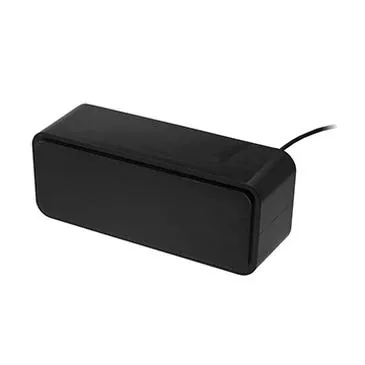
What that means at the transducer: on Marion you want a clean, narrow reading in 10 to 25 feet that still separates a fish from a tree. High-frequency CHIRP does that, and a thru-hull keeps the element protected while you idle through stumps. On Moultrie, a dual-channel low/high unit marks striper schools and bait at trolling speed and gives you the high channel to see how they are sitting in the water column. An in-hull tank mount such as the M260 is the low-drama choice for a fiberglass boat that spends most of its life on these two lakes: no hole in the hull, no haul-out, and 50/200 kHz at 1 kW with 19-degree and 6-degree beams.
Lake Murray: deep, clear piedmont water
Lake Murray covers 48,579 acres west of Columbia with 620 miles of shoreline, averages 41.5 feet and drops to roughly 200 near the dam. It is clearer than the coastal plain lakes, and its striped bass and largemouth suspend over deep water rather than sitting in wood.
Clear water and deep basins reward frequency. High CHIRP gives you target separation on suspended fish and bait; the low channel is what reaches 150 to 200 feet with any definition. A 1 kW thru-hull with both channels covers Murray properly, and the clarity means you can turn the gain down and still see a jig.
Charleston and the Lowcountry creeks
Around Charleston, Edisto, Georgetown and Murrells Inlet the water is tidal: roughly a five to six foot swing between high and low, pluff mud banks, creeks that nearly empty, and coffee-colored water pushing through the inlet on the flood. Redfish, spotted seatrout, sheepshead and flounder sit in that murk over oyster shell and creek ledges.
Turbid water is where a low or medium frequency earns its keep, because it pushes through suspended sediment that swallows a high-frequency ping. Most inshore boats run a transom or trolling-motor mount for exactly this reason, and for a skiff that never leaves the creeks that is the right call. The thru-hull argument starts when your boat also runs the jetties and the nearshore reefs: then one medium-CHIRP thru-hull, fitted at the right tilt, reads the creek channel at idle and the beach structure at 20 knots.
Offshore: Blackfish Banks to the shelf edge
South Carolina's offshore bottom is sand with scattered rock and coral rising out of it, and the state's own surveys split it into three zones: the Blackfish Banks out to about 100 feet with only three or four feet of relief, the Snapper Banks out to about 180 feet with up to eight feet, and the Shelf Edge from 180 feet past 600 with relief up to 40 feet. The Gulf Stream runs roughly 75 miles off the beach.
Three or four feet of relief in 90 feet of water is a hard target for a wide beam, and it is the single best reason to fit a narrow, high-power element. The shelf edge is the opposite problem: you need low frequency and power to punch to 500 feet and hold the bottom at trolling speed. A bronze dual-channel thru-hull such as the B275LH-W does both in one hull hole; the larger R509LH-W broadband unit is for the boat that runs to the edge and fishes it hard.
Which xSonic unit suits which water
| Unit | Mount | Where it fits in South Carolina |
|---|---|---|
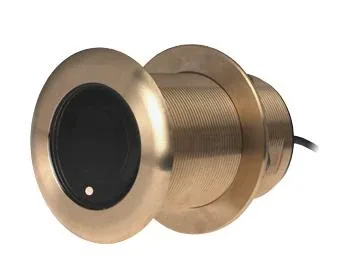
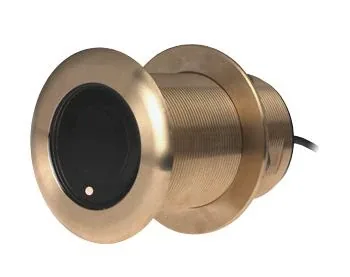
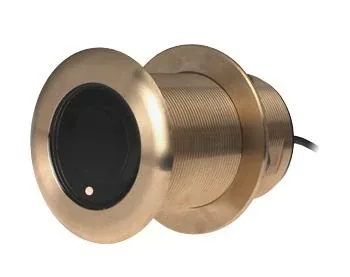
| B150M, 0, 12 or 20 degree tilt | Bronze thru-hull, medium CHIRP | Bay boats and center consoles working the creeks, jetties and nearshore reefs |
| B275LH-W | Bronze thru-hull, dual-channel CHIRP, wide | One hole that covers Charleston creeks and the Snapper Banks |
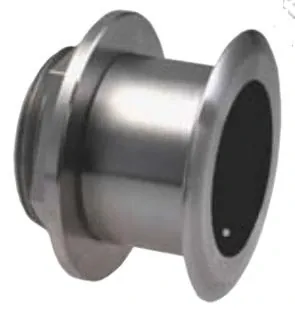
| SS175H-W, 12 degree tilt | Stainless thru-hull, high-wide CHIRP | Aluminum hulls up to about 36 feet; shallow structure and stump edges |
| SS175L, 12 degree tilt | Stainless thru-hull, low CHIRP | Same hulls, but fishing deep: Murray basins, the shelf edge |
| B258 and SS260 | Bronze or stainless thru-hull, 50/200 kHz, 1 kW | The straightforward offshore workhorse; SS260 for metal hulls |
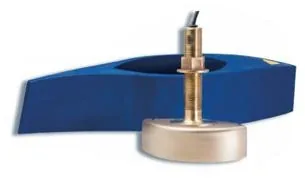
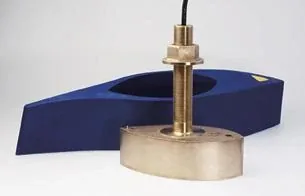
| CM275LH-W and CM599LH-W | Tank-mounted in-hull, dual-channel CHIRP | Fiberglass boats that want thru-hull performance without cutting a hole |
| M260 | In-hull tank mount, 50/200 kHz, 1 kW, 8 elements | Lake boats on Marion and Moultrie that occasionally run offshore |
| PM275LH-W | Pocket mount, glassed into the hull | Refits where the hull is already open for a fairing or a pocket |
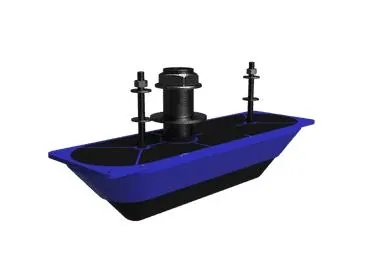
| StructureScan 3D thru-hull, single or dual | Stainless thru-hull, StructureScan 3D | Scanning stump fields, docks and creek ledges rather than straight down |
Tilt angle and hull material decide the part number
Tilt is not a preference. It is the deadrise angle at the spot where the element sits, and a transducer fitted at the wrong tilt fires off to one side and loses the bottom at speed. Flat-running hulls and pontoon tubes take a 0 degree housing, most planing bay boats and center consoles take 12, and the steep deadrise of a deep-V offshore boat takes 20. Measure it where the hole goes, not at the transom.
Hull material picks the housing: bronze for fiberglass and wood, stainless for aluminum and steel. In-hull tank mounts need solid fiberglass and will not read through cored or foam sandwich hulls.
Shipping to South Carolina
South Carolina ships in the East and Midwest zone: orders are dispatched in 1 to 3 business days once payment clears, then 2 to 6 business days in transit. Shipping is priced to your ZIP code and confirmed on the invoice before you pay, and every parcel is tracked and insured. A large thru-hull housing is a bulky box, so if an order travels in more than one parcel, each tracking number is on the invoice.
Nothing is charged on the site. Pay the emailed invoice by card link, ACH or wire, or Zelle, and you can cancel free any time before the parcel ships. Details are on the shipping policy.
We check the fit before you pay
Send your hull material, the deadrise at the mounting spot, and the display or sounder module you run, and we match the mount, tilt, channels and connector before an invoice goes out. Every listing carries its part number and full specs. Start in Simrad xSonic transducers, see the rest of the range under transducers and sonar, or ask a question through contact.