Two basins, two different sonar jobs
West of Huron, the Western Basin averages about 24 feet deep. It is sand, mud and limestone reef, often stained after a blow, and the walleye are close to bottom or stacked just above the reef tops. East of Huron the bottom drops away: the Central Basin averages around 60 feet and runs flatter and clearer, and from June into September most walleye are caught by trolling, with the fish showing as marks well off the bottom.
That split decides the display size, the transducer and the frequencies you want. If you fish both, you are really shopping for one unit that does shallow-and-tight and deep-and-suspended properly.
Western Basin: reefs, shallow water, stained
Around Locust Point, Marblehead, Sandusky Bay and the islands, the game is reading bottom composition and finding the reef edges that hold fish. Practical requirements:
- Reliable bottom tracking at speed. You want a clean digital depth reading while running between reefs, not a screen full of clutter. That is a transducer placement question before it is a sonar question.
- 2D CHIRP as the primary view. A narrow high-frequency beam separates fish from the reef top in 15 to 25 feet. Wide beams in shallow water blur the two together.
- Down imaging for structure. It shows the difference between a rock pile and a mud edge, which is where a lot of Western Basin fish sit.
- Side imaging, with realistic expectations. Stained water cuts usable range hard. It is worth having for cleaner days and for mapping a reef you intend to come back to, but do not buy a unit for side scan alone if most of your fishing is pea-soup water.
Central Basin: trolling suspended fish
From Lorain and Cleveland east to Fairport Harbor, Ashtabula and Conneaut, summer walleye are usually suspended 20 to 45 feet down over 45 to 65 feet of water. You need to see a mark, decide whether it is a walleye or a school of white bass or smelt, and get a lure back to that depth.
- Screen size earns its money. A 9 inch unit split into 2D, down imaging and chart is about the practical minimum for trolling; 10 and 12 inch units are easier at planing speed with sun on the screen.
- High-frequency CHIRP and down imaging pick individual fish out of a suspended mark better than a fixed 200 kHz beam.
- Routes, tracks and speed over ground. Repeatable trolling passes are a navigation job, not a fish finding one, so check the chartplotter side of the unit as carefully as the sonar.
Which Garmin units fit which job
The catalogue carries Garmin across the range, and the difference between them is mostly screen, sonar channels and whether they take LiveScope later:
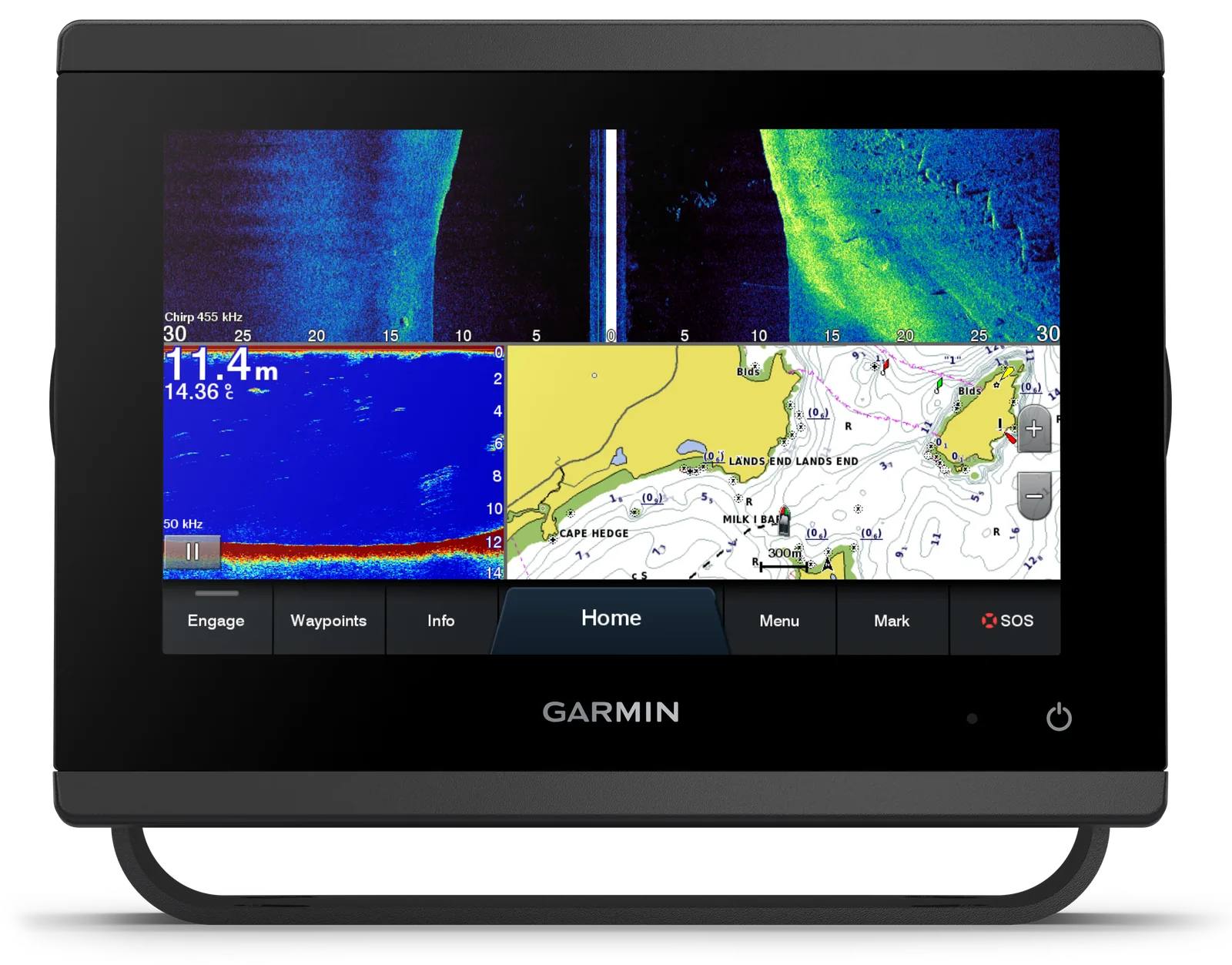
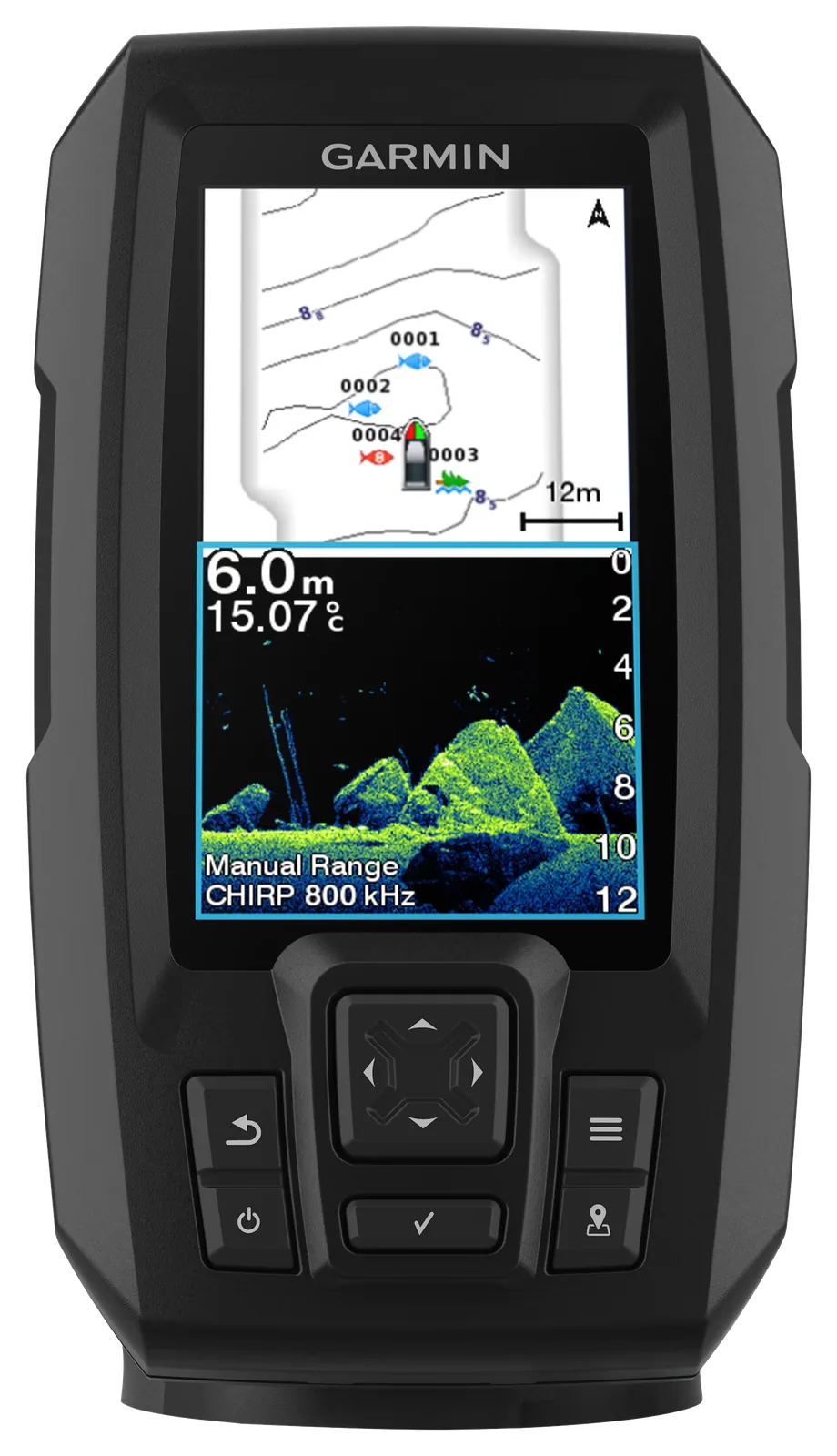
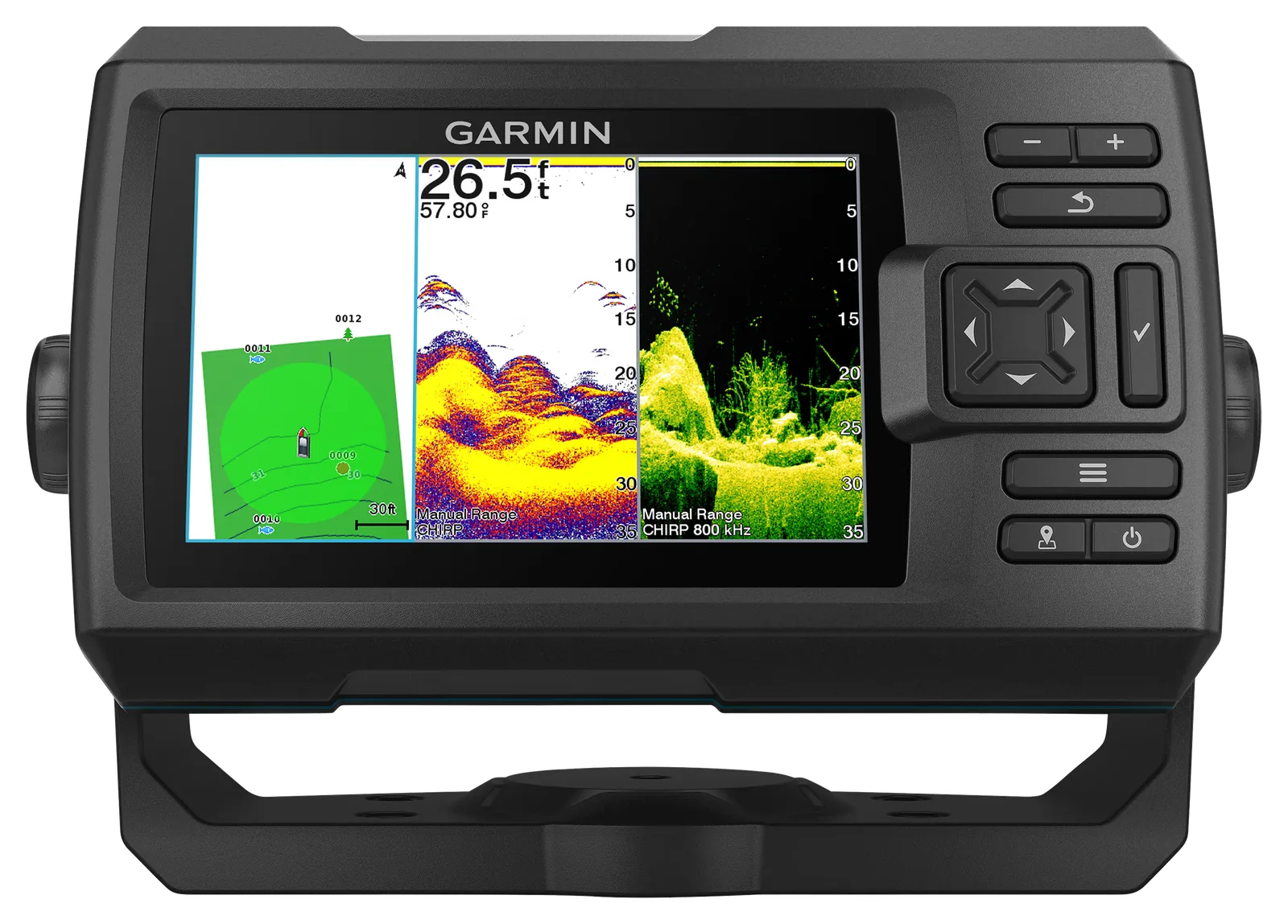
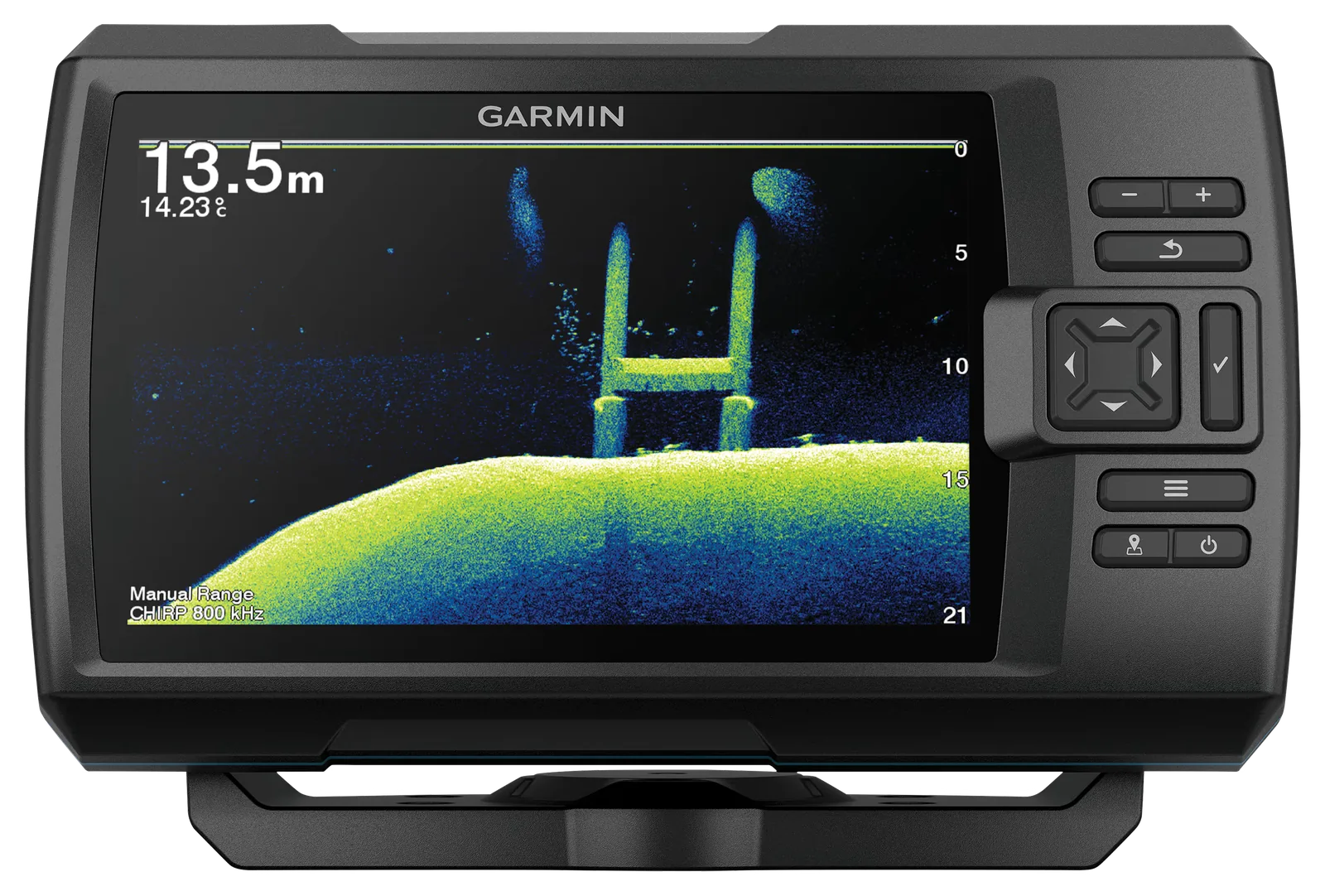
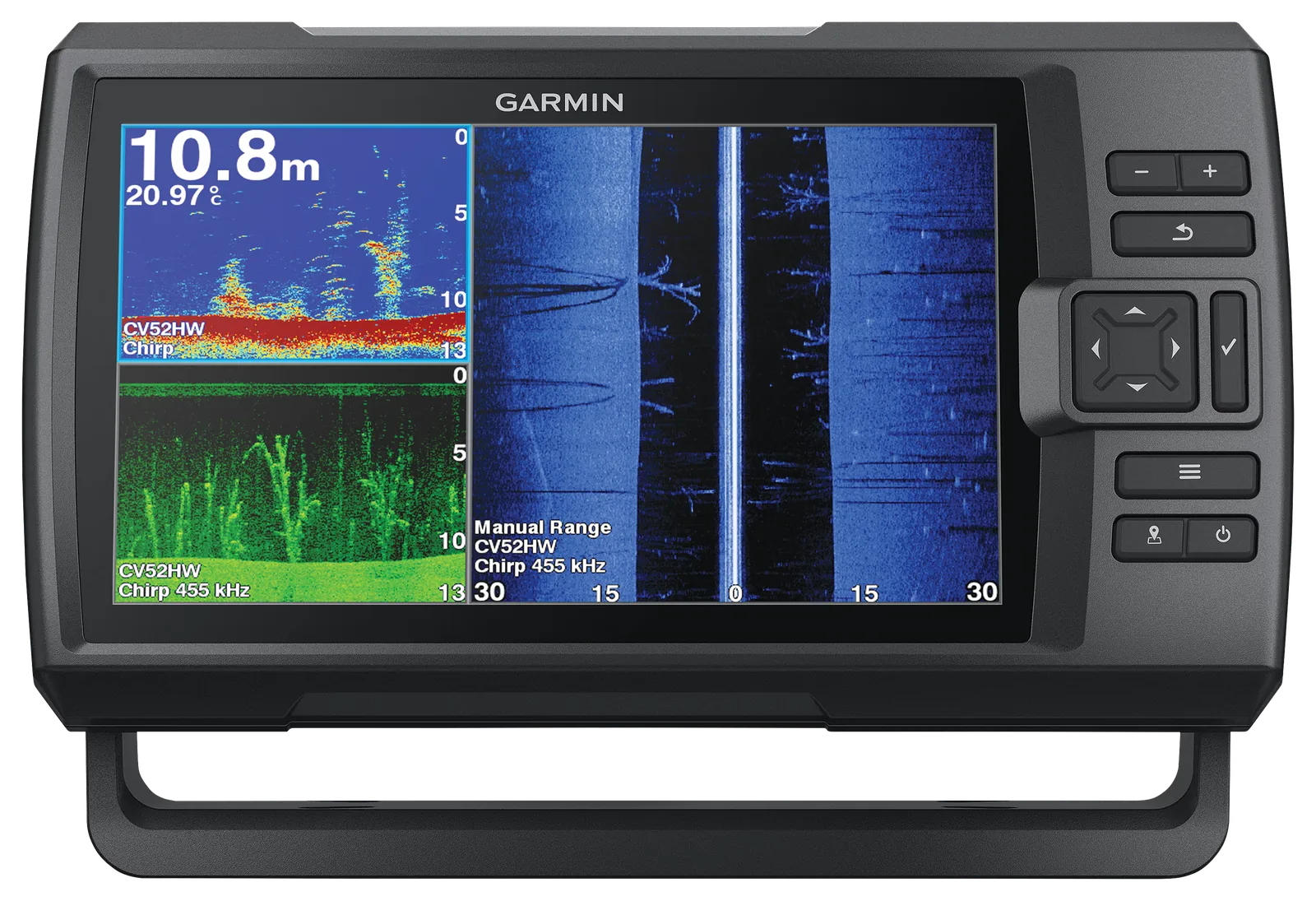
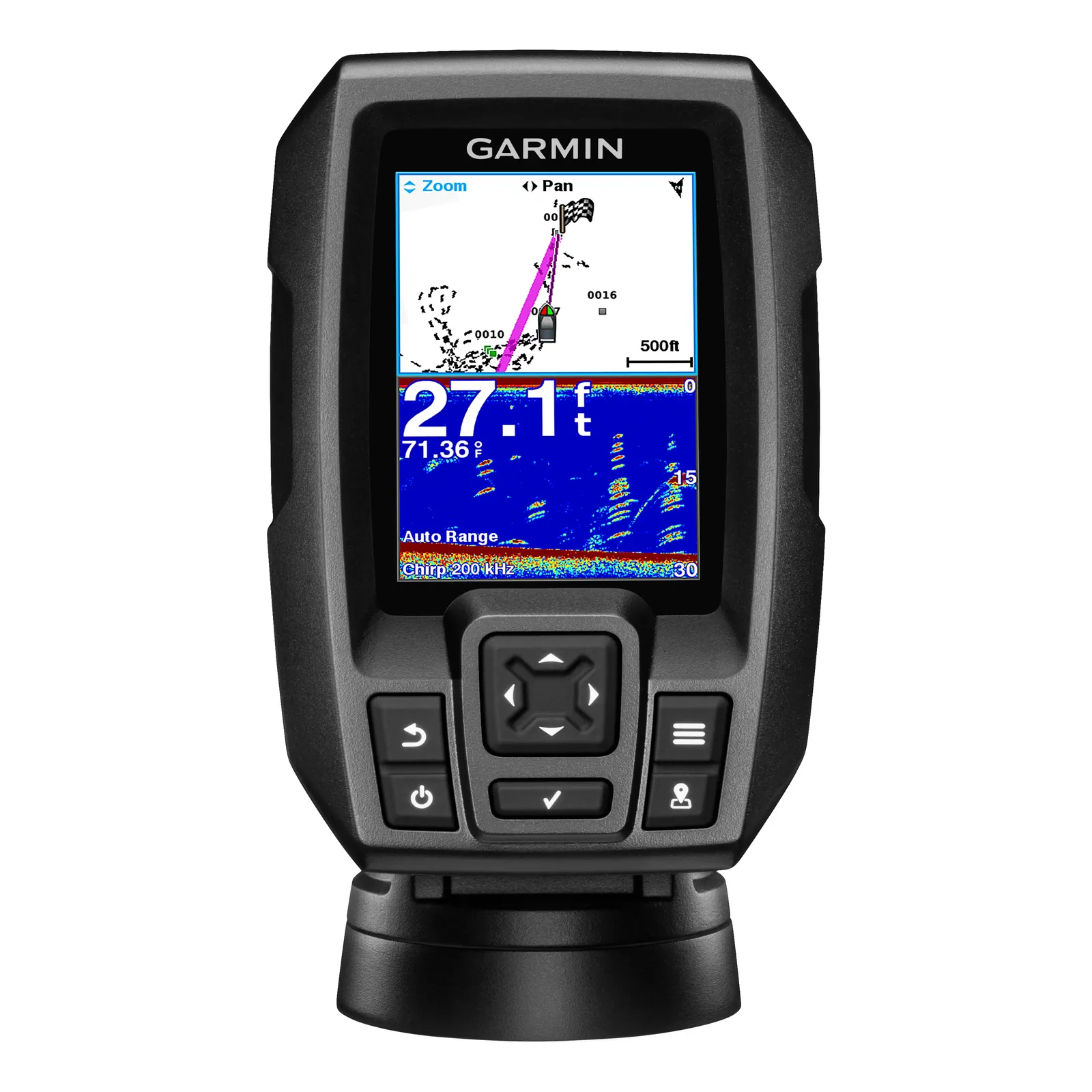
- STRIKER Vivid 4cv, 5cv, 7 and 9sv — sonar and GPS, no chartplotter mapping depth. The 9sv with down and side imaging is the cheapest way into side scan for a small walleye boat or a tiller boat you trailer to the lake.
- ECHOMAP UHD2 53cv through 94sv, including the Touch 63sv–94sv — 2D, down and side imaging on the sv models, built-in mapping, and the 7 and 9 inch sizes are the workhorse trolling pick. The UHD2 93sv and 94sv ship with a GT56UHD-TM transducer, which is the sharpest of the transom-mount options here.
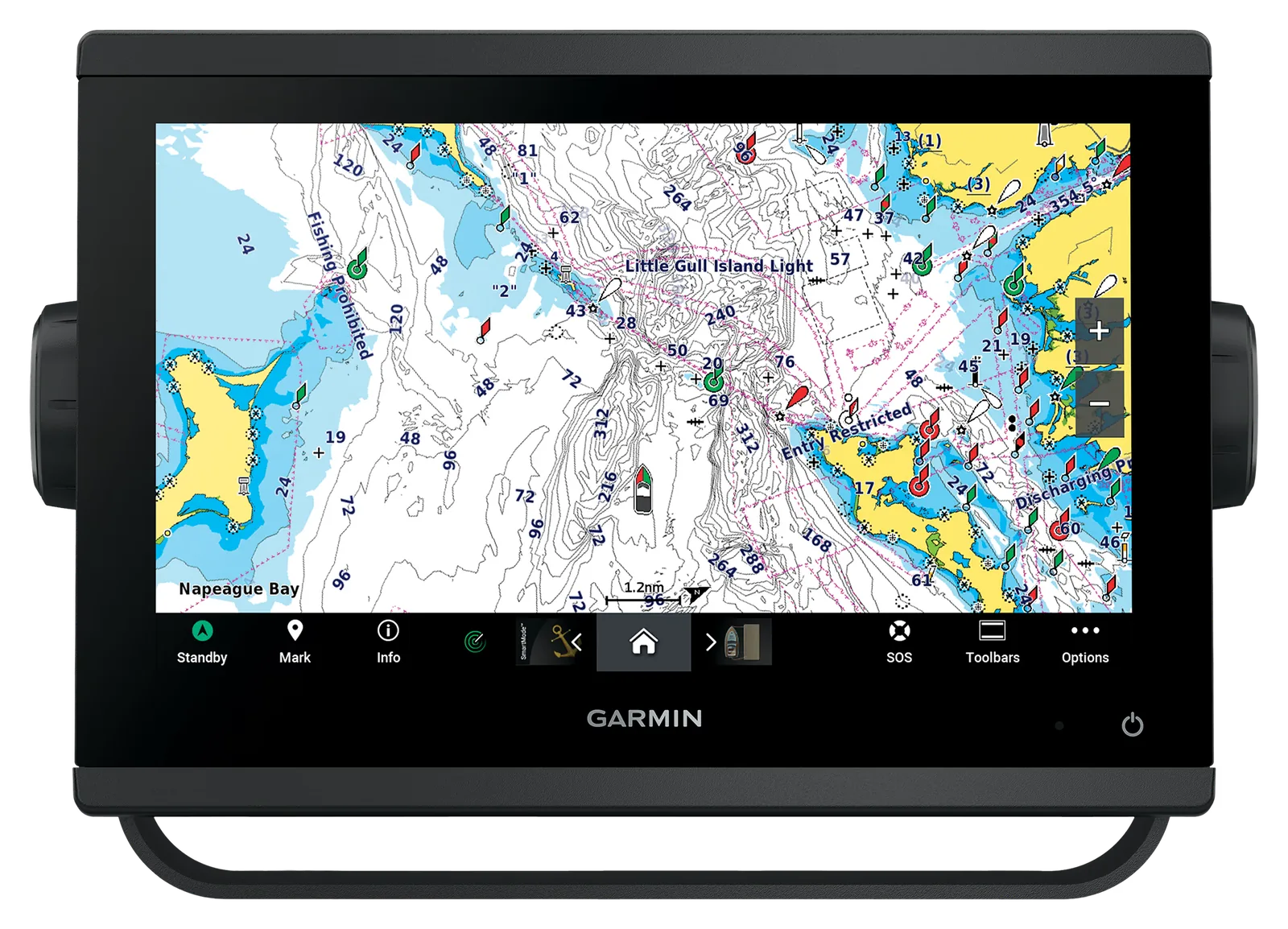
- ECHOMAP Ultra 2 106sv and 126sv — 10 and 12 inch screens, the comfortable choice for a Central Basin trolling boat running several views at once, and LiveScope-ready.
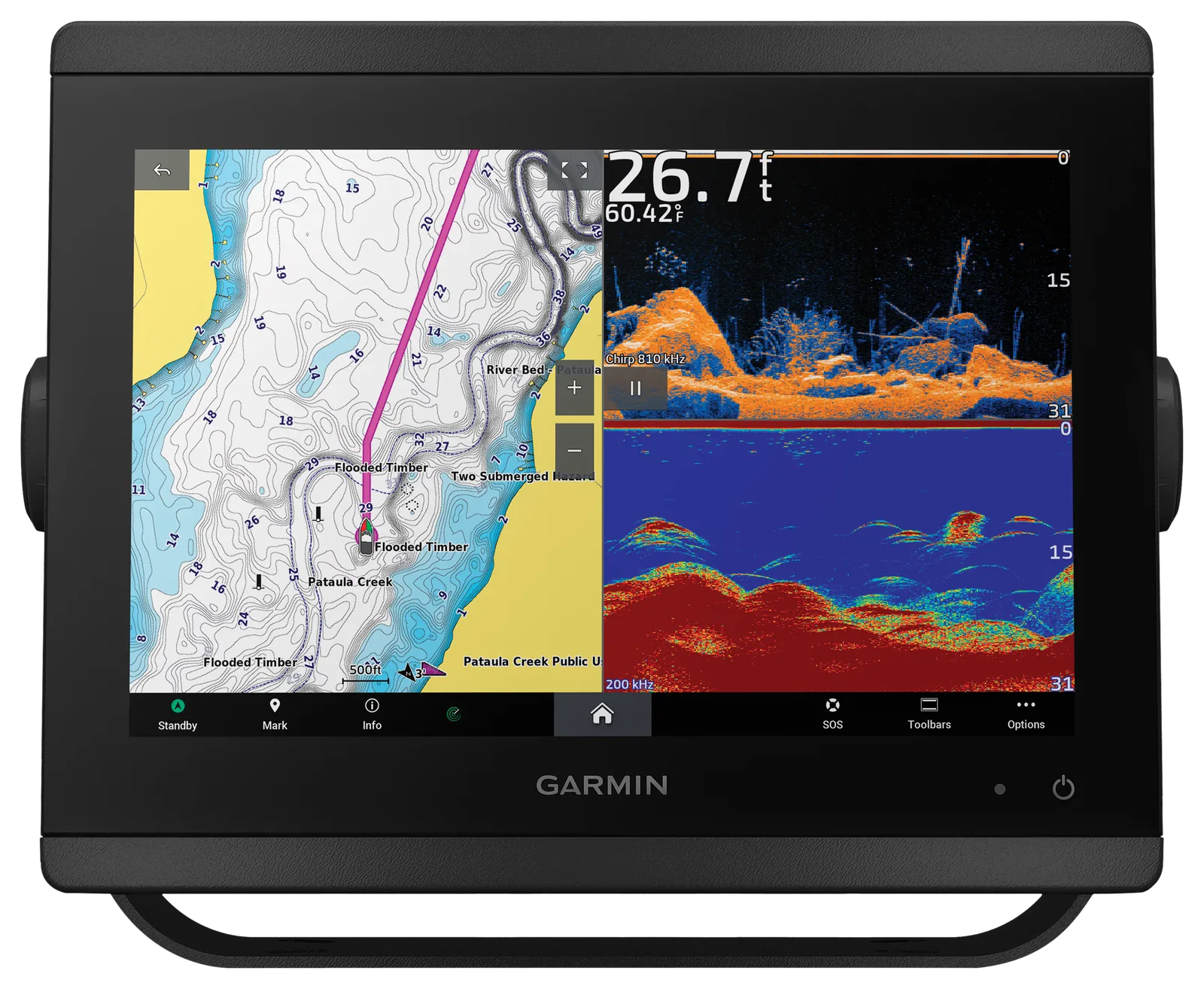
- GPSMAP 723xsv and 1222 — keyed and touchscreen units for boats that want a network, radar later and a bigger, brighter display.
- ECHOMAP Ultra 2 with LiveScope Plus LVS34 bundle — forward-facing sonar for jigging and casting to fish you can see, which is a growing way to fish Western Basin reefs and the fall run in the harbors.
Browse the full range on the Garmin fish finder page or the depth sounders and fish finders department.
The transducer and mount on a walleye boat
Most Ohio walleye boats are aluminum or fiberglass deep-V hulls with a stepped or riveted bottom, and most run a transom-mount transducer. Two things go wrong there: the transducer sits in disturbed water off a strake or a rivet row and loses bottom at speed, and a kicker or a trolling plate puts turbulence across it.
- A GT56UHD-TM or GT54 covers 2D, down and side imaging in one transom mount. A GT20-TM is the plain 2D and down imaging option.
- Fiberglass boats that stay in the water often suit a thru-hull or in-hull mount better, and those come in different deadrise angles — the transducer has to match the hull angle or the beam fires off to one side.
- If you jig vertically over reefs, a trolling-motor mount lets you scan with the bow mount while you fish, and it is the cheaper way to add a second view.
The transducer guide walks through mount, frequency, power and connector. If you already own a display and only need the transducer, start there and then send us the model.
Ice on the bays, and Ohio inland water
In cold winters Sandusky Bay and the sheltered water around the islands lock up, but Erie ice is inconsistent and wind-driven; inland water is the more dependable bet. Grand Lake St. Marys, Indian Lake, Buckeye Lake and the northeast Ohio reservoirs freeze more reliably, and the same electronics carry over.
A flasher is still the tool for reading a jig in real time, and a portable unit with its own battery and transducer is easier to move between holes. See ice fishing and portable fish finders. No ice is ever safe on a schedule — check current conditions locally before you go.
Shipping to Ohio
Ohio is in our East and Midwest shipping zone. Orders are dispatched 1 to 3 business days after payment clears, then run 2 to 6 business days in transit. Shipping is priced to your ZIP code and confirmed on the invoice before you pay anything. We ship only — there is no showroom or pickup in Ohio or anywhere else, and nothing is charged on the website. Pay the emailed invoice by card link, ACH or wire, or Zelle.
Full detail is on the shipping policy page.
Will it fit my boat and my display?
Every order is reviewed against your display and your boat — connector type, sonar channels, mounting and hull angle — before an invoice is sent. That check is the reason to buy here rather than guess at a part number: send your display model, your boat and what you fish, and we match it or tell you it will not work. Lists and specs for every unit are in the shop, and the FAQ covers compatibility, payment, shipping and returns.