Why Florida water is hard on sonar
Most Florida fishing happens in water under 10 feet deep, and much of it is over grass, shell or muck. Three things follow from that.
- You rarely need high power. A 500 W or 600 W sounder reaches the bottom easily in 4 feet of water for bass or snook. Wattage buys you depth, not detail.
- Weed and grass return a soft, cluttered trace. Higher frequencies cut that clutter and show fish holding in the grass instead of blending into it.
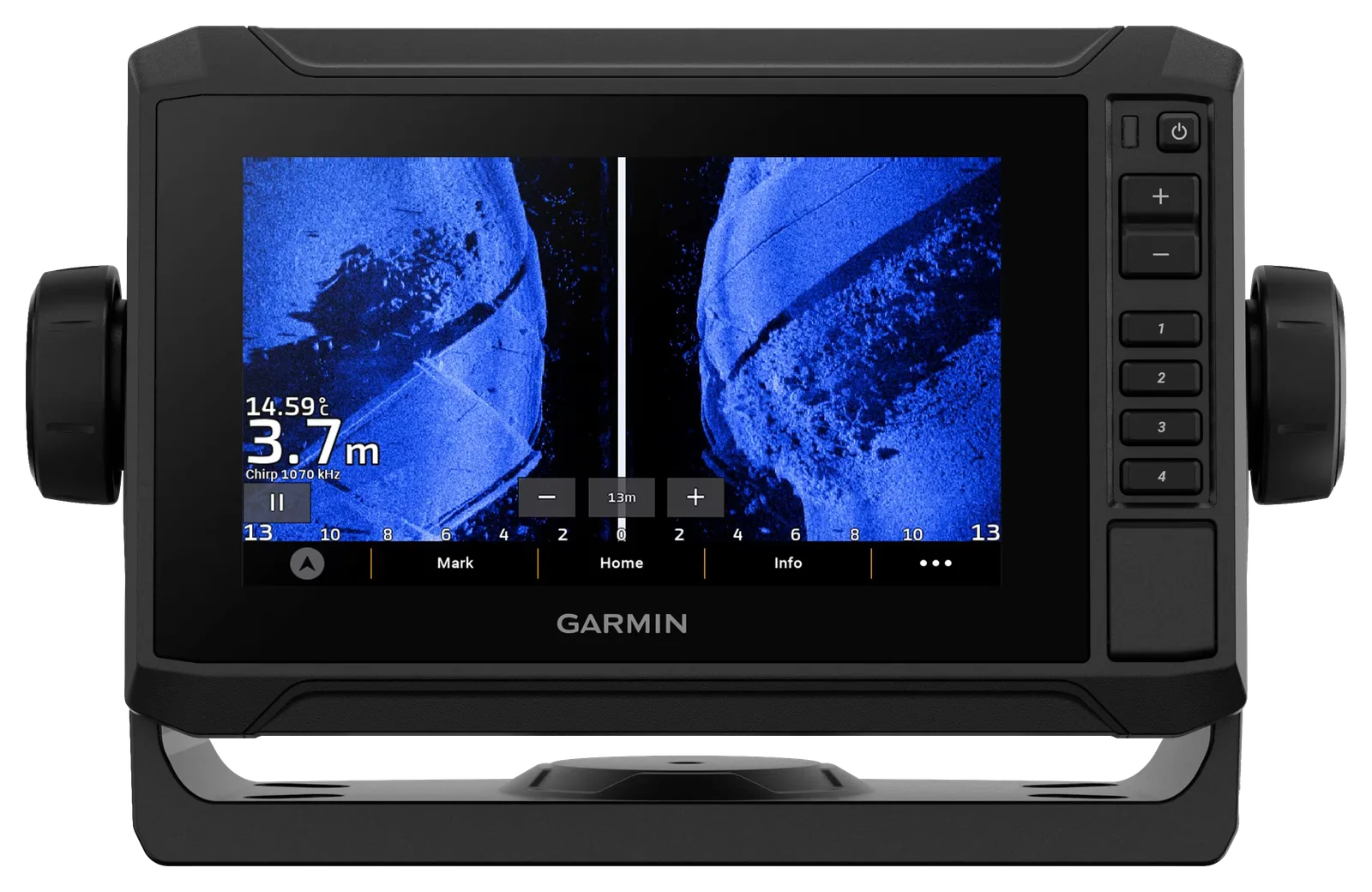
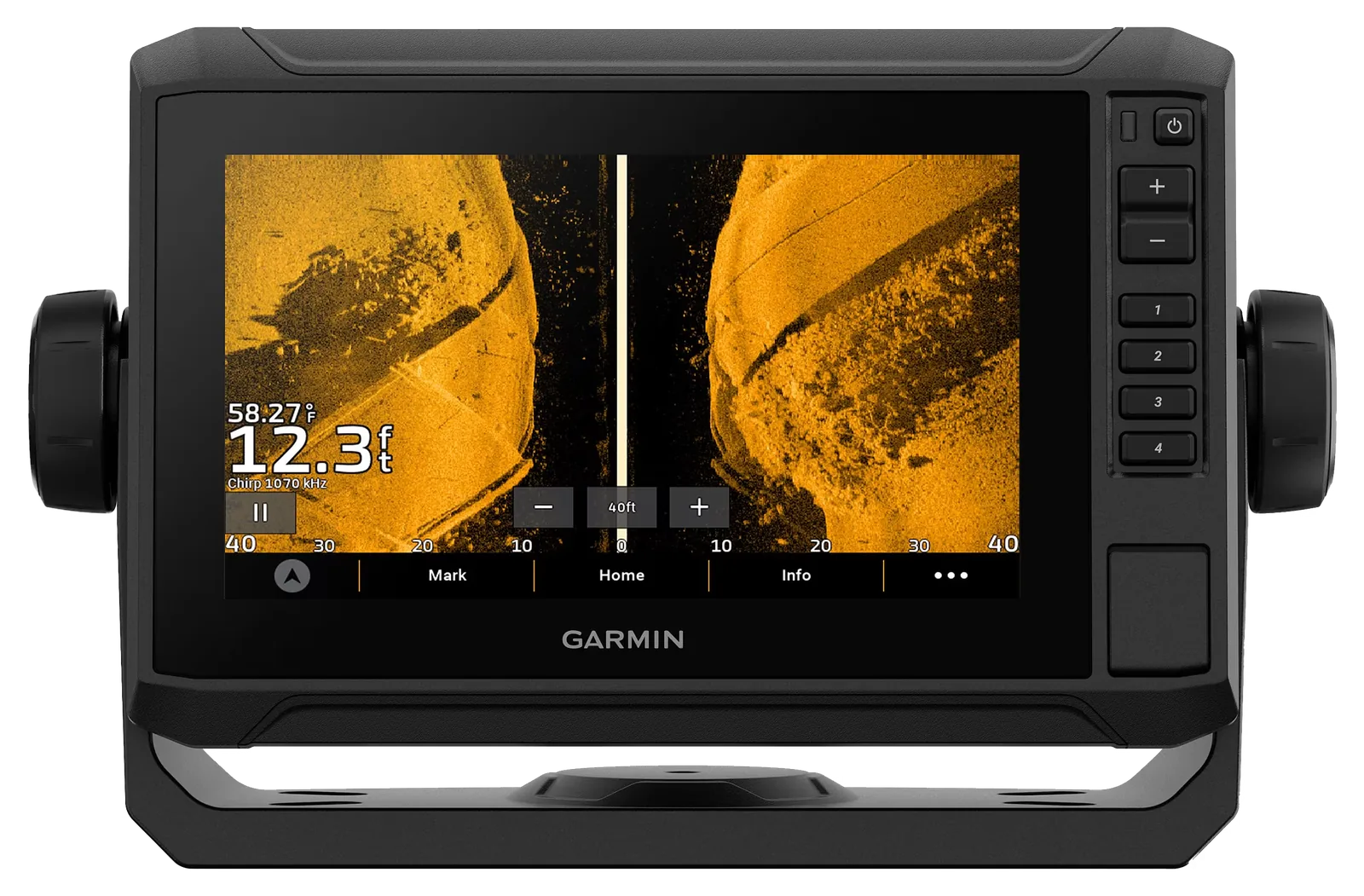
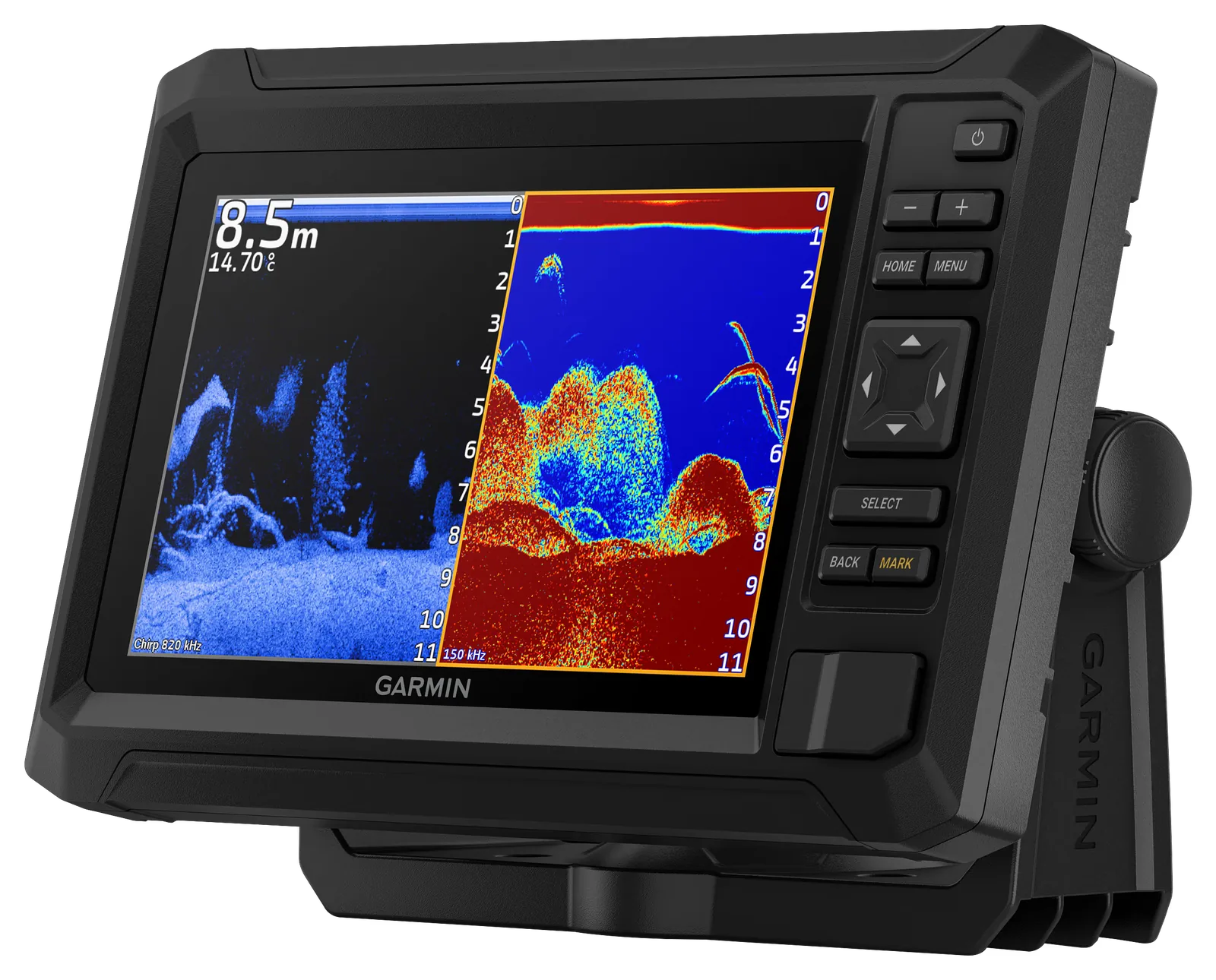
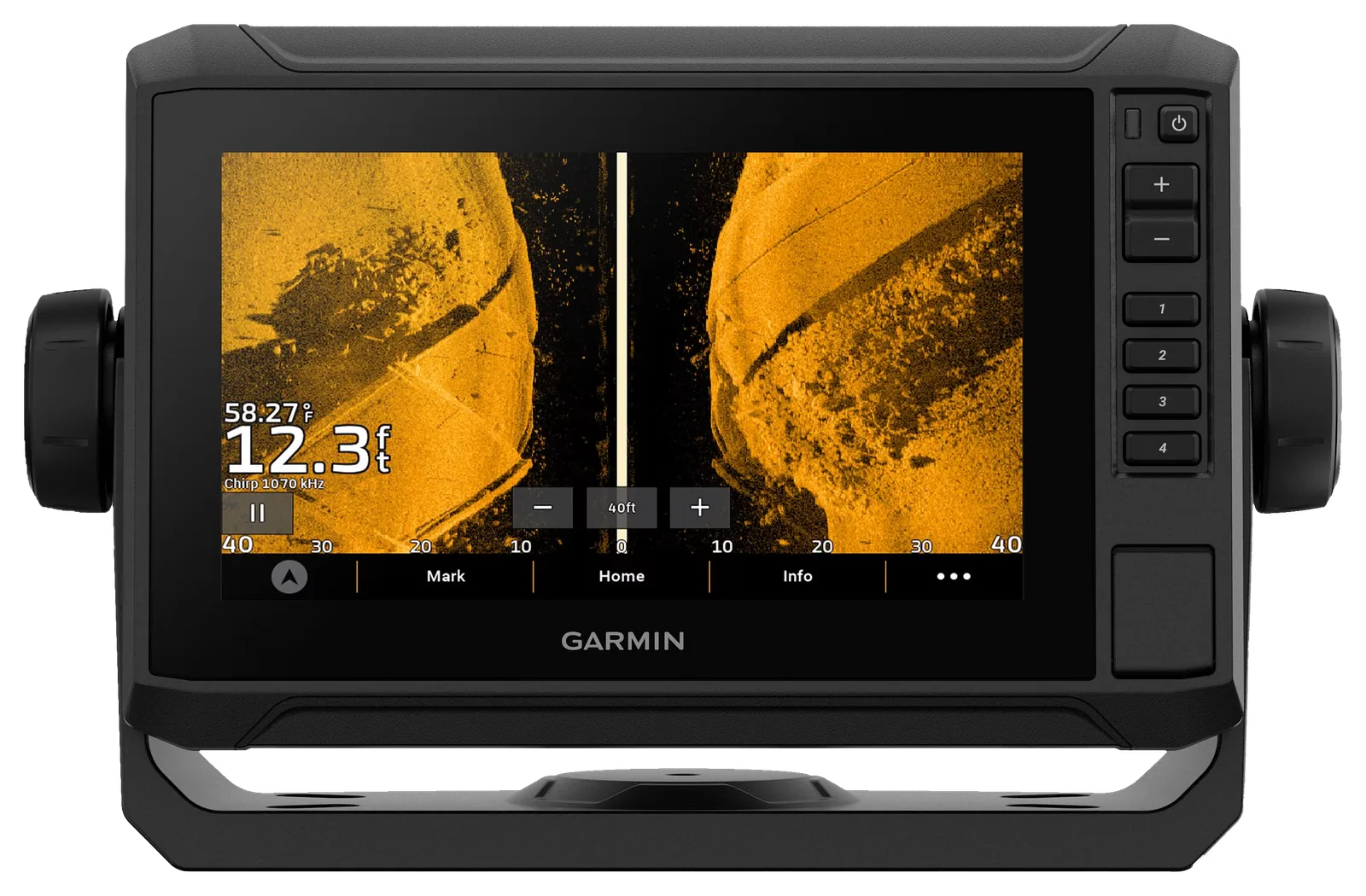
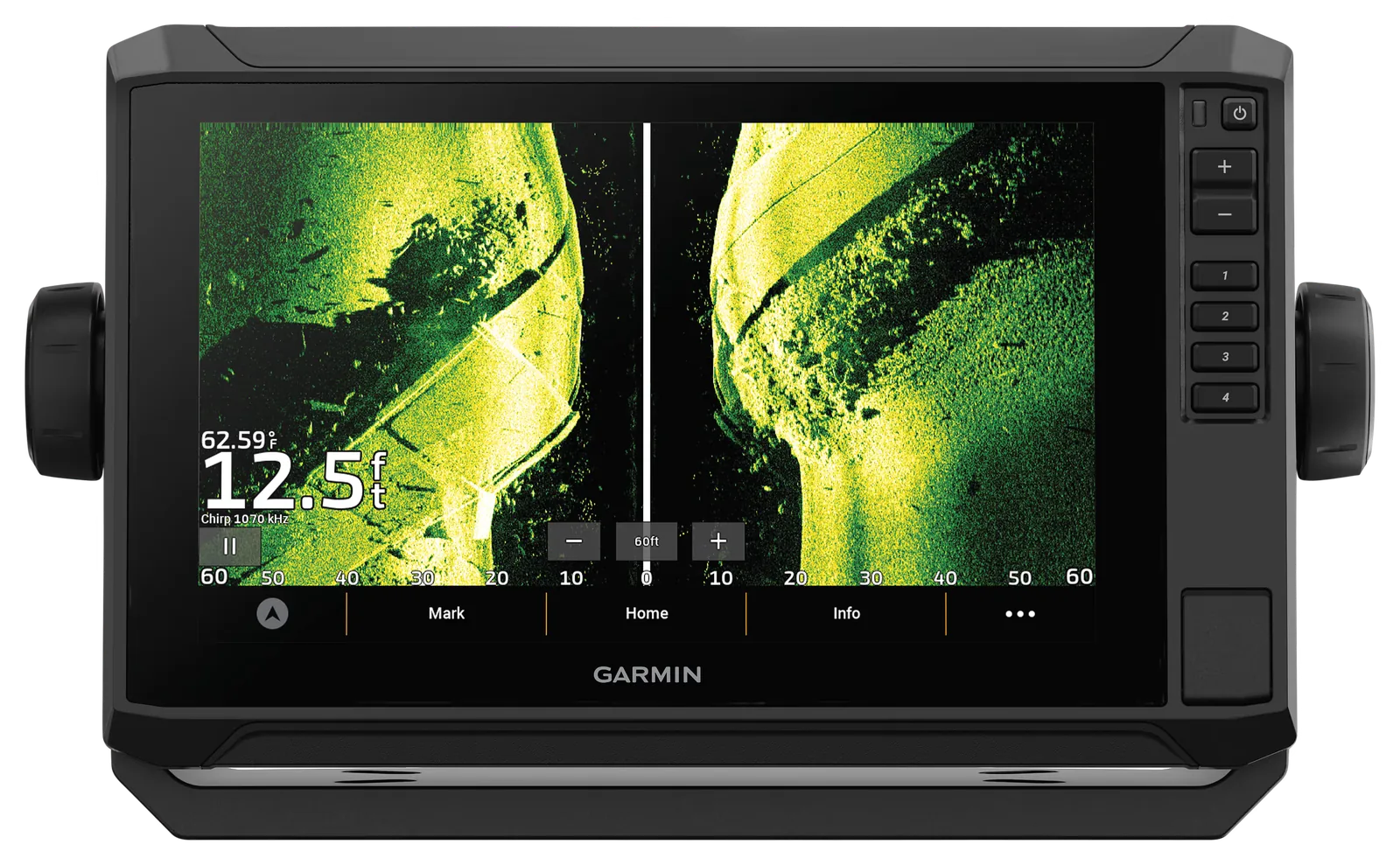
- The bottom moves. Sand, rock, shell and hydrilla all read differently, and side imaging is usually the fastest way to map what is actually under you.
Freshwater on the peninsula is often tannic and stained; coastal water ranges from clear on the flats to murky after rain. Both reward a sounder you can tune, not one that only offers an auto mode.
Okeechobee, the Kissimmee Chain and the St. Johns River
Lake Okeechobee is big, shallow and grass-covered, so largemouth bass relate to vegetation edges rather than to depth. The Kissimmee Chain — Kissimmee, Cypress, Hatchineha and Tohopekaliga — fishes the same way at a smaller scale: weed lines, hydrilla mats, scattered shell. The St. Johns River adds current, brackish water and tidal movement to the mix.
What works on that water:
- A transom-mount transducer if you are running the outboard and want to read bottom and bait at speed, with side imaging for finding grass edges and shell beds.
- A trolling-motor mount if you fish slowly, in the grass, with a bow-mounted electric. The transducer stays level and under you instead of behind the prop.
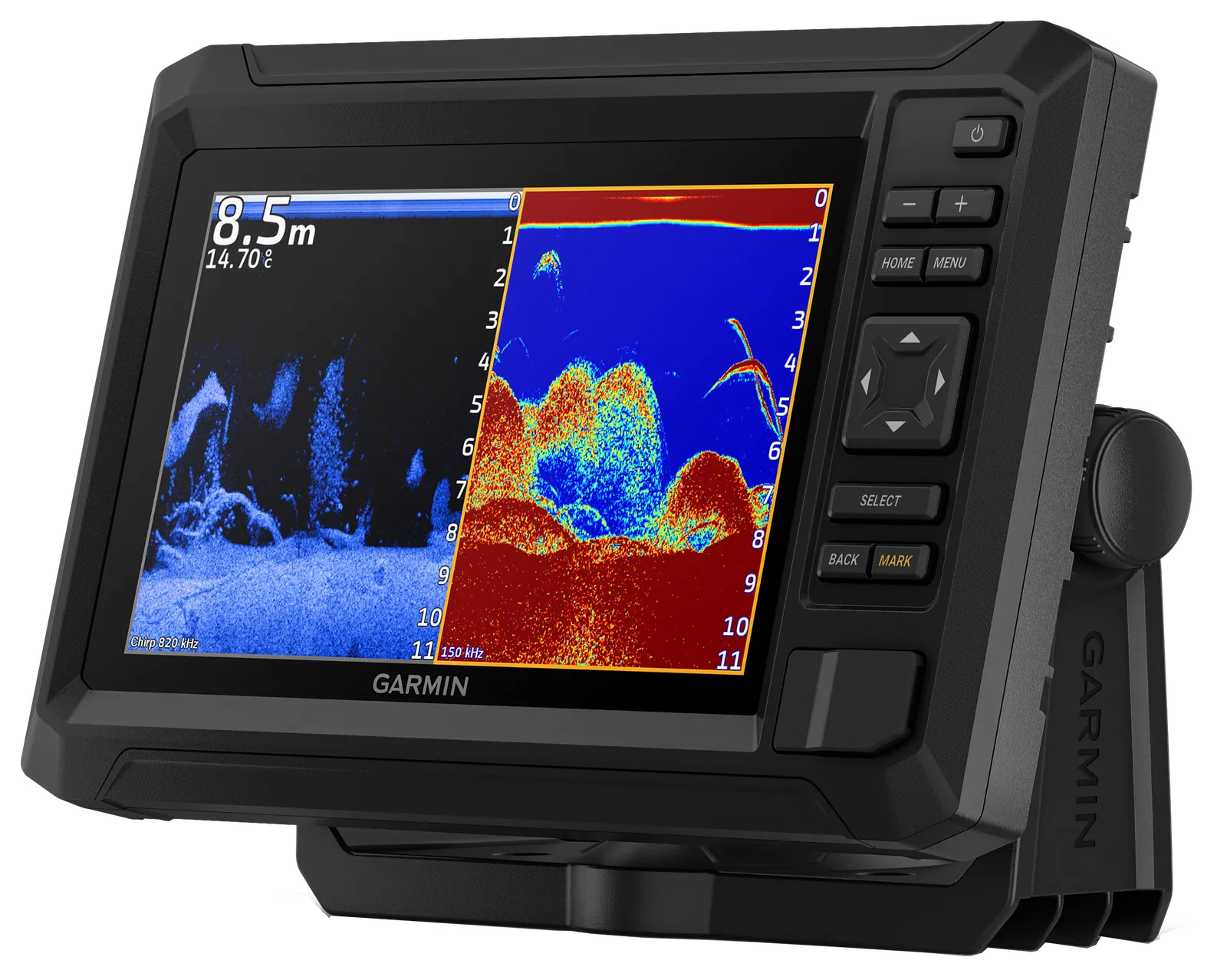
- Down imaging to see how fish sit in the weeds, and 2D sonar with a narrower high-frequency beam to hold bottom contact in the chop.
- Side imaging to cover water — it sweeps tens of feet either side of the boat and finds the isolated shell and the points where bass stack.
Because these lakes run shallow, an in-hull or thru-hull installation is the wrong answer for most bass boats. Transom or trolling motor is where the money goes. Our transducer guide covers mount, frequency and connector in detail.
Grass flats on both coasts
On the Atlantic side, Mosquito Lagoon, the Indian River Lagoon and the flats behind Biscayne Bay fish as clear, shallow grass. On the Gulf side, Tampa Bay, Charlotte Harbor and the Ten Thousand Islands offer the same mix: sand potholes, turtle grass, oyster bars and tidal creeks holding snook, redfish and seatrout.
Two things matter more than screen size here:
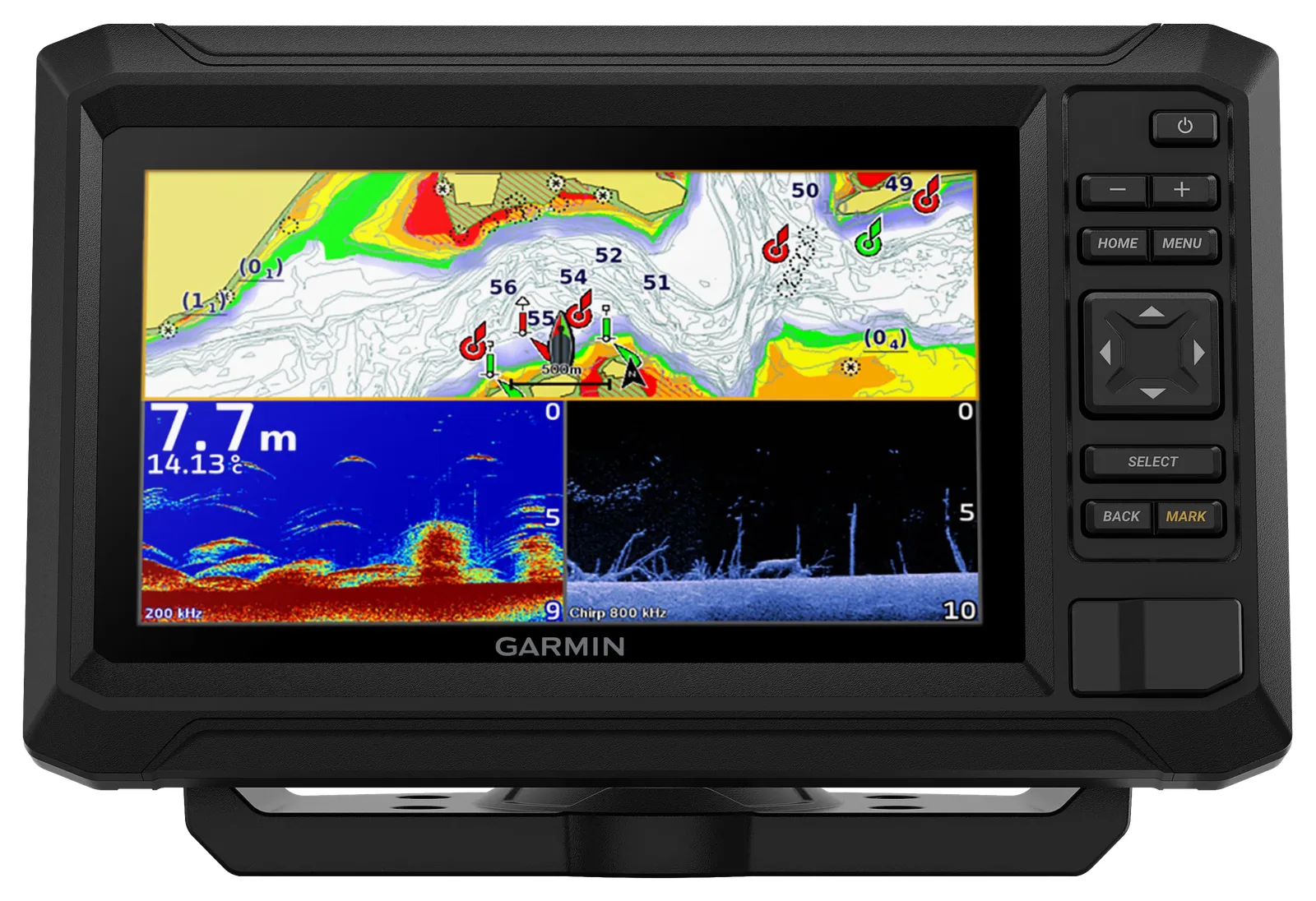
- Spot-lock and mapping. A chartplotter with good coastal detail — Garmin Navionics+, C-MAP or Raymarine Lighthouse charts — puts you on the pothole edges and channel mouths that hold fish. You will use the map more than the sonar on a rising tide.
- Side imaging over the flat. With water this shallow, down imaging sees almost nothing ahead of you. Side imaging at 455 or 800 kHz shows the sand-to-grass transitions and the deeper potholes that hold seatrout at low water.
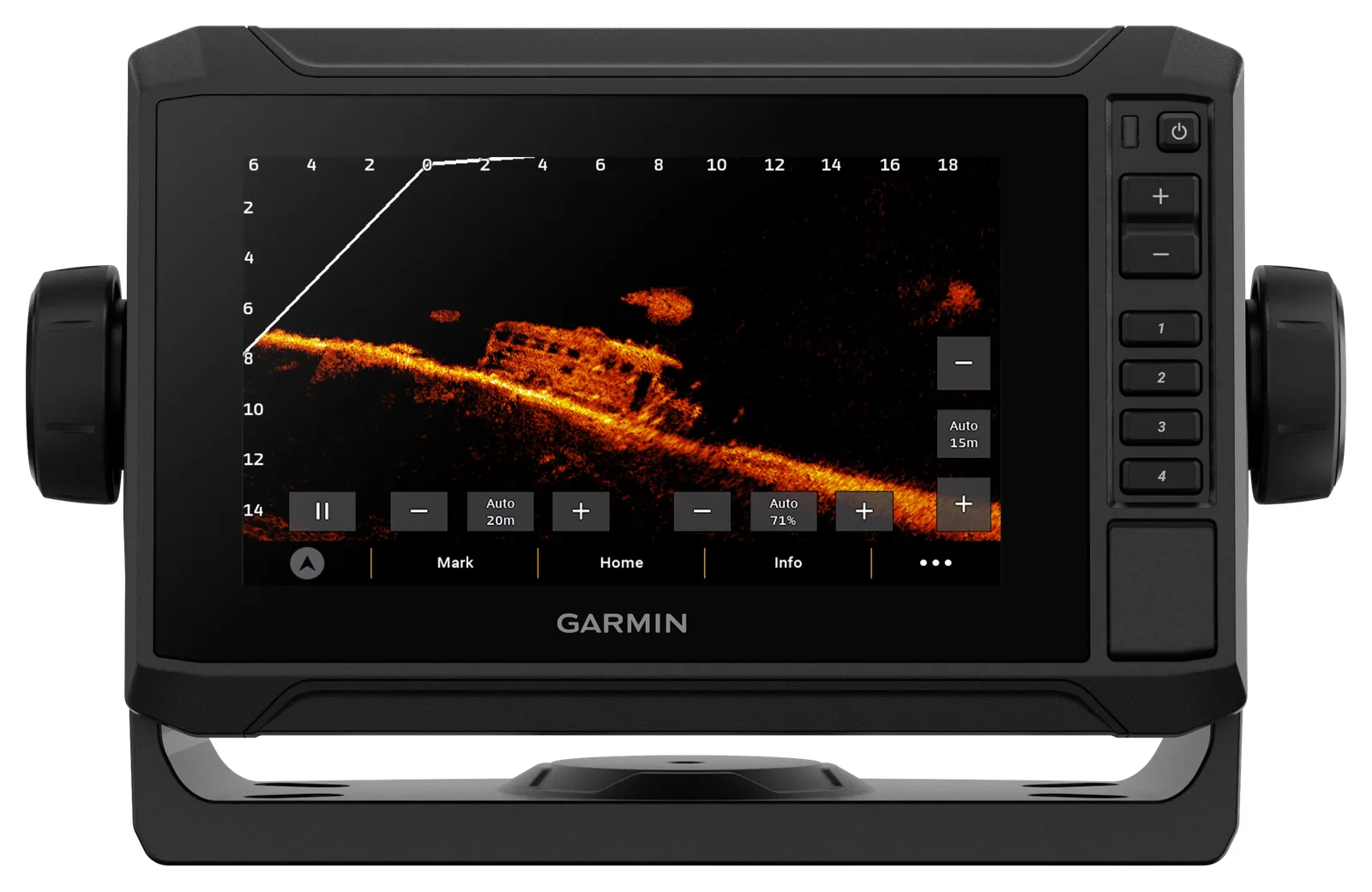
For live sonar, forward-facing units have become common on flats boats because they show a cruising redfish or snook before it sees the boat. They need a clear mounting point with nothing in the cone — usually a dedicated pole or a trolling motor shaft, not the transom. Live sonar systems are worth looking at if you already run a compatible display.
Matching a fish finder to a Florida boat
Bay boats, flats skiffs, bass boats, center consoles and kayaks all need different things from a unit:
- Bass boat or bay boat: 7 to 9 inch combo with down and side imaging, plus a bow unit networked on the trolling motor. Fish finders and depth sounders is the department to start in.
- Flats skiff: chartplotter-led, with a mapping card for the coast and a trolling-motor transducer; side imaging second.
- Center console running offshore from Florida inlets: a larger multifunction display, a 1 kW CHIRP thru-hull, radar and autopilot. Look at GPS chartplotters and the Garmin Marine or Humminbird pages.
- Kayak: a compact unit with a portable or through-hull-scupper mount, and a small battery.
Brand matters less than the connector and sonar channels the display supports. A transducer that fits one display will not necessarily plug into another, and Florida anglers switch brands often enough that this is the most common mismatch we see.
Shipping to Florida
Deepline Marine is based in Miami, but it ships only — there is no showroom, no pickup and no installation at the address. That is deliberate: every order is checked against your display and boat before it is invoiced, and then sent by tracked, insured parcel.
Florida sits in the contiguous East & Midwest zone. Once payment clears, orders are dispatched in 1 to 3 business days, then 2 to 6 business days in transit. Shipping is priced to your ZIP and shown on the invoice before you pay. Nothing is charged on the website: you get an emailed invoice and pay by card link, ACH or wire, or Zelle. Full detail is on the shipping policy page.
Before you order
Have your hull, your display model and your current transducer in front of you. Send those three things through the contact page and we confirm the mount, the connector and the sonar channels match before an invoice goes out. If you are still deciding between mounts or frequencies, read the FAQ first — it covers the questions that come up most.