What each one actually shows you
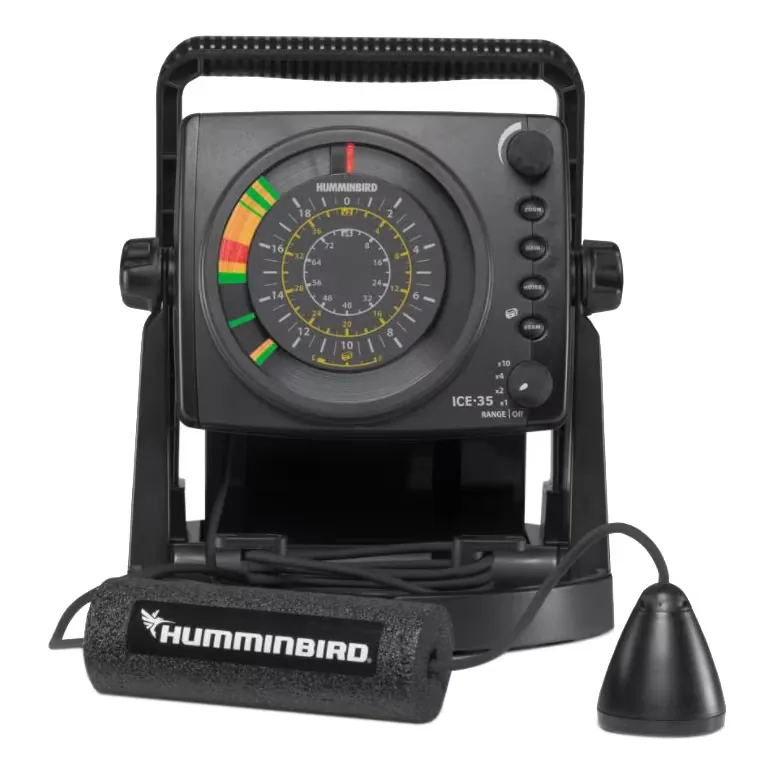
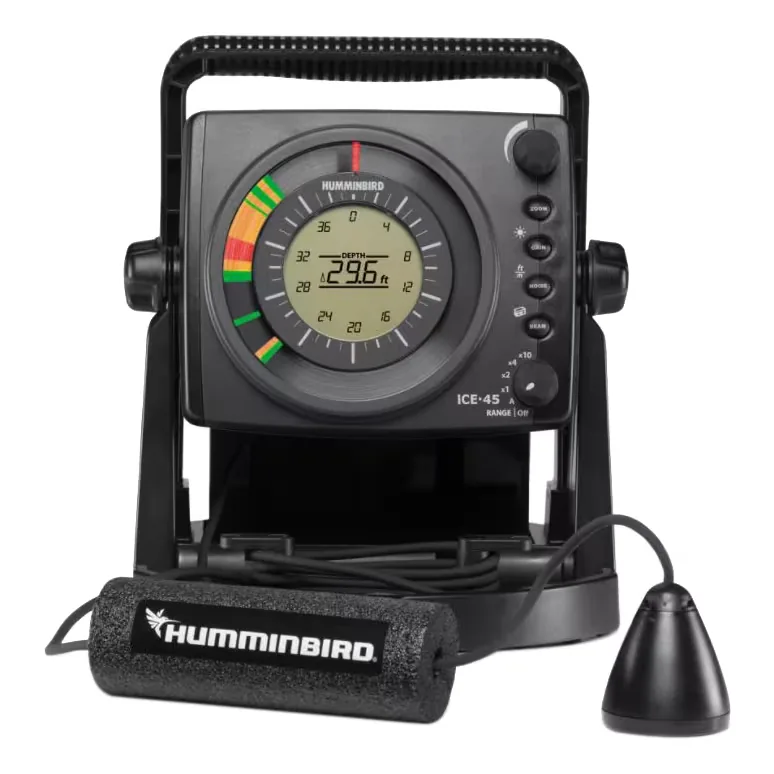
A flasher paints the column as a live signal, not a picture. The bottom sits at the edge of the dial, your jig is a mark you can watch, and a fish rising to it shows up in the space between. Nothing is recorded — when the fish leaves the cone, the mark is gone. That is the point: you are reading what is happening under you this second, which is how you work a jig.
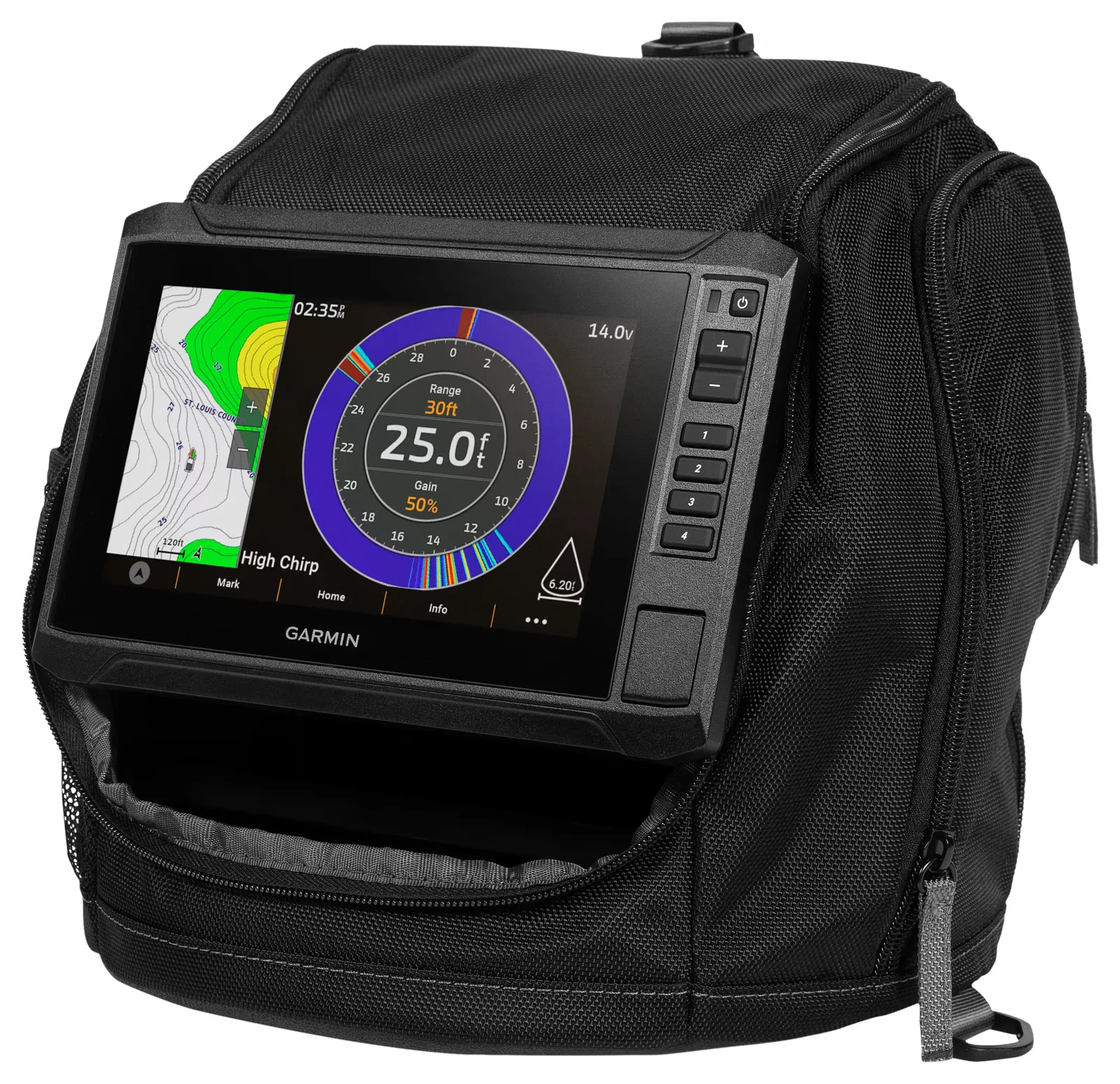
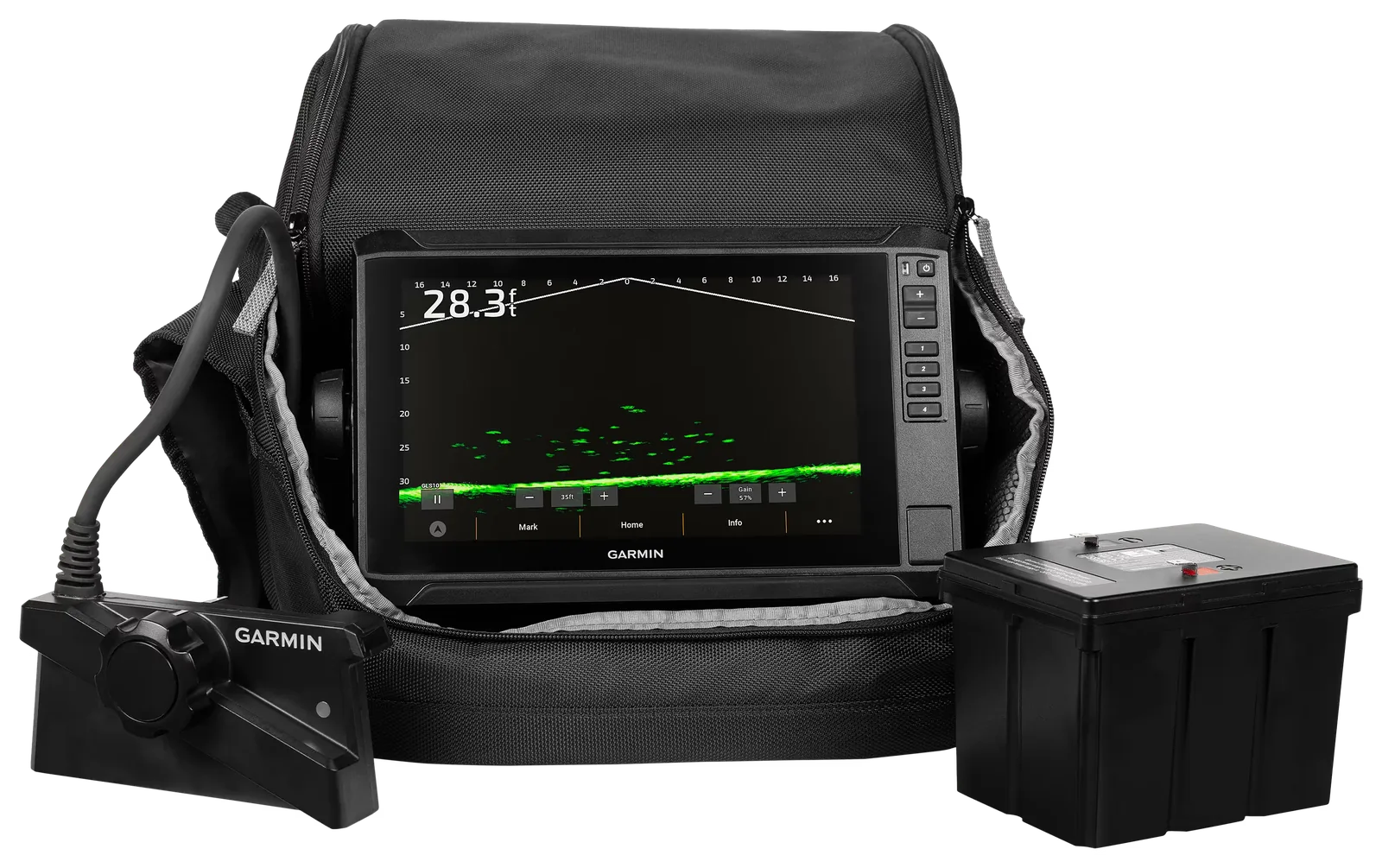
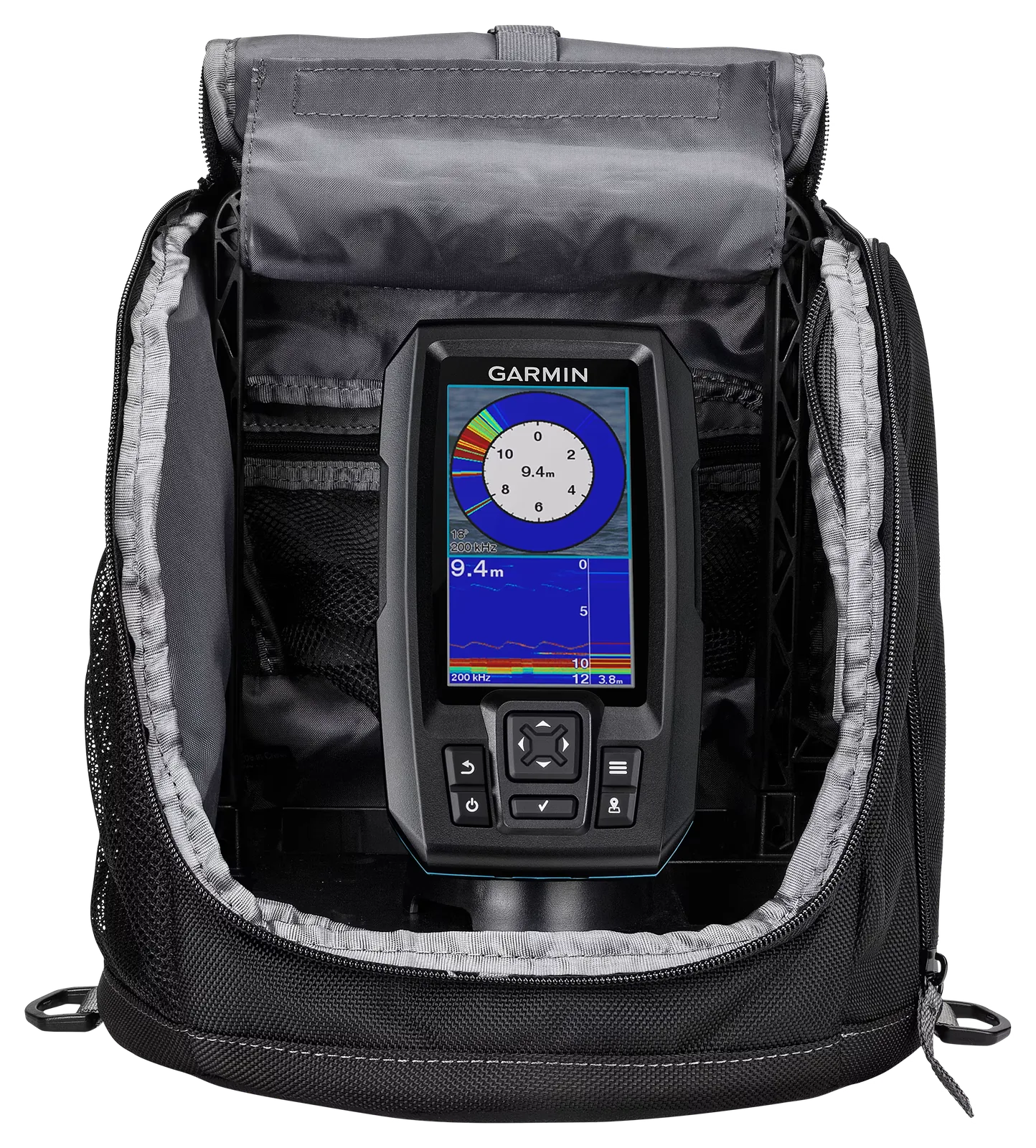
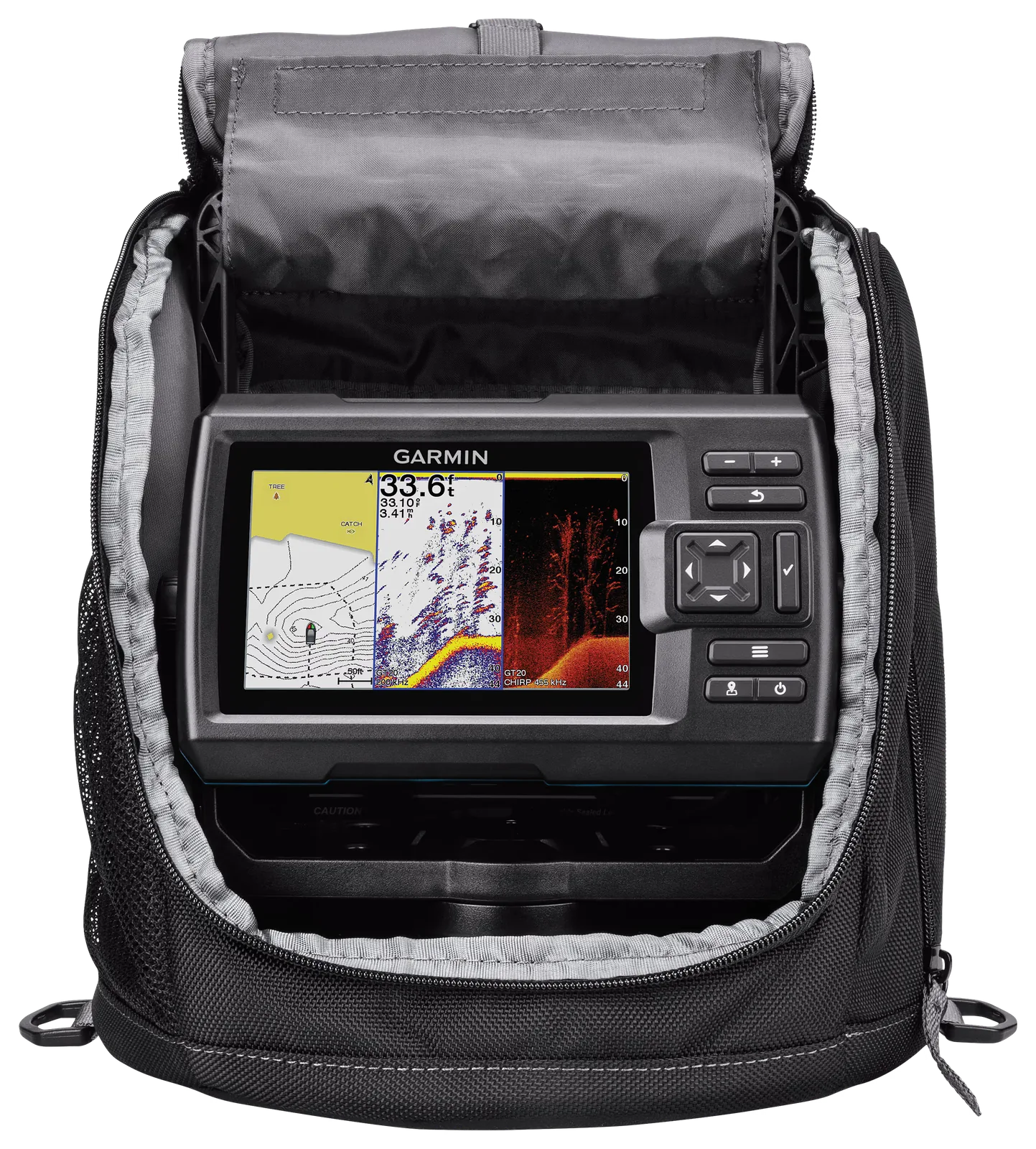
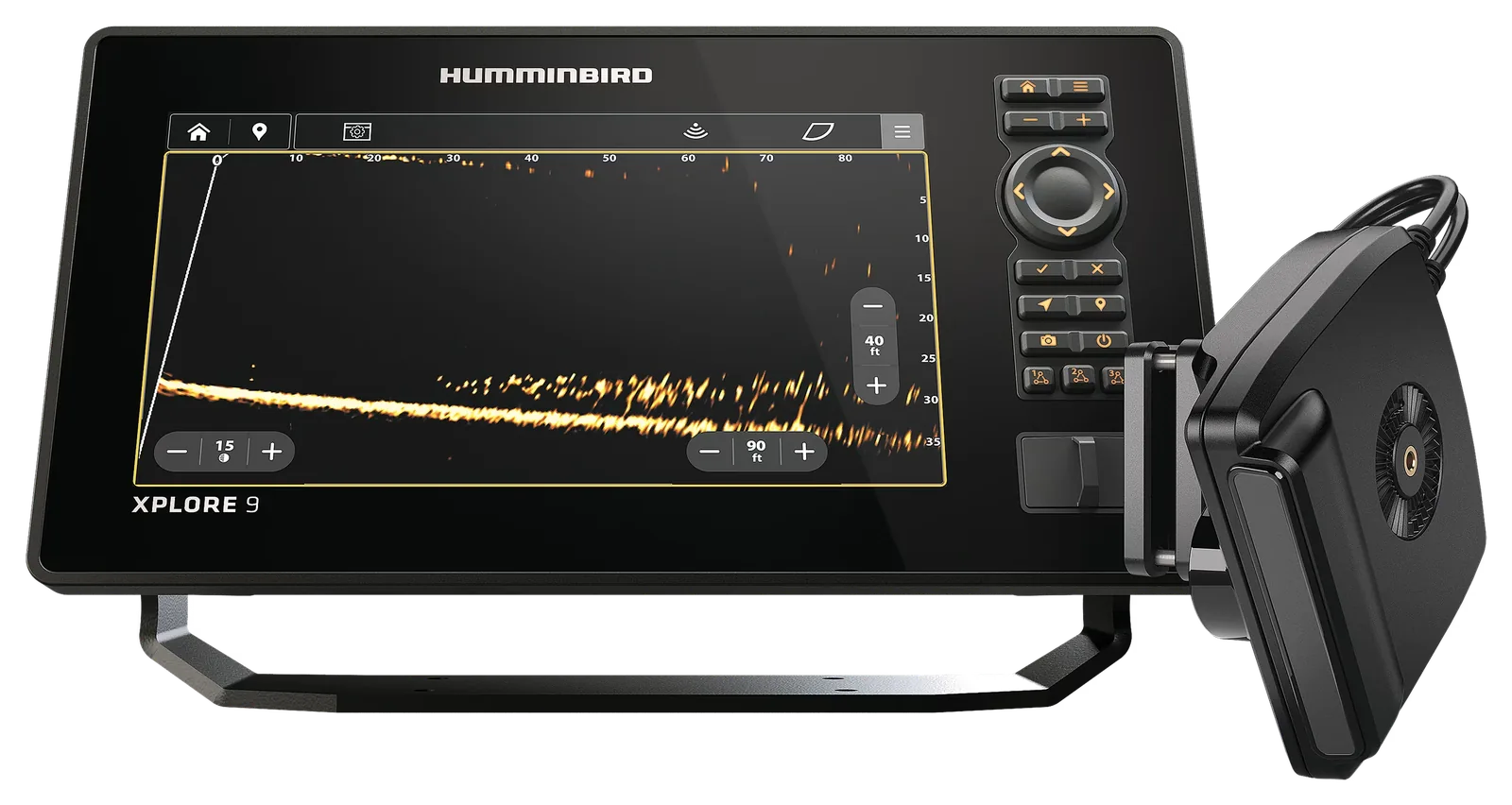
A screen unit draws sonar as a scrolling picture. You get the same live column plus history on the right, so you can look away to drill or net a fish and still see what moved through. Add GPS and it will mark structure you found so you can come back to it, and the ECHOMAP and XPLORE ice bundles in the catalogue carry charts on top of that.
The ice-fishing range is on the ice fishing page, and the smaller handheld and portable units are under portable fish finders.
Side by side
| Unit | Live column | Scrolling history | GPS and charts | Ice transducer |
|---|---|---|---|---|
| Vexilar FLX-28 Sonar Flasher Pro Pack | Yes | No | No | Included |
| Vexilar FL-8SE Genz Pack | Yes | No | No | 19 degree Ice-Ducer |
| MarCum M1 Ice Sonar Flasher System | Yes | No | No | Included, 9 lb system |
| Humminbird ICE-35 Portable Flasher | Yes | No | No | XI 9 19 |
| Humminbird ICE-45 Portable Flasher | Yes | No | No | XI 9 19 |
| Garmin STRIKER Plus 4 Ice Bundle | Yes, 2D | Yes | GPS, no charts | Included |
| Garmin STRIKER Vivid 5cv Ice Bundle | Yes, 2D and down scan | Yes | GPS, no charts | GT8HW-IF |
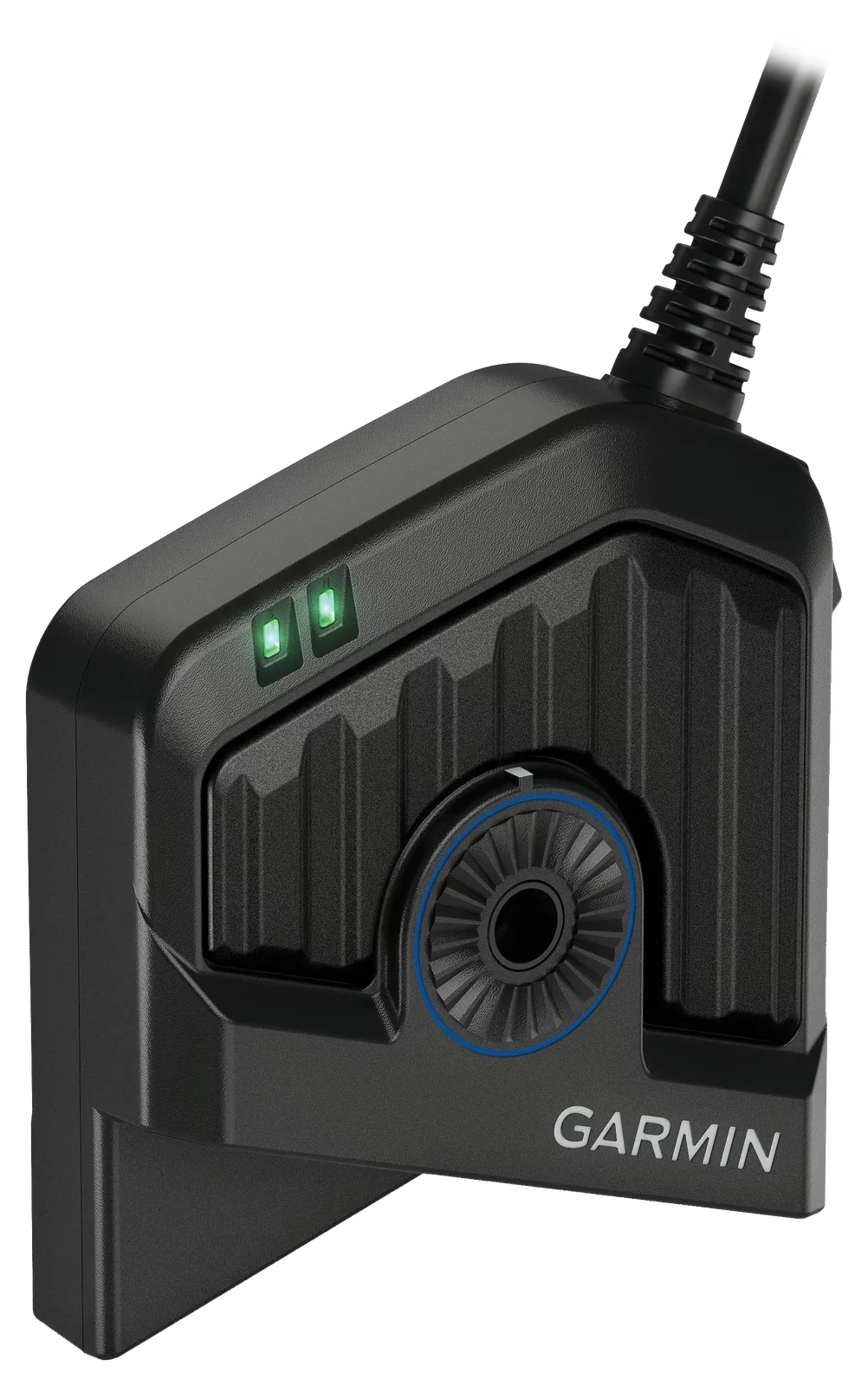
| Garmin ECHOMAP UHD2 73sv Ice Bundle | Yes, 2D, down and side scan | Yes | GPS, US Freshwater charts | GT10HN-IF |
| Humminbird XPLORE 9 Ice ML2 Combo | Yes, plus MEGA Live 2, MEGA SI and DI | Yes | GPS, US Freshwater and Saltwater charts | MEGA Live 2 |
Where a flasher is the better tool
- Hole hopping. A flasher is on and reading within seconds of dropping the transducer in. You are not waiting on a boot screen while the guy 30 feet away is already into fish.
- Watching a jig. The mark for your lure and the mark for the fish sit on the same dial. You see the fish drop or rise in relation to your bait as you work it, which is the whole skill of jigging.
- Suspended fish in the column. Crappie, perch and walleye that come through mid-column show as marks above bottom with nothing to interpret.
- Low draw and simple power. The Humminbird ICE-35 lists 0.21 amps draw, the ICE-45 lists 0.25 and the Vexilar FL-8SE lists 0.2, so a small battery carries you a full day. None of these flashers need a chart card or a GPS fix to work.
- Chest pack and bucket fishing. The MarCum M1 is a 9 lb system with 20, 40, 80 and 160 ft selectable ranges, which is the shape of rig you carry rather than tow.
Where a screen unit is the better tool
- You fish the same structure twice. GPS on the Garmin STRIKER, ECHOMAP and Humminbird XPLORE ice bundles lets you drop a waypoint on a hump or a weed edge and drill it again next trip.
- You want charts. The ECHOMAP UHD2 bundles list US Freshwater charts and the XPLORE 9 lists Freshwater and Saltwater charts. On a big lake with no landmarks, that is how you decide where to start.
- You want to see the shape of the bottom. Down and side scanning on the STRIKER Vivid 5cv, the ECHOMAP 73sv and the XPLORE 9 shows whether that hard return is rock, gravel or a brush pile.
- You want history. A scrolling screen lets you drill a hole, come back and see what swam through while you were setting up.
- You want live sonar. The ECHOMAP UHD2 LiveScope Plus ice bundle and the Humminbird XPLORE 9 Ice ML2 are live-forward units: you see fish approach from the side before they are under the hole. That is a different class of money and a different way of fishing, and worth it only if you spend serious days on the ice.
The open-water question
Most people buying an ice unit also want it to work in June. A flasher is an ice tool — the flashers in the catalogue are sold as ice systems with an ice transducer, and none of them carry GPS or charts, so there is nothing to navigate with on open water.
A screen unit is the one that crosses over. The Garmin STRIKER, ECHOMAP and Humminbird XPLORE units are boat units with an ice bundle: put the ice transducer on for winter, and use a transom or thru-hull transducer on the boat for summer. That is the reason many anglers spend a little more on a screen unit and skip the flasher entirely.
Transducer and cone angle
If you fish shallow flats for panfish, a narrow cone keeps the reading tight under the hole. In deep water a wider cone covers more of the column but blurs the edges. The Vexilar FL-8SE Genz Pack ships with a 19 degree Ice-Ducer and the Humminbird ICE flashers use an XI 9 19 — check the cone in the listing against the water you fish most — the transducer guide explains how cone angle and frequency change what you see.
Depth range matters as much. The MarCum M1 lists 20, 40, 80 and 160 ft settings; if your lakes run 60 ft, you want a unit that switches cleanly in that band rather than one built for 200 ft of water. And an ice transducer needs to hang level in the hole — a float and a stop are part of the kit, not an extra.
What to check before you buy
- Which transducer is in the box, by model number — GT8HW-IF and GT10HN-IF take different displays.
- Whether the display you already own takes an ice transducer, or whether you are buying a full bundle.
- How you will power it: the STRIKER Vivid 5cv bundle lists a lead-acid battery, others do not list one.
- Screen size against how you fish — a 4 inch unit in a tent is fine, a 9 inch unit is for a shelter or a boat.
- Whether it has to fish open water too, because that decides flasher or screen before anything else does.
Send us the water you fish, the depth, your target species and whether the unit has to double as a summer boat unit. We will point you at the right setup, and we check the transducer and connector against your display before we invoice. If you are unsure which question matters most, send us the details and we will answer it straight.